
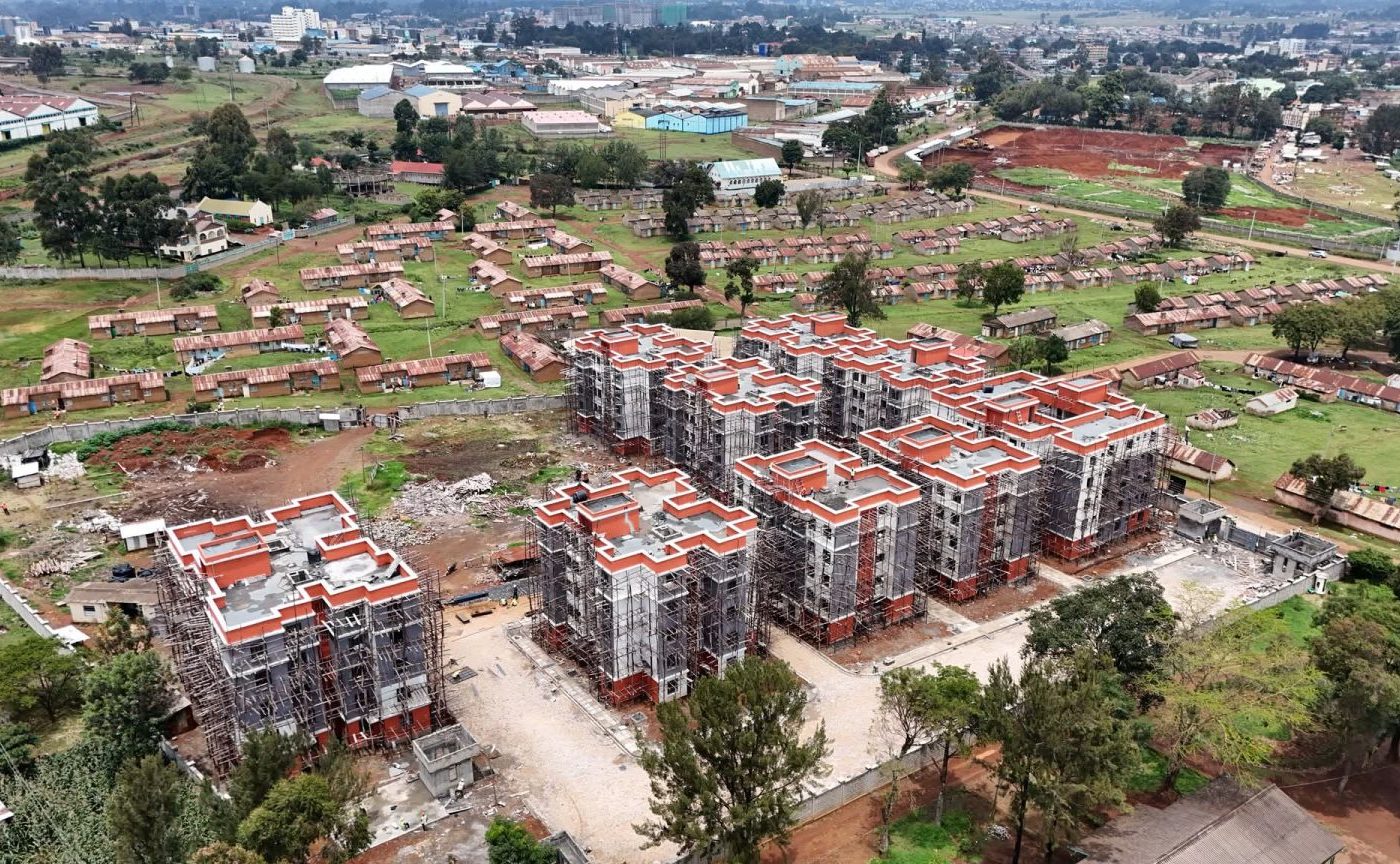
Kenya’s Housing Revolution: Jobs, Rising Property Prices and the Race to Build Millions of Homes

Kenya’s Affordable Housing Boom: 2,157 Eldoret Homes Handed Over as Prices Rise and the Property Market Enters a New Era
Kenya’s real estate sector is entering a significant period of transformation as the government’s Affordable Housing Programme expands across the country, creating new opportunities for homeownership, construction employment, manufacturing and property investment.
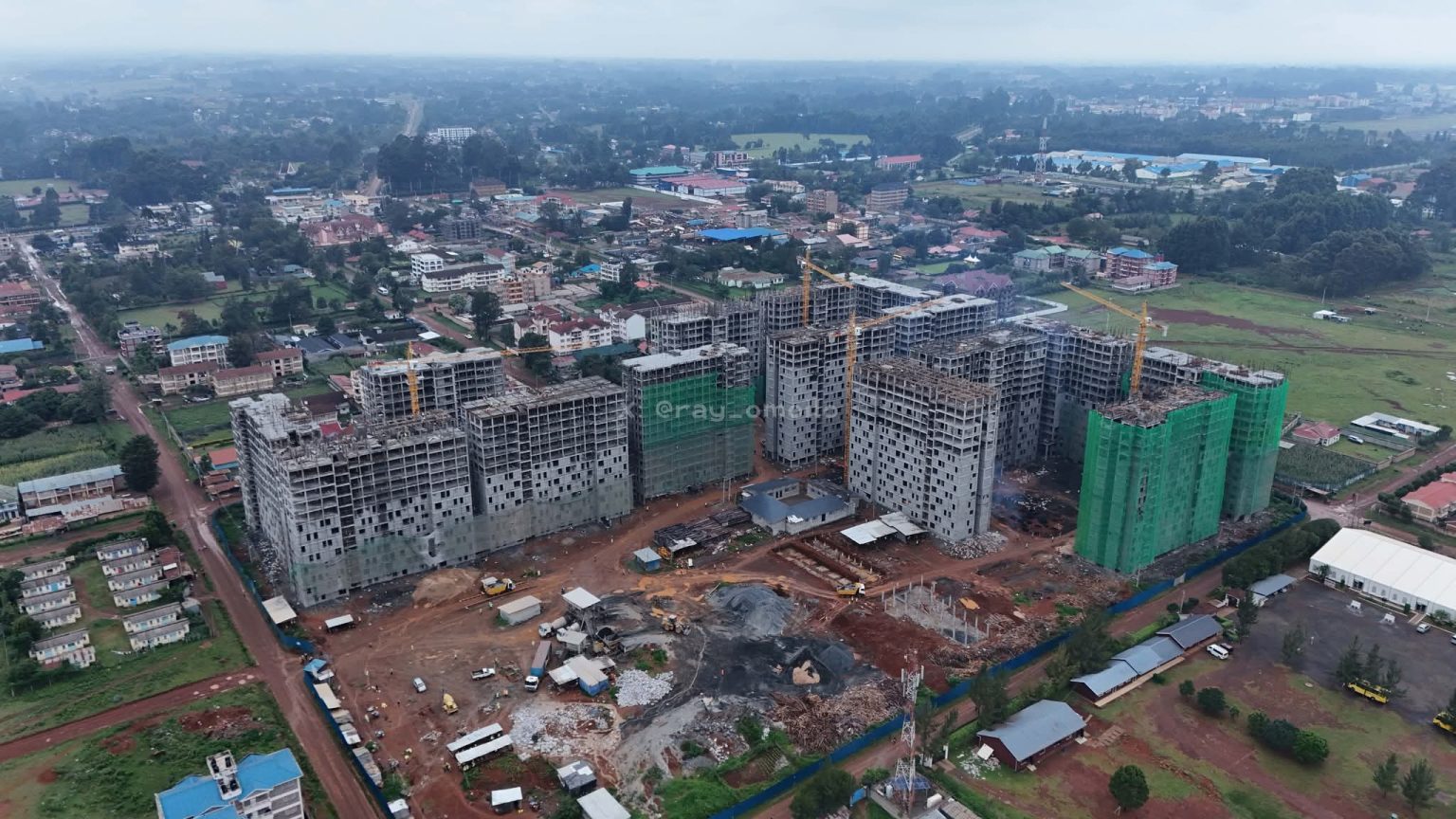
The October 2026 handover of 2,157 homes at the Pioneer Affordable Housing Estate in Eldoret represents another milestone in the country’s housing ambitions. However, the expansion comes at a time when the government has revised affordable housing prices upwards, raising questions about the purchasing power of ordinary Kenyans and whether the programme can sustainably bridge the country’s housing deficit.
Beyond the political debate surrounding the initiative, the developments have potentially far-reaching economic consequences. Housing construction is stimulating demand for building materials, transport, financial services, skilled labour and small businesses while accelerating the growth of urban centres beyond Nairobi.
The bigger question is whether Kenya can use the current construction momentum to establish a sustainable housing industry capable of accommodating its growing population over the next three decades.
Eldoret emerges as another affordable housing investment centre
One of the most significant recent developments is the commissioning of the Pioneer Affordable Housing Project in Eldoret City, Uasin Gishu County.
President William Ruto officially opened the Sh5.3 billion development in October 2026, handing over keys to 2,157 homeowners.
The development is located in Kapseret and includes 104 commercial shops, a kindergarten, playgrounds, green spaces, a clubhouse and a swimming pool. Additional facilities, including a junior school and sports courts, are also planned.
Beyond providing residential accommodation, the project demonstrates how affordable housing developments can support the growth of secondary cities by creating new commercial centres and attracting investment into surrounding neighbourhoods.
The participation of local Jua Kali artisans is particularly noteworthy. According to the Kenya News Agency, local manufacturers supplied windows and doors worth approximately Sh264 million for the project.
This illustrates how large construction projects can create opportunities for local manufacturers, fabricators, suppliers and small enterprises rather than benefiting property developers alone.
For Eldoret, which already serves as an important commercial and agricultural centre in the North Rift, increased residential development could stimulate demand for retail outlets, schools, healthcare facilities, transport and other services.
Affordable housing prices rise by 20 per cent
While the government continues expanding housing construction, prospective homeowners are facing higher purchase prices following revisions that took effect on October 1, 2026.
According to pricing information reported by People Daily from the Boma Yangu platform, affordable housing units experienced increases of approximately 20 per cent, while market housing units increased by approximately 10 per cent for new applicants.
The revised prices include:
| Housing type | Previous price | New price |
|---|---|---|
| Studio | KSh 1.5 million | KSh 1.8 million |
| One bedroom | KSh 2 million | KSh 2.4 million |
| Two bedroom | KSh 3 million | KSh 3.6 million |
The increases represent an additional KSh 300,000 for a studio, KSh 400,000 for a one-bedroom unit and KSh 600,000 for a two-bedroom home.
Although the revised prices may reflect changes in construction costs, project financing and implementation requirements, they also raise an important affordability question.
For a household earning KSh 30,000 monthly, purchasing a KSh 1.8 million studio remains a substantial financial commitment. The ability to make monthly payments will depend on household expenses, employment stability, deposit requirements and the terms of the Tenant Purchase Scheme.
The challenge facing policymakers is ensuring that housing remains accessible to the people it was originally intended to benefit, particularly lower-income households and young working Kenyans.
Housing construction becomes a major source of employment

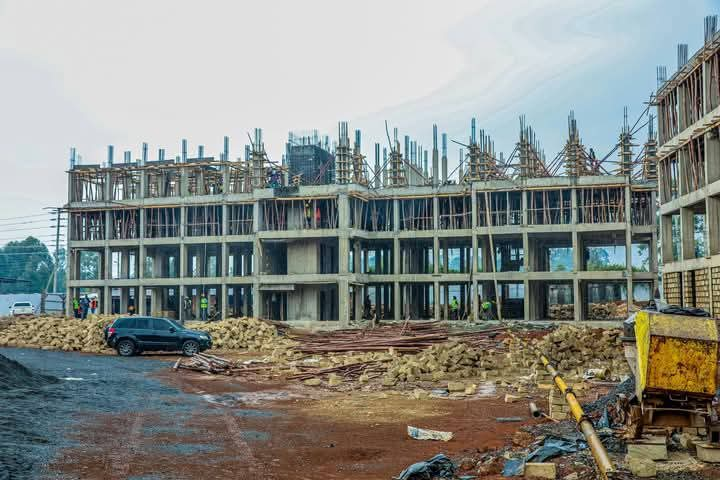
One of the strongest economic arguments for large-scale housing investment is its ability to generate employment across several industries.
Speaking at the Kenya Affordable Housing Conference in Naivasha in August 2026, Principal Secretary for Housing and Urban Development Charles Hinga said more than 280,000 housing units were under construction nationwide, representing approximately KSh731.5 billion in contract value.
He also indicated that additional contracts worth approximately KSh300 billion were awaiting approval, potentially pushing the total value of housing construction contracts beyond KSh1 trillion.
The government has attributed between 640,000 and one million direct and indirect jobs to its housing programme, although these are programme-wide estimates rather than independently verified permanent employment figures.
Employment opportunities extend well beyond construction workers.
- Construction workers: Masons, electricians, plumbers, painters, steel fixers, carpenters and site supervisors.
- Manufacturing: Producers of cement, steel, roofing materials, windows, doors, tiles and electrical fittings.
- Transport: Truck drivers, logistics companies, material distributors and equipment operators.
- Professional services: Architects, engineers, quantity surveyors, estate agents, lawyers and property managers.
- Small businesses: Hardware shops, food vendors, local fabricators, cleaning companies and retail operators.
The multiplier effect is particularly important. When construction workers receive wages, they spend money on food, transport, accommodation, education and other household needs. This creates additional demand in the wider economy.
Similarly, local manufacturers supplying construction materials benefit from increased production demand, potentially encouraging investment in machinery, distribution networks and additional employment.
However, the sustainability of these jobs will depend on whether construction continues consistently and whether workers acquire skills that can be used in other parts of the economy after individual projects are completed.
The housing deficit remains a major challenge
Despite the expansion of affordable housing, Kenya still faces a substantial gap between the number of homes required and the number being supplied annually.
Estimates published by Kenya’s National Commission for Science, Technology and Innovation and the country’s Permanent Mission to UN-Habitat place annual housing demand at approximately 244,000 to 250,000 units, against formal supply of fewer than 50,000 homes annually.
This leaves an estimated annual shortfall of approximately 200,000 homes and a cumulative housing deficit exceeding two million units.
The problem is particularly pronounced among low-income households, which frequently depend on informal settlements or rental accommodation because formal housing is beyond their financial reach.
The government’s programme is therefore attempting to address both the quantity and affordability of housing through social housing, affordable housing and market-rate developments.
However, construction figures must be distinguished from actual delivery. A house under construction does not immediately become available for occupation, while a completed house does not necessarily mean that a household can afford to purchase it.
In September 2026, The Star reported that the government had indicated approximately 10,000 affordable housing units were complete and 8,000 occupied. Meanwhile, a separate Treasury-related assessment reported that only 1,836 units had been completed and handed over by the end of June under the programme’s reported financial-year performance. The different reporting dates and project classifications are important when interpreting national delivery figures.
Financing challenges could slow future construction
One of the less discussed challenges facing the Affordable Housing Programme is how the government will finance continued construction over the coming years.
Under the proposed revolving financing model, revenue generated from completed and sold houses is expected to help fund additional developments.
However, a Business Daily investigation published on October 7, 2026, revealed that the Affordable Housing Board collected approximately KSh212.342 million from house sales during the financial year to June, against a projected KSh15.25 billion.
This represented only about 1.4 per cent of the targeted sales revenue.
The publication attributed much of the shortfall to buyers opting for Tenant Purchase Schemes, commonly described as rent-to-own arrangements, rather than paying the full purchase price upfront.
Although this arrangement can make homeownership more accessible, it means government revenue is received gradually instead of immediately.
The situation creates a financing challenge because construction requires substantial capital upfront, while payments from homeowners may take several years to accumulate.
For the programme to remain sustainable, Kenya will need efficient collection systems, predictable housing fund contributions, transparent financial reporting and additional long-term investment from institutional investors and financial institutions.
How Kenya compares with other East African countries
Kenya is not alone in facing a housing shortage. Rapid population growth, urbanisation and limited access to affordable mortgages are placing pressure on housing markets throughout East Africa.
Available national and regional assessments illustrate the scale of the challenge:
| Country | Reported housing challenge | Annual requirement |
|---|---|---|
| Kenya | Over 2 million-unit deficit | About 250,000 homes |
| Uganda | About 2.6 million-unit deficit | About 300,000 homes |
| Tanzania | About 3 million-unit deficit | About 200,000 homes |
| Ethiopia | Large accumulated housing shortage | About 471,000 homes |
These figures come from different national assessments and reporting periods, so they should not be interpreted as a precise ranking of housing performance.
Uganda’s Ministry of Finance reported in 2025 that approximately 60 per cent of its population lived in informal settlements or inadequate housing conditions. Its estimated housing deficit stood at 2.6 million units, with annual construction requirements of approximately 300,000 homes.
Tanzania, meanwhile, faces an estimated shortage of three million homes and annual demand of approximately 200,000 units, according to information published by the Bank of Tanzania in its mortgage market assessment.
Ethiopia faces an even larger annual housing requirement. The Centre for Affordable Housing Finance in Africa estimated that the country’s annual housing need averaged approximately 471,000 units up to 2025, with the requirement expected to increase to 486,000 annually through 2035.
Rwanda has also been investing in planned urban development and housing initiatives, particularly around Kigali. However, its housing market should be assessed using comparable affordability, delivery and financing indicators rather than simply comparing the number of projects announced.
Kenya’s distinguishing feature is the scale of its national affordable housing initiative, its dedicated housing financing framework and its attempt to combine homeownership with local manufacturing and employment creation.
Nevertheless, being among the more ambitious housing markets in the region does not automatically mean that Kenya has solved its affordability problem. The ultimate measure will be how many decent homes are actually completed and occupied by households that genuinely need them.
What will Kenya’s real estate market look like in 2056?
Looking 30 years ahead, Kenya’s property market could be substantially different from what exists today.
According to the United Nations’ World Population Prospects 2024, Kenya’s population is projected to reach approximately 83.6 million by 2050 under the medium scenario, compared with approximately 55 million in 2023.
UN-Habitat projections also indicate that approximately half of Kenya’s population could be living in urban areas by 2050.
These demographic changes will have significant implications for housing demand, land values, infrastructure investment and the development of cities.
By 2056, Kenya could have a much larger urban population, with greater demand for apartments, family homes, rental properties, commercial buildings, schools, hospitals and transport infrastructure.
The most important long-term developments could include:
1. Expansion of secondary cities
Nairobi will remain an important commercial and financial centre, but cities such as Eldoret, Nakuru, Kisumu, Mombasa, Naivasha and Thika could attract more residential and commercial investment.
Improved roads, transport networks, industrial facilities and digital infrastructure could encourage businesses and households to establish themselves outside the capital.
2. Growth of the rental property market
Not every household will be able or willing to purchase a home. As urban populations expand, demand for affordable rental apartments, student accommodation and professionally managed residential developments is likely to increase.
This could create opportunities for private property investors, developers, landlords and property management companies.
3. More sophisticated property financing
Kenya’s housing finance market could develop beyond conventional mortgages through housing cooperatives, SACCO financing, mortgage refinancing, institutional investment and flexible rent-to-own arrangements.
Longer repayment periods and more affordable financing could help households that currently depend entirely on rental accommodation.
4. Increased demand for commercial and mixed-use developments
As residential estates expand, demand for shopping centres, offices, warehouses, supermarkets, schools, healthcare facilities and recreational spaces will increase.
Developers who plan integrated residential and commercial communities could benefit from this changing demand.
5. Technology and climate-conscious construction
By 2056, modern construction could increasingly rely on prefabricated building components, energy-efficient designs, smart-home systems, sustainable materials and improved water-management technologies.
These innovations could reduce construction time and operating expenses, although their benefits will depend on local manufacturing capacity, regulation and affordability.
Kenya’s biggest opportunity is to build an entire property economy
The affordable housing programme should not be evaluated exclusively by the number of apartments constructed or the amount of money spent.
Its wider economic potential lies in developing an interconnected property industry that supports manufacturing, financial services, professional employment, construction technology and commercial investment.
For example, a residential development of several thousand households creates a market for supermarkets, restaurants, pharmacies, schools, transport operators and other service providers. Over time, these activities can turn previously underdeveloped areas into active commercial neighbourhoods.
However, such transformation requires proper planning. Housing developments must be supported by reliable water supplies, electricity, sewerage systems, roads, public transport, healthcare and education facilities.
Without these essential services, the country risks creating densely populated residential estates that reproduce the same infrastructure challenges found in existing informal settlements.
The challenges Kenya must overcome
Despite the opportunities, several structural issues could determine whether the country’s housing ambitions succeed.
- Affordability: Rising construction and purchase prices could exclude the very households the programme is designed to assist.
- Financing: Slow revenue collection and dependence on continued public funding could affect the pace of future developments.
- Land availability: High land prices and ownership complications can increase project costs and delay construction.
- Infrastructure: Residential expansion must be matched by investment in roads, water, sanitation and public services.
- Employment sustainability: Construction jobs must translate into transferable skills and longer-term economic opportunities.
- Transparency: Clear reporting on completed, occupied, financed and ongoing units is essential for public confidence.
Conclusion: A defining opportunity for Kenya’s next generation
Kenya’s affordable housing expansion represents an important opportunity to reshape the country’s property market and stimulate economic activity beyond traditional centres of investment.
The handover of 2,157 homes in Eldoret demonstrates that major residential developments can be delivered outside Nairobi while involving local manufacturers and creating new commercial opportunities.
However, the rising cost of housing, financing constraints and the persistent shortage of completed homes show that the journey is far from over.
Over the next 30 years, Kenya could emerge with more developed cities, a stronger construction industry, a larger rental market and improved access to homeownership. Alternatively, if population growth continues to outpace housing delivery, the country could face even greater pressure on urban infrastructure and affordable accommodation.
The difference will depend on whether today’s construction momentum develops into a financially sustainable, inclusive and well-planned property sector.
For investors, developers, homeowners and businesses, the message is clear: Kenya’s real estate industry is evolving, and the opportunities emerging today could shape the country’s economic landscape for decades.
Key Takeaways
- Kenya handed over 2,157 homes at the KSh5.3 billion Pioneer Affordable Housing Project in Eldoret in October 2026.
- Affordable housing prices reportedly increased by 20 per cent from October 1, 2026.
- More than 280,000 housing units were reported under construction nationally in August 2026.
- The government estimates that its housing programme has generated hundreds of thousands of direct and indirect jobs.
- Kenya still faces an estimated housing deficit exceeding two million units.
- Uganda, Tanzania and Ethiopia also face substantial housing shortages, making affordable housing a regional economic priority.
- Population growth and urbanisation could substantially reshape Kenya’s real estate industry by 2056.
Frequently Asked Questions
How many affordable housing units are being built in Kenya?
In August 2026, the government reported that more than 280,000 housing units were under construction nationwide, with a target of completing 45,000 units by the end of the year.
How much does affordable housing cost in Kenya in 2026?
Reported revised prices include KSh 1.8 million for a studio, KSh 2.4 million for a one-bedroom apartment and KSh 3.6 million for a two-bedroom apartment. Actual prices depend on the project and applicable housing category.
How does affordable housing create employment?
Construction creates direct employment for builders and technicians while generating indirect opportunities in manufacturing, transport, banking, professional services and retail businesses.
Does Kenya have enough houses for its population?
No. Available national estimates indicate annual demand of approximately 250,000 homes against formal supply of fewer than 50,000 units, leaving a substantial housing shortage.
What is the long-term outlook for Kenya’s real estate market?
Population growth, urbanisation, infrastructure investment and expanding commercial centres could support substantial growth in residential, rental and commercial property markets through 2056.
Sources and Further Reading
- Kenya News Agency – Ruto opens Pioneer Affordable Housing Project in Eldoret, October 2026.
- People Daily – Government raises Affordable Housing prices, October 1, 2026.
- Kenya News Agency – Government targets 45,000 affordable housing units by December, August 26, 2026.
- Business Daily – Rent-to-own option traps affordable homes billions, October 7, 2026.
- The Star – State says 10,000 affordable housing units complete, 8,000 occupied, September 11, 2026.
- National Commission for Science, Technology and Innovation – Affordable Housing in Kenya.
- Uganda Ministry of Finance – Housing Conditions in Uganda, May 2025.
- Bank of Tanzania – Mortgage Market Update, 2025.
- Centre for Affordable Housing Finance in Africa – Ethiopia Housing Market.
- UN-Habitat – Kenya Habitat Country Programme 2023–2027.
- United Nations – World Population Prospects 2024.
Disclaimer: This article is published for general news and informational purposes. Housing prices, construction estimates, employment figures and population projections are subject to revision. Regional comparisons use available national estimates that may differ in methodology and reporting periods.
SkyPress Editorial | Skyrexx
Practical Finance. Smarter Money. Better Decisions.