
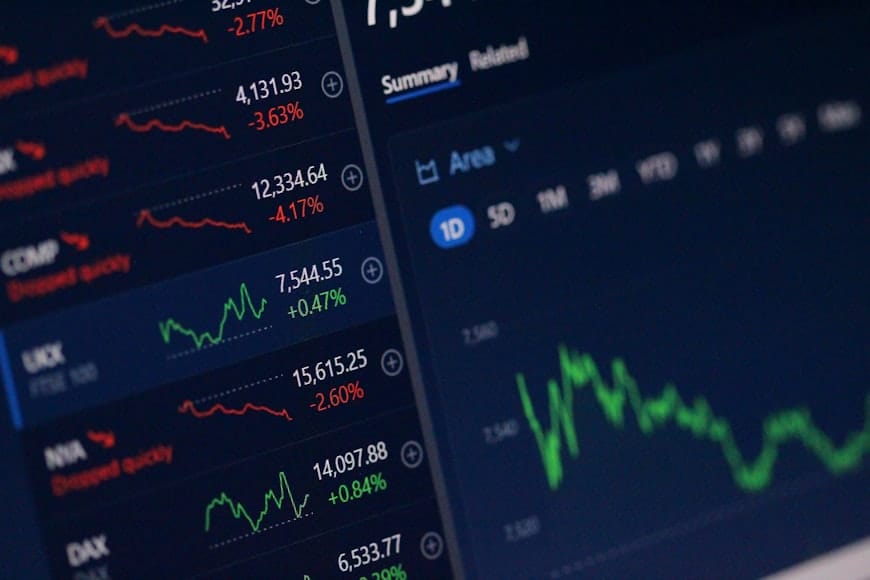
Is Forex Trading a Viable Business? A Realistic Guide to Making Money Trading Forex

Is Forex Trading a Viable Business? A Realistic Guide to Making Money Trading Forex
Forex trading is often promoted as a flexible way to participate in global financial markets and potentially build an independent source of income. With an internet connection, a trading platform, and access to a broker, individuals can buy and sell currencies from almost anywhere. This accessibility has made the foreign exchange market increasingly attractive to people looking for financial independence, additional income, or a possible full-time trading career.
However, accessibility does not mean simplicity.
The reality of Forex trading is considerably more demanding than many advertisements, social-media posts, and online trading personalities suggest. While some traders are able to develop sustainable profitability, many others lose money because they begin without sufficient knowledge, use excessive leverage, risk too much capital, or approach the market with unrealistic expectations.
This leads to an important question: Is Forex trading actually a viable business, or is it simply a sophisticated form of speculation?
The answer depends largely on how the activity is approached.

Forex Trading: Business or Gamble?
The foreign exchange market is the global marketplace where currencies are bought and sold. It serves an important role in international commerce, investment, banking, tourism, and cross-border financial transactions. Banks, corporations, governments, institutional investors, hedge funds, and individual traders all participate in the currency market for different reasons.
Retail traders generally attempt to profit from changes in exchange rates. For example, a trader may buy EUR/USD because they expect the euro to appreciate against the U.S. dollar. If the market moves in the anticipated direction, the trader may close the position for a profit. If the market moves against the position, the trader experiences a loss.
That basic process is relatively easy to understand. Becoming consistently profitable is much more difficult.
Forex trading starts to resemble gambling when decisions are based primarily on hope, excitement, intuition, or the desire to recover previous losses. A trader who enters positions without a defined strategy, risks an excessive percentage of their account, and continually changes decisions according to emotions is not operating a structured trading business.
A professional approach is fundamentally different.
A serious trader develops a written trading plan, defines acceptable levels of risk, studies market conditions, tests strategies, records trades, reviews performance, and understands that individual trades are uncertain. The objective is not to predict every market movement correctly. Instead, the objective is to operate a repeatable process in which risk is controlled and potential opportunities are evaluated according to predetermined criteria.
This distinction is crucial because Forex trading does not provide guaranteed income. Even a well-researched trade can lose money. Markets can react unexpectedly to economic data, central-bank decisions, geopolitical developments, changes in investor sentiment, or other events that may be difficult to anticipate.
Why Forex Trading Attracts So Many People
There are several reasons why Forex trading has become popular among aspiring traders.
- Accessibility: Retail traders can access currency markets through online brokers and trading platforms.
- Global participation: Forex is connected to economies and financial markets around the world.
- Flexible trading hours: The currency market operates across major global financial sessions during the trading week.
- Potential for both long and short positions: Traders can potentially seek opportunities when currencies rise or fall.
- Leverage: Brokers may provide leverage that allows traders to control positions larger than their deposited capital.
- Low initial barriers: Some brokers allow individuals to begin with relatively small amounts of capital.
These characteristics can make Forex appealing, but they can also encourage inexperienced traders to underestimate the risks.
For example, a small starting account combined with high leverage may create the illusion that a trader can quickly generate a substantial income. In reality, trying to produce a large income from a small account generally requires taking disproportionately large risks.
The Get-Rich-Quick Myth in Forex
One of the most damaging misconceptions surrounding Forex trading is the belief that it is a fast route to wealth.
Online advertisements sometimes present trading as an activity where someone can turn a small account into a fortune within a short period. Social-media content may focus heavily on winning trades, luxury lifestyles, expensive vehicles, and screenshots of impressive account balances.
What is often missing from this picture is the risk required to achieve such results.
A trader who attempts to double an account every month would generally need to accept a level of risk that could also produce devastating losses. A few successful trades can create confidence, but confidence without proper risk controls can quickly become overconfidence.
Sustainable trading should therefore not be built around extraordinary short-term returns.
Instead, the focus should be on developing a process that can survive losing periods and changing market conditions.
Trading profitability is better understood over a meaningful sample of trades rather than by looking at one exceptionally successful position. A strategy can experience losing trades and still have positive expectancy if its winners, losers, costs, and risk are managed appropriately.
Profitability Requires More Than a Winning Strategy
Having a strategy that produces winning trades is only one part of becoming a successful trader.
A complete trading operation also requires appropriate position sizing, disciplined execution, risk management, emotional control, record keeping, and ongoing evaluation.
Consider two traders who use exactly the same strategy. The first trader risks a small and consistent amount on each position and follows the strategy without emotional interference. The second trader increases position sizes after winning trades, doubles down after losses, and moves stop-loss orders whenever a position moves against them.
Although they technically use the same strategy, their results can be dramatically different.
This demonstrates an important principle: a trading system is only as effective as the process used to execute it.
Successful trading is therefore not simply about finding the perfect indicator or the most accurate chart pattern. It involves creating a complete framework for making decisions under uncertainty.
Understanding the Difference Between Skill and Luck
Short-term trading results can sometimes be misleading.
A beginner may enter several random trades and make money because the market happens to move in their favor. This does not necessarily mean that the trader has developed a profitable edge. Likewise, an experienced trader can follow a well-tested strategy and still experience a series of losses.
This is why professional traders evaluate performance across many trades rather than judging their ability based on one transaction or one week of results.
A genuine trading edge should be supported by evidence. Traders may examine historical performance, win rate, average win, average loss, drawdown, risk-to-reward characteristics, and how the strategy behaves under different market conditions.
The purpose of this analysis is not to eliminate losses. Losses are an unavoidable part of trading. The purpose is to determine whether the overall process has a reasonable probability of producing favorable results after losses and trading costs are considered.
Forex Trading Is a Business of Risk Management
If Forex trading is going to be treated as a business, risk management should come before profit expectations.
A trader’s first responsibility is to protect the capital required to continue participating in the market.
This is particularly important because losses have an asymmetric effect on account recovery. For example, if a trader loses 10% of an account, they need approximately 11.1% on the remaining capital to recover. If they lose 50%, they need a 100% gain on the remaining capital just to return to the original balance.
The larger the drawdown becomes, the harder recovery can be.
For this reason, responsible traders generally establish limits on how much they are willing to lose on an individual trade and over a particular period. Position sizing should be calculated according to the amount of capital at risk and the distance to the stop-loss rather than simply choosing the largest position a broker will allow.
Risk management can include:
- Appropriate position sizing.
- Predefined stop-loss levels.
- Maximum daily or weekly loss limits.
- Controlled use of leverage.
- Avoiding excessive concentration in highly correlated positions.
- Maintaining sufficient capital reserves.
- Never using money required for essential living expenses.
The specific rules will differ between traders and strategies, but the underlying principle remains the same: survival comes before growth.
What Makes Forex Trading So Difficult?
Forex markets are influenced by a wide range of economic and financial factors. Interest rates, inflation, employment figures, economic growth, central-bank policy, political developments, geopolitical risks, commodity prices, and changes in global investor sentiment can all affect currency prices.
This creates an environment in which conditions can change quickly.
A strategy that performs well during a strong trend may behave differently when the market becomes range-bound. A setup that works under normal conditions may produce unexpected results during major economic announcements. Even experienced traders cannot control these external variables.
The trader can control something else, however: how much they are willing to risk when they are wrong.
This is one of the foundations of professional trading.
The Double-Edged Sword of Leverage
Leverage is one of the most attractive and misunderstood features of Forex trading. It allows traders to control a position that is larger than the amount of capital they have deposited with their broker. This can increase the potential return on a successful trade, but it can also magnify losses when the market moves in the wrong direction.
For example, a trader with a relatively small account may be able to open a position worth significantly more than their available capital because of leverage. While this can make Forex accessible to traders with smaller accounts, it can also encourage excessive risk-taking.
The important point is that leverage does not create a trading edge. It simply changes the size of the exposure. A trader with a losing strategy does not become profitable by increasing leverage. Instead, losses can accumulate more quickly.
Responsible traders therefore distinguish between the leverage a broker makes available and the amount of leverage they actually need. Just because a broker permits high leverage does not mean that using maximum leverage is sensible.
A professional approach starts with the amount of money the trader is prepared to lose if the trade fails. Position size can then be calculated around that risk rather than around the maximum position the trading account can technically support.
Market Volatility Creates Both Opportunity and Risk
Currency markets can move quickly when important economic or political information enters the market. Central-bank interest-rate decisions, inflation reports, employment data, economic growth figures, political developments, and unexpected geopolitical events can all cause significant price movements.
Volatility is not automatically bad for traders. Without price movement, there would be limited opportunity for short-term traders to seek profits. However, increased volatility can also make positions more difficult to manage.
A market may move through a stop-loss before reversing. Spreads can change during periods of reduced liquidity or major announcements. Orders may also be executed at prices different from the exact level a trader expected, particularly during rapid market movements.
This is why traders need to understand the conditions under which their strategies operate.
A strategy designed for calm, directional markets may behave very differently during a major economic announcement. Likewise, a short-term strategy may become more difficult to execute when spreads widen or liquidity changes.
The objective is not to avoid every volatile period. Rather, traders should understand the risks associated with different market environments and determine when they should participate and when they should remain on the sidelines.
The Psychological Challenge of Forex Trading
Technical knowledge alone does not make someone a successful trader.
One of the greatest challenges in Forex is psychological discipline. Traders are required to make decisions while dealing with uncertainty, potential losses, missed opportunities, and constantly changing market conditions.
Even a strategy that has been carefully tested can become difficult to follow after several consecutive losses.
This is where emotions can interfere with decision-making.
Fear
Fear can cause traders to close profitable positions too early, avoid valid setups after experiencing losses, or hesitate when their trading rules indicate that an opportunity exists.
Fear can also cause traders to move stop-loss levels farther away from the original invalidation point because they do not want to accept a loss.
Greed
Greed can appear after a series of successful trades. A trader may begin increasing position sizes, taking lower-quality setups, or abandoning established risk limits because they believe their recent success will continue indefinitely.
One successful trade does not justify taking significantly more risk on the next trade.
FOMO: Fear of Missing Out
Forex markets can produce strong price movements that create the impression that an opportunity is disappearing quickly. A trader may enter after most of the move has already occurred simply because they are afraid of being left behind.
FOMO often results in poor entries and unfavorable risk-to-reward conditions.
Revenge Trading
Revenge trading occurs when a trader attempts to recover a recent loss immediately by entering additional trades, increasing position sizes, or abandoning their normal strategy.
This is particularly dangerous because the trader is no longer responding objectively to market conditions. The objective has shifted from following a trading process to recovering money emotionally.
A single losing trade can therefore lead to another trade, followed by another, creating a chain of increasingly poor decisions.
Professional discipline requires accepting that losses are part of the business. The trader’s responsibility is not to eliminate every loss but to ensure that individual losses do not become account-threatening events.
Developing a Trading Edge
If Forex trading is to be approached as a serious business, the trader needs more than confidence. They need a reason to believe that their decision-making process can produce favorable results over time.
This is commonly described as a trading edge.
An edge does not mean that a strategy predicts the market perfectly. Instead, it means that a particular approach may offer a statistical advantage when applied consistently under appropriate conditions.
For example, a trader may develop a strategy based on trend structure, support and resistance, price action, momentum, economic fundamentals, or a combination of several factors.
The strategy should then be tested rather than simply assumed to work.
Testing can help a trader understand questions such as:
- How frequently does the strategy produce winning trades?
- What is the average size of a winning trade?
- What is the average size of a losing trade?
- How long can losing streaks become?
- What is the largest historical drawdown?
- Which market conditions produce the strongest results?
- Which conditions cause the strategy to perform poorly?
- How do spreads, commissions, and other trading costs affect performance?
These questions transform trading from guesswork into a measurable process.
Why a High Win Rate Does Not Guarantee Profitability
Many beginners believe that the best trading strategy is the one with the highest percentage of winning trades. This is not necessarily true.
Consider a hypothetical strategy that wins 80% of its trades but loses four times as much on its average losing trade as it makes on its average winning trade. Despite having a very high win rate, the strategy could still lose money overall.
Conversely, a strategy that wins fewer than half of its trades could potentially be profitable if its average winning trades are sufficiently larger than its average losing trades.
This is why traders need to think about expectancy rather than focusing on win rate alone.
Expectancy considers the probability of winning, the average profit from winning trades, the probability of losing, and the average loss from losing trades.
In simple terms, the goal is to develop a process where the potential results across a large number of trades are favorable after costs and losses are taken into account.
Technical Analysis and Fundamental Analysis
Forex traders generally use one or both of two broad approaches to analyzing markets: technical analysis and fundamental analysis.
Technical analysis focuses primarily on price behavior and market data. Traders may study trends, support and resistance, candlestick structures, chart patterns, momentum, volatility, moving averages, and other indicators to identify potential trading opportunities.
Fundamental analysis focuses on the economic and financial forces that can influence currency values. Interest-rate expectations, inflation, employment, economic growth, central-bank policy, and political developments can all play important roles.
Neither approach guarantees successful trades.
A trader may have an excellent technical setup while an unexpected economic announcement causes the market to move sharply in the opposite direction. Similarly, a strong fundamental argument may not translate into an immediate price movement because markets can remain driven by positioning, sentiment, and technical factors.
The most important lesson is that analysis should support a defined decision-making process rather than create false confidence.
Why Education Matters Before Real-Money Trading
Forex trading involves concepts that beginners should understand before putting significant capital at risk. These include currency pairs, spreads, pips, lots, margin, leverage, order types, stop-losses, take-profit orders, risk-to-reward ratios, position sizing, market sessions, and economic events.
Education should also extend beyond terminology.
A trader needs to understand how their chosen strategy behaves, how much risk they are taking, and what can happen when the market behaves differently from expectations.
Demo trading can provide a useful environment for learning platform mechanics and practicing a strategy without immediately risking real money. However, demo results should not be treated as proof that live trading will be profitable. Real-money trading introduces psychological pressure that can be difficult to reproduce in a simulated environment.
For this reason, education should be viewed as an ongoing process rather than something that ends after completing a trading course.
The Importance of Keeping a Trading Journal
A trading journal is another important tool for anyone attempting to treat Forex trading as a business.
Instead of relying on memory, traders can record information about every trade, including the setup, entry, stop-loss, target, position size, market conditions, outcome, and emotional state.
Over time, this information can reveal patterns that are difficult to see from individual trades.
A journal may reveal that a trader performs better during certain market sessions, struggles with particular currency pairs, enters too early, frequently moves stop-losses, or performs poorly after a losing streak.
This creates an opportunity for continuous improvement.
The professional trader does not simply ask, “Did I make money?” They also ask, “Did I follow my process, and what can the data teach me?”
Building a Forex Trading Business Plan
If you want to treat Forex trading as a serious business activity, one of the first things you need is a written trading plan. Trading without a plan is similar to starting a conventional business without knowing what you are selling, how much money you can afford to lose, or how you will measure success.
A trading plan provides a framework for making decisions before emotions become involved. It should explain what you trade, when you trade, why you enter a position, how much you are prepared to risk, and under what circumstances you will exit.
Your plan should be specific enough that another person could understand the basic rules simply by reading it.
Important elements can include:
- Trading strategy: Define the market conditions and setups that qualify for a trade.
- Entry rules: Establish the conditions that must be present before entering a position.
- Exit rules: Determine where and why a trade will be closed.
- Risk parameters: Define the maximum amount you are willing to risk on individual trades and over a specific period.
- Position sizing: Determine how trade size will be calculated according to account size and risk.
- Markets: Decide which currency pairs or instruments you will focus on.
- Timeframes: Establish whether your approach is based on scalping, intraday trading, swing trading, or longer-term analysis.
- Trading schedule: Define when you will analyze and execute trades.
- Review process: Establish how frequently you will evaluate your results.
A trading plan should not be viewed as a document that is written once and then forgotten. It should evolve as you collect evidence from your trading journal and gain a better understanding of your strategy.
However, there is an important distinction between improving a strategy based on evidence and changing it simply because of a few losing trades. A losing streak does not automatically mean that a strategy is broken.
This is why traders should evaluate performance over a sufficiently large sample of trades.
Define What You Are Actually Trying to Achieve
Another important part of treating Forex trading as a business is defining realistic objectives.
Many beginners make the mistake of starting with a specific income target without considering the capital required, the risk involved, or the strategy’s historical performance.
For example, someone might decide that they need to make $2,000 every month from a $1,000 trading account. This creates an enormous pressure to generate returns that are unlikely to be sustainable without taking extremely high risks.
A better approach is to focus first on process-based objectives.
Instead of saying, “I must make $2,000 this month,” a trader could establish goals such as:
- Follow the trading plan on every qualified setup.
- Never exceed the predetermined risk limit.
- Record every trade in the trading journal.
- Avoid revenge trading after losses.
- Review all trades at the end of each week.
- Only trade setups that meet predefined criteria.
These objectives are within the trader’s control. The market outcome is not.
Profit targets can still be useful for planning purposes, but they should not become a reason to force trades when legitimate opportunities are unavailable.
How Much Capital Do You Need to Trade Forex?
There is no universal account size that makes someone a successful Forex trader.
A person can learn the mechanics of trading with a demo account without risking real money. A small live account can then be used to gain experience with real-market psychology, provided the capital is genuinely disposable and the trader understands the possibility of losing it.
The important question is not simply how much money you need to open a trading account. The more important question is whether you have enough financial resources to trade without depending on immediate profits.
Trading capital should not come from money needed for essential expenses.
Rent, food, school fees, debt repayments, emergency savings, medical expenses, and other essential financial commitments should not depend on the outcome of Forex trades.
A trader who needs the market to produce money this week may feel pressured to take trades that do not meet their strategy’s requirements.
That pressure can lead to excessive risk-taking.
It is also important to understand that a small account naturally limits the amount of income that can reasonably be extracted without taking disproportionate risk. This is one reason why traders should be cautious about social-media claims of turning tiny accounts into substantial fortunes within very short periods.
Why Account Growth Should Be Gradual
Capital growth should generally be treated as a consequence of consistent execution rather than the primary objective of every trade.
Suppose a trader has developed a strategy that appears to have positive expectancy and has demonstrated disciplined execution over a meaningful sample of trades. If the trader begins increasing risk dramatically simply because the account has experienced a profitable period, the original risk profile may change completely.
Growth should therefore be accompanied by careful evaluation.
One useful principle is to increase exposure only when there is evidence that the trader’s strategy, execution, and psychological discipline can support the additional risk.
There is no requirement to trade aggressively simply because the account is growing.
In fact, protecting accumulated capital becomes increasingly important as an account becomes larger.
Choosing a Trading Style
Forex traders use different trading styles depending on their objectives, availability, personality, and preferred time horizon.
Scalping involves attempting to capture relatively small price movements over short periods. Scalpers may execute numerous trades during a trading session and therefore face significant challenges involving transaction costs, execution, concentration, and psychological pressure.
Day trading generally involves opening and closing positions within the same trading day. Day traders may rely heavily on technical analysis, market structure, price action, economic events, or a combination of factors.
Swing trading attempts to capture larger market movements that may develop over several days or weeks. Swing traders typically allow positions more time to develop and may rely on higher timeframes to identify broader market trends.
Position trading takes an even longer-term approach. Positions may be held for weeks or months based on broader economic trends, monetary policy expectations, and long-term market analysis.
None of these approaches is automatically superior.
The appropriate style depends on the trader’s circumstances and whether the strategy produces results that justify its costs and risks.
If you are still developing your understanding of price behavior and chart-based decision-making, the SkyPress Forex Chart Analysis resources can help you build a stronger foundation in reading market structure and price movement.
Do Not Confuse Activity With Productivity
One of the psychological traps of Forex trading is believing that a trader needs to be constantly active.
Because markets are open across multiple global sessions, there can always appear to be another currency pair moving somewhere. This can tempt traders to enter positions simply because they are available.
But more trades do not automatically mean more opportunities.
Overtrading can increase spreads, commissions, exposure, emotional fatigue, and the likelihood of taking low-quality setups.
A disciplined trader should be comfortable remaining out of the market when conditions do not meet the requirements of the trading plan.
Sometimes the best trade is no trade.
This mindset can be difficult for beginners because sitting on the sidelines may feel unproductive. In reality, waiting for a high-quality opportunity can be an important part of a professional trading process.
The Role of Technical Indicators
Technical indicators can be useful tools for analyzing market data, but they should not be treated as automatic profit generators.
Moving averages, oscillators, momentum indicators, volatility measures, and other analytical tools can help traders organize information and identify potential conditions. However, an indicator does not know whether an unexpected central-bank announcement is about to change market expectations.
Using multiple indicators does not necessarily make a strategy better either. A chart filled with indicators can create an illusion of precision while actually making decision-making more complicated.
The goal should be to understand what each analytical tool contributes to the trading process.
For example, one tool might help identify trend direction while another measures momentum or volatility. The trader can then define rules for how those pieces of information interact.
This is more useful than adding indicators simply because they appear popular among other traders.
Price Action and Market Structure
Many traders also build strategies around price action and market structure. Instead of relying exclusively on indicators, they study how price forms highs, lows, ranges, breakouts, pullbacks, and areas of support or resistance.
Understanding market structure can help traders develop a clearer framework for interpreting what price is doing.
For example, a sequence of higher highs and higher lows may indicate a bullish structure, while lower highs and lower lows may indicate a bearish structure. However, traders should avoid treating these observations as guarantees of future direction. Markets can change structure quickly.
Combining price action with appropriate risk management can therefore provide a more complete framework than attempting to predict every movement.
Traders interested in developing more advanced analytical skills can progress through the SkyPress Forex Academy, which provides a structured path through Forex education and trading concepts.
Backtesting Before Increasing Risk
Before committing significant capital to a trading strategy, traders should consider testing it using historical market data where appropriate.
Backtesting involves applying a set of trading rules to historical data to evaluate how the strategy might have performed under previous market conditions.
This can help identify weaknesses and provide information about potential drawdowns, losing streaks, trade frequency, and overall performance.
However, backtesting has limitations.
Historical performance does not guarantee future results. Markets change, execution conditions differ, spreads and costs vary, and a trader may behave differently with real money than they would when analyzing historical charts.
For that reason, backtesting should be viewed as one component of strategy development rather than definitive proof of future profitability.
Risk Management: The Foundation of a Sustainable Forex Business
Backtesting can help a trader understand how a strategy behaves, but a trading business cannot survive on strategy selection alone. The next major responsibility is controlling risk. A trader can have a strong analytical method and still experience serious losses if position sizes are too large, stop-losses are poorly placed, or too much capital is exposed to a single idea.
Risk management is therefore not an optional addition to a Forex trading plan. It is one of the foundations that determines whether a trader can remain active long enough to develop skill and experience.
Position Sizing Matters
Position sizing refers to determining how much currency exposure to take on a particular trade. It should be connected to the amount of capital a trader is willing to risk if the trade reaches its predetermined stop-loss.
Instead of deciding position size simply because a particular lot size looks attractive, a disciplined trader considers several factors:
- Account size
- Entry price
- Stop-loss distance
- Currency pair being traded
- Value of each pip
- Maximum acceptable loss
- Current exposure across other trades
This approach helps separate the quality of a trading opportunity from the amount of money being placed at risk. A trader may have strong conviction about a setup while still choosing a relatively small position because market conditions are uncertain.
That distinction is important. Confidence in an analysis should never automatically translate into excessive financial exposure.
Stop-Loss Orders and Loss Control
A stop-loss is designed to close a position when price reaches a predetermined level. Its purpose is not to predict the exact point at which a market must reverse. Instead, it establishes a predefined point at which the original trade idea is considered invalid or no longer worth maintaining.
Stop-loss placement should therefore be connected to market structure and the logic of the strategy rather than an arbitrary distance chosen simply to avoid being stopped out.
For example, a trader using a technical setup may place a stop beyond a significant support or resistance area because a sustained move beyond that level could invalidate the setup. The exact method depends on the strategy and market conditions.
However, a stop-loss does not guarantee that the final execution price will always be identical to the selected level. During periods of rapid movement, major economic announcements, low liquidity, or market gaps, execution can differ from expectations.
This is another reason why risk should be controlled at the overall account level rather than relying on a single protective order.
Understanding Drawdown
Drawdown is the decline in an account from a previous peak to a subsequent low before the account recovers. It is one of the most important concepts for anyone treating Forex trading as a business.
A trading strategy can be profitable over a long period while still experiencing losing periods along the way. If a trader does not understand this possibility, a normal losing sequence can create panic and lead to impulsive decisions.
For example, a strategy may produce several losing trades in succession even though its overall historical results are positive. The trader needs to know in advance how much drawdown the strategy has historically experienced and how much financial loss they are personally prepared to tolerate.
Managing drawdown is partly about mathematics and partly about psychology. Large losses require disproportionately larger gains to recover.
If an account loses 10%, it requires approximately an 11.1% gain to return to its previous level. A 50% loss, however, requires a 100% gain to recover.
This illustrates why preserving trading capital is so important. The objective is not merely to make money when conditions are favorable. It is also to avoid losses that make future recovery unnecessarily difficult.
Capital Preservation Comes Before Aggressive Growth
New traders are often focused on how quickly they can increase a small account. A more sustainable question is how effectively they can protect the capital available to them while developing their skills.
Capital preservation does not mean avoiding every possible loss. Losses are an unavoidable part of trading. It means ensuring that individual losses and periods of poor performance remain within predetermined boundaries.
A professional approach may include rules such as:
- Never risking money that is needed for essential living expenses.
- Maintaining predefined maximum exposure per trade.
- Limiting the number of highly correlated positions.
- Reducing activity when market conditions become unusually difficult.
- Reviewing performance after significant drawdowns.
- Avoiding attempts to recover losses through oversized positions.
These principles can help prevent a temporary trading setback from becoming a serious financial problem.
Trading Costs Can Change the Outcome
Profitability calculations should also account for the costs associated with trading. A strategy that appears attractive before expenses may produce a very different result after spreads, commissions, swaps, slippage, and other applicable charges are considered.
Spreads represent the difference between the bid and ask prices. Depending on the broker, account type, currency pair, market conditions, and time of day, spreads can vary.
Commissions may also apply to certain account structures. Overnight financing or swap charges can become relevant when positions remain open beyond the applicable trading session.
For a trader who enters and exits positions frequently, these costs can become particularly important because a large number of transactions creates more opportunities for trading expenses to accumulate.
This is one reason why strategy evaluation should focus on net performance rather than simply looking at winning and losing trades.
A useful review should ask:
- How much was earned before trading costs?
- How much was paid in spreads and commissions?
- Were overnight financing costs significant?
- How frequently did slippage affect execution?
- Did transaction costs make certain setups unattractive?
Understanding these details gives a trader a more realistic picture of whether a strategy is economically viable.
Choosing a Forex Broker Carefully
The broker a trader uses can influence execution, costs, available markets, platform functionality, and the overall trading experience. Broker selection should therefore be treated as a business decision rather than a search for the highest leverage or the most attractive promotional offer.
Before opening an account, traders should investigate the broker’s regulatory status, fee structure, trading conditions, available instruments, withdrawal procedures, customer support, and applicable terms.
Regulation is particularly important because financial markets operate under different legal frameworks in different jurisdictions. A trader should verify regulatory information independently rather than relying exclusively on advertising claims.
It is also worth understanding exactly how a broker handles orders and what protections may or may not apply to client funds. The cheapest-looking account is not necessarily the most suitable account.
For beginners who are still learning the fundamentals of currency markets, the SkyPress Forex Market Fundamentals resource can provide useful background before making decisions about trading platforms, currency pairs, and market participation.
Demo Trading Before Going Live
A demo account can provide a practical environment in which to test a trading plan without immediately exposing real capital to market risk. It allows traders to become familiar with order types, charts, position management, platform functionality, and the mechanics of executing trades.
However, demo trading has limitations.
The emotional experience of managing simulated money can be very different from managing real capital. Fear of losing actual money, hesitation before entering a position, premature profit-taking, and the temptation to interfere with trades can become much stronger once real funds are involved.
For that reason, demo trading should not be viewed as proof that a trader is guaranteed to succeed with a live account. Instead, it should be used as a testing and learning environment.
A sensible progression can be:
- Learn the basic mechanics of Forex.
- Develop a written trading plan.
- Test the strategy using historical data.
- Practice execution on a demo account.
- Review the results and identify weaknesses.
- Only consider live trading when the trader understands the risks and can afford potential losses.
This gradual process can help reduce the temptation to move into live trading simply because of excitement or short-term confidence.
Transitioning From Demo Trading to Real Money
Moving from a demo account to live trading is an important stage in the development of a Forex trader. It should not be treated as a graduation ceremony where successful demo results automatically mean that a trader is ready to make significant amounts of money.
The biggest difference is psychological. When real capital is involved, every losing trade has a financial consequence. This can influence decision-making in ways that may not appear during simulated trading.
A trader who followed their strategy perfectly on a demo account may suddenly begin changing stop-losses, closing profitable trades too early, entering trades outside their plan, or avoiding valid setups because of fear.
For this reason, the transition to live trading should be gradual. The initial objective should be to demonstrate that the trader can follow the same process with real money that they followed during testing and practice.
Start With Manageable Risk
There is no requirement to begin live trading with a large account. In fact, starting with capital that would cause serious financial stress can make the psychological challenge considerably harder.
The money allocated to trading should be money the trader can afford to lose without compromising essential financial obligations.
This distinction is critical. Rent, food, school fees, emergency savings, debt repayments, and other essential expenses should not depend on the outcome of a Forex trade.
Forex trading should be treated as a risk-bearing activity, not as a guaranteed replacement for employment or a reliable source of immediate income.
Beginners who are still developing their overall financial foundation may also benefit from reviewing broader financial education resources before allocating significant capital to speculative markets. The SkyPress Trading Education section provides additional learning material that can complement Forex-specific study.
Developing Realistic Income Expectations
One of the most important questions surrounding Forex as a business is how much money a trader can realistically make.
There is no universal monthly income figure. Trading results depend on capital, strategy, risk, market conditions, execution quality, costs, and the trader’s ability to follow their plan consistently.
A trader with a small account cannot reasonably expect to generate a large and dependable income without taking substantial risk. Increasing the potential return usually increases the potential loss as well.
This is where many unrealistic Forex promises begin. Marketing materials may focus on exceptional winning periods while ignoring losing periods, drawdowns, transaction costs, account size, or the possibility of complete capital loss.
A responsible approach is to think in percentages, probabilities, risk limits, and long-term consistency rather than promising a fixed amount of money every month.
For example, earning a certain percentage during one month does not mean that the same result can simply be repeated the following month. Markets are dynamic, and a strategy can experience periods in which suitable opportunities are limited or its historical edge performs poorly.
Therefore, a professional trader should not build household expenses around an assumed trading return.
Why Account Size Matters
Capital size also affects the practical meaning of trading returns.
Suppose two traders achieve the same percentage return during a particular period. The monetary result will be different because their starting capital is different.
This simple mathematical reality is often overlooked by people who are attracted to small-account trading challenges. Trying to generate a large income from a very small account can encourage excessive leverage and risk-taking.
Instead of asking, “How can I turn a small account into a huge amount of money quickly?” a more sustainable question is, “How can I develop a repeatable process while protecting my capital?”
The second question focuses on the development of a business process rather than a gambling-style outcome.
Measuring Trading Performance Properly
A trader should not judge their performance solely by looking at the account balance.
A profitable week can result from luck, while a losing week can occur even when a trader follows a sound process. Short-term outcomes therefore need to be separated from the quality of decision-making.
Useful performance measurements can include:
- Number of trades taken
- Winning percentage
- Average winning trade
- Average losing trade
- Risk-to-reward characteristics
- Total trading costs
- Maximum drawdown
- Profit or loss over a meaningful sample of trades
- Percentage of trades that followed the written plan
- Frequency of emotional or impulsive decisions
These measurements provide a more complete picture than simply asking whether the account went up or down.
Expectancy and the Bigger Picture
One useful concept in evaluating a strategy is expectancy. In simple terms, expectancy estimates the average result a trading system may produce over a series of trades based on its historical win rate and average wins and losses.
A simplified representation is:
Expectancy = (Win Rate × Average Win) − (Loss Rate × Average Loss)
Consider a hypothetical strategy that wins 45% of its trades. If its average winning trade is significantly larger than its average losing trade, the system could still have positive expectancy.
Conversely, a strategy that wins most of its trades can still lose money if its occasional losses are substantially larger than its average wins.
This is why a high win rate should never be used as the only measure of trading quality.
Expectancy is not a promise of future performance. It is simply a framework for thinking about the relationship between probability and payoff over a sufficiently large sample.
The Importance of a Large Enough Sample
Another common mistake is judging a strategy after only a handful of trades.
A strategy that produces five winning trades in a row may appear highly reliable, but five trades provide very limited evidence about how the strategy performs across different market conditions.
Likewise, a short sequence of losses does not automatically prove that a strategy is broken.
Professional evaluation requires a sufficiently large sample and should ideally include different market environments, including trending markets, ranging markets, high-volatility periods, and quieter conditions.
The exact number of trades required will vary according to the strategy, timeframe, and methodology. The important principle is that conclusions should be based on meaningful evidence rather than isolated outcomes.
Creating a Professional Trading Routine
Forex trading becomes more structured when it is treated as a routine rather than a constant search for opportunities.
A trader can establish specific periods for market preparation, analysis, execution, and review.
A daily routine might include:
- Reviewing the economic calendar and major market developments.
- Identifying important support, resistance, and market structure levels.
- Reviewing currency pairs that match the trading plan.
- Waiting for predefined setups rather than forcing trades.
- Recording every executed position.
- Reviewing open trades according to the original plan.
- Documenting lessons after the trading session.
This structure helps reduce unnecessary screen time and can make it easier to identify whether a trader is following their process.
Avoiding Overtrading
One of the biggest threats to a developing Forex business is the belief that more trades automatically create more opportunities for profit.
In reality, excessive trading can increase transaction costs, emotional fatigue, exposure to poor-quality setups, and the possibility of breaking risk-management rules.
There will be trading sessions when the best decision is to do nothing.
Not entering a trade is still a decision. If market conditions do not satisfy the criteria in the trading plan, remaining on the sidelines can be a sign of discipline rather than missed opportunity.
Reviewing the Business Every Month
A serious trading operation should be reviewed regularly.
At the end of each month, a trader can examine the trading journal and ask:
- Did I follow my trading plan?
- Which setups performed best?
- Which setups produced the weakest results?
- Were losses caused by the strategy or by execution mistakes?
- Did I overtrade?
- Did I increase risk after a winning or losing period?
- Were trading costs higher than expected?
- Did emotions influence my decisions?
- What should remain unchanged?
- What needs further testing before being modified?
This process transforms trading from a sequence of isolated decisions into an ongoing learning system.
Importantly, traders should avoid changing their entire strategy after a small number of unsuccessful trades. A strategy should be modified because evidence suggests that an assumption needs improvement, not simply because the trader experienced a disappointing day or week.
The goal is continuous improvement without constantly abandoning one method for another.
When Forex Trading Starts to Look Like a Business
Forex trading begins to resemble a genuine business when decisions are based on a defined process rather than emotion, excitement, or the expectation of easy money.
A traditional business normally has capital, operating costs, procedures, performance measurements, customers or markets, and a plan for managing uncertainty. A trading operation has many comparable elements. The trader provides capital, pays transaction costs, follows a process for identifying opportunities, manages financial risk, records results, and continuously evaluates performance.
However, there is one major difference: a trading business cannot control its market. A retailer can improve its product, pricing, or marketing. A Forex trader cannot force a currency pair to move in a particular direction.
The trader’s control is therefore limited to decisions such as when to participate, how much to risk, where to exit, which markets to trade, and when to remain on the sidelines.
This makes process discipline especially important.
Separate the Business From the Individual Trade
One trade should never determine whether a trader believes they are successful or unsuccessful.
Individual trades are uncertain. Even a well-researched setup can fail because markets are influenced by economic data, central-bank decisions, geopolitical developments, unexpected news, liquidity conditions, and other factors.
The business perspective focuses on the performance of the overall process across many trades.
Instead of thinking:
“This trade must win.”
A disciplined trader thinks:
“If this setup meets my criteria, I will take it according to my rules and accept the predetermined risk.”
This mindset reduces the emotional pressure attached to individual outcomes.
Building a Trading Edge
A trading edge is an identifiable characteristic of a strategy or decision-making process that may provide a positive statistical advantage over a sufficiently large sample of trades.
An edge does not mean that a trader can predict the market with certainty. No legitimate trading methodology can eliminate uncertainty.
Instead, an edge may come from factors such as:
- Recognizing particular market structures.
- Identifying recurring price-action conditions.
- Using fundamental information in a systematic way.
- Trading only during specific market conditions.
- Applying disciplined risk-to-reward parameters.
- Avoiding low-quality setups.
- Combining several independent pieces of evidence before entering.
The key is that the advantage should be testable. If a trader cannot explain why a strategy should work or cannot evaluate its historical behavior, it becomes difficult to distinguish a genuine process from random results.
For traders developing their technical approach, studying Forex Chart Analysis can help build a stronger understanding of market structure, price behavior, and chart-based decision-making.
Do Not Chase Every Strategy
The Forex industry contains thousands of strategies, indicators, systems, signals, robots, courses, and trading communities. This abundance can create a serious problem for beginners: constantly switching methods.
A trader may use one strategy for a few days, experience several losses, abandon it, discover another system, and repeat the process.
This makes it almost impossible to determine whether the original strategy had potential because it was never tested consistently.
A better approach is to select a methodology that is understandable, define its rules, test it properly, and give it enough time and data to evaluate its behavior.
Improvement should come from evidence rather than from constantly searching for a “secret” strategy.
Fundamental Factors Still Matter
Technical analysis can provide valuable information about price behavior, but Forex markets are also influenced by economic and monetary conditions.
Interest rates, inflation, employment, economic growth, central-bank expectations, government policy, and geopolitical developments can all influence currency demand and market sentiment.
This is why traders should understand the economic environment surrounding the currency pairs they trade.
For example, changing expectations about interest rates can affect the relative attractiveness of one currency compared with another. When expectations change rapidly, currency markets can experience significant volatility.
A trader does not necessarily need to become an economist. However, understanding the major forces affecting currencies can provide useful context for technical analysis.
The SkyPress Forex Market Fundamentals resource can be used alongside chart analysis to strengthen this broader understanding of the market.
Understanding Correlation and Concentration Risk
Another issue that traders sometimes overlook is correlation.
Holding several currency positions does not necessarily mean that risk has been diversified. Multiple trades can be exposed to the same underlying economic factor.
For example, several positions may effectively represent similar exposure to a particular currency. If that currency experiences a sharp move, multiple trades could lose money at the same time.
This means that risk should be evaluated across the entire portfolio rather than one position at a time.
A trader should periodically ask:
- How much total capital is currently exposed?
- Are several trades dependent on the same currency?
- Could one economic event affect multiple positions?
- Are open positions concentrated in one market theme?
- Would several stop-losses potentially be triggered during the same event?
Thinking about total exposure can help prevent a trader from unintentionally taking a much larger risk than their individual trade limits suggest.
Economic News and High-Volatility Events
Major economic announcements can produce rapid movements in currency markets. Interest-rate decisions, inflation reports, employment data, central-bank speeches, and other high-impact events may cause spreads and volatility to change quickly.
Traders should understand how their strategy behaves around such events.
Some strategies are specifically designed to trade volatility. Others may perform poorly when price moves rapidly and unpredictably.
There is no universal rule requiring every trader to participate during major announcements. In fact, avoiding certain events may be entirely consistent with a trading plan.
The important point is to make the decision in advance rather than reacting emotionally after volatility has already increased.
Technology Does Not Replace Skill
Modern traders have access to sophisticated charting platforms, automated systems, economic calendars, algorithmic tools, market scanners, and analytical software.
These tools can improve efficiency, but they do not remove the underlying risks of trading.
An automated system can execute rules quickly, but it can also execute losing trades quickly. An indicator can identify a condition, but it cannot guarantee what price will do next. A signal provider can generate ideas, but the trader remains responsible for understanding the risk associated with acting on those ideas.
Technology should therefore support a well-defined trading process rather than become a substitute for understanding.
Be Careful With Trading Robots and Guaranteed-Profit Claims
Automated Forex systems are often marketed using impressive historical results or claims of effortless income. Traders should approach such claims cautiously.
Backtested or simulated performance may not reflect actual live execution. Market conditions can change, spreads can widen, liquidity can vary, and an algorithm may behave differently when real capital is exposed.
Most importantly, no legitimate system can guarantee profits from an inherently uncertain market.
Any offer that emphasizes guaranteed returns, effortless income, or extraordinary profits with little or no risk should be treated as a major warning sign.
Trading as a Business Requires Financial Separation
Another useful practice is keeping trading capital separate from money intended for everyday life.
A trader should know exactly how much capital is allocated to trading and how much is reserved for emergency savings, household expenses, long-term investments, and other financial priorities.
This separation can reduce the temptation to withdraw money from essential funds to cover trading losses or to increase trading capital after a period of excitement.
It also makes business performance easier to evaluate because the trader can distinguish trading results from personal income and expenses.
Knowing When Not to Trade
One of the strongest signs of trading maturity is recognizing that there are times when staying out of the market is the correct decision.
A trader may choose not to participate when:
- Market conditions do not match the strategy.
- Volatility is unusually unpredictable.
- The trader is emotionally distracted.
- Risk limits have already been reached.
- Important economic events create unacceptable uncertainty.
- The available setup does not meet the trading plan’s requirements.
There is no obligation to trade every day.
Financial markets will continue producing opportunities tomorrow, next week, and beyond. The ability to wait for suitable conditions can be more valuable than the ability to constantly find reasons to enter.
The Long-Term Perspective
Ultimately, the question is not whether Forex trading can produce profitable trades. It clearly can. The more difficult question is whether an individual trader can develop a repeatable process that remains financially and psychologically sustainable over a long period.
That requires education, testing, risk management, emotional discipline, accurate record keeping, realistic expectations, and continuous improvement.
Forex trading should therefore be approached as a high-risk financial activity that rewards preparation and discipline but offers no guarantee of income.
The trader who focuses only on profits may become vulnerable to excessive risk. The trader who focuses on building a strong process has a better foundation for evaluating whether trading is genuinely suitable for them.
Is Forex Trading Right for You?
After understanding the opportunities, risks, psychology, costs, and discipline involved in Forex trading, the next question is personal: Is Forex trading actually suitable for you?
There is no universal answer. Forex may be interesting to one person and completely unsuitable for another. The right decision depends on financial circumstances, available time, risk tolerance, personality, knowledge, and willingness to accept uncertainty.
Before committing real money, it is worth evaluating the following areas honestly.
1. Can You Afford the Risk?
The first consideration should be financial rather than technical.
If losing your trading capital would prevent you from paying essential expenses, meeting debt obligations, maintaining emergency savings, or supporting your household, Forex trading should not take priority.
Trading capital should be money that you can afford to lose. This does not make losses desirable; it simply means that a losing period should not create a financial crisis in your personal life.
This principle is especially important for beginners because early trading results can be unpredictable while experience is still developing.
2. Do You Have the Time to Learn?
Forex trading is often presented as an activity that can be done from anywhere with a smartphone and an internet connection. While technology has made market access easier, becoming a competent trader requires more than simply opening a trading account.
Learning involves understanding currency markets, studying charts, testing strategies, reviewing trades, learning risk management, and developing emotional discipline.
The amount of time required will depend on the trading style. A short-term trader may need to monitor markets more frequently, while a swing trader may make fewer decisions and hold positions for longer periods.
Neither approach is automatically better. The important factor is whether the trading style fits the individual’s schedule and temperament.
3. Can You Follow Rules?
A trading strategy is only useful if the trader can execute it consistently.
Someone may have an excellent trading plan but repeatedly ignore it because of fear, excitement, impatience, or the desire to recover losses.
This is why self-discipline can be more important than finding another indicator or strategy.
A suitable trading plan should be clear enough that the trader knows:
- What qualifies as a valid setup.
- When an entry is allowed.
- Where the trade becomes invalid.
- How much capital can be exposed.
- When profits or losses should be realized.
- When the trader should stay out of the market.
Rules do not eliminate uncertainty, but they can reduce unnecessary decision-making.
4. How Do You Handle Losses?
Every trading strategy can experience losing trades. The question is how the trader responds to them.
If one losing position immediately creates anger, panic, or an overwhelming desire to recover the money, live Forex trading may be psychologically difficult.
Professional development requires learning to view individual losses as part of a larger statistical process rather than as personal failures.
A trader should be able to close a losing position according to the plan without moving the stop-loss simply because they hope the market will reverse.
5. Are You Comfortable With Uncertainty?
Financial markets do not provide certainty.
Even when several technical and fundamental factors appear to support a particular direction, the market can move differently. Unexpected events can change sentiment within minutes.
Successful participation therefore requires accepting that analysis is probabilistic.
The goal is not to know exactly what will happen. The goal is to identify situations where the potential opportunity justifies the predefined risk and then manage the position according to the plan.
Common Mistakes That Can Destroy a Trading Business
Many traders do not fail because Forex itself is impossible. They fail because their behavior exposes them to unnecessary risk.
Overleveraging
Using excessive leverage can make relatively small market movements produce large gains or losses relative to account capital. While leverage can increase capital efficiency, it can also accelerate losses.
Traders should understand the full financial effect of leverage before using it and should never select leverage simply because a broker makes a high level available.
Revenge Trading
Revenge trading occurs when a trader attempts to recover a recent loss through impulsive or unusually aggressive trading.
The trader may increase position size, abandon the trading plan, enter trades without proper confirmation, or continue trading long after reaching their daily risk limit.
This can turn one manageable loss into a much larger drawdown.
Moving Stop-Losses Without a Valid Reason
A trader may initially accept a certain level of risk but then move the stop farther away when price approaches it.
Sometimes a strategy legitimately allows dynamic stop management. The problem occurs when the adjustment is made solely because the trader does not want to accept the loss.
Risk parameters should be defined before the emotional pressure of a losing trade takes over.
Taking Profits Too Quickly
Fear does not only cause traders to hold losses. It can also cause them to close winning positions prematurely.
A trader may have a strategy designed around larger winners but repeatedly take small profits because they are afraid that the market will reverse.
Over a large sample, this behavior can significantly alter the strategy’s original risk-to-reward characteristics.
Constantly Changing Strategies
Strategy-hopping prevents meaningful evaluation.
If a trader changes their rules every time they experience a losing period, they may never collect enough data to determine whether the underlying method actually works.
Improvement should be systematic. Test one change, measure its effect, and compare the results rather than rebuilding the entire system after every setback.
What a Sustainable Forex Trading Business Looks Like
A sustainable trading operation does not necessarily look exciting.
It may involve long periods of waiting, small controlled losses, selective entries, detailed record keeping, and occasional periods when no trades are taken at all.
There may also be months in which the trader’s primary achievement is protecting capital and avoiding poor decisions.
This can seem very different from the aggressive trading lifestyle often promoted online, where attention is focused on large profits, expensive cars, rapid account growth, and screenshots of winning trades.
Those images do not provide a complete picture of trading performance.
A serious trader is more concerned with questions such as:
- Is the strategy properly tested?
- Is risk controlled?
- Are decisions consistent?
- Are trading costs understood?
- Is performance being measured over a meaningful sample?
- Can the trader tolerate losing periods?
- Is the capital allocation financially responsible?
Forex Trading Compared With Traditional Investing
It is also important to distinguish active Forex trading from long-term investing.
Trading generally involves more frequent decisions and greater emphasis on short-term price movements, risk control, execution, and market timing.
Long-term investing often focuses more heavily on asset ownership, diversification, fundamental value, time horizon, and compounding over many years.
Neither approach should automatically be considered superior. They serve different objectives and involve different risks.
Someone seeking long-term wealth accumulation may not need the same approach as someone interested in active currency trading.
For beginners, understanding this distinction can prevent the common mistake of treating speculative trading as a replacement for a diversified long-term financial plan.
Forex trading can be one component of a broader financial strategy, but it should not automatically replace saving, emergency planning, responsible investing, or other foundations of personal financial management.
From Trader to Business Operator
The biggest shift occurs when a trader stops asking only, “How much can I make?” and begins asking, “How well can I manage this operation?”
That shift changes the way decisions are made.
Instead of chasing opportunities, the trader waits for qualified setups.
Instead of increasing risk after losses, the trader follows predetermined limits.
Instead of celebrating one winning trade, the trader evaluates a complete sample of results.
Instead of searching for guaranteed profits, the trader accepts uncertainty.
Instead of treating trading as entertainment, the trader treats it as a disciplined financial activity.
This does not guarantee success. Nothing in Forex can provide that guarantee. But it creates a more realistic foundation for anyone considering trading as a serious pursuit.
Key Takeaways
- Forex trading can be approached as a business activity, but it is not a guaranteed source of income.
- Profitability depends on a combination of strategy, risk management, execution, discipline, and market conditions.
- Leverage can magnify both profits and losses and should be used with caution.
- Capital preservation is essential because large losses can be difficult to recover.
- Trading costs such as spreads, commissions, financing, and slippage can affect net results.
- Demo trading can help develop skills, but live trading introduces psychological pressures that simulation may not reproduce.
- A high win rate does not automatically mean a strategy is profitable.
- Trading performance should be evaluated over a meaningful sample rather than a few individual trades.
- Keeping a detailed trading journal can reveal behavioral patterns and areas for improvement.
- Not trading is sometimes the most disciplined decision when market conditions do not meet the trading plan.
- Traders should never rely on guaranteed-profit claims or assume that past performance will continue indefinitely.
- Forex trading should be considered separately from essential household finances and long-term financial planning.
Frequently Asked Questions About Forex Trading as a Business
Can Forex trading be a real business?
Yes, Forex trading can be structured as a serious business activity, but it carries substantial financial risk and does not guarantee income. A business-like approach requires a documented strategy, risk-management rules, capital allocation, record keeping, performance evaluation, and disciplined execution.
Can beginners make money trading Forex?
Beginners can potentially make profitable trades, but early success should not be interpreted as proof of long-term profitability. New traders face a steep learning curve and should prioritize education, risk management, practice, and realistic expectations before committing significant capital.
How much money do I need to start Forex trading?
There is no universal minimum amount that makes someone a successful Forex trader. The appropriate amount depends on the broker, account structure, strategy, position sizing, and the trader’s financial circumstances. More importantly, trading capital should be money that the trader can afford to lose.
Is Forex trading gambling?
Forex trading can resemble gambling when decisions are based on speculation, emotional impulses, excessive risk, or the expectation of quick rewards. A disciplined trading process is different because it uses defined rules, risk controls, analysis, and systematic evaluation. Nevertheless, trading remains financially risky and outcomes are uncertain.
Can Forex replace a regular job?
Some people may eventually generate significant income from trading, but there is no reliable guarantee that an individual trader will be able to replace employment income. Anyone considering such a decision should have adequate financial reserves and should not assume that trading profits will remain consistent.
What is the most important skill in Forex trading?
There is no single skill that guarantees success. Risk management, emotional discipline, market analysis, patience, execution, and the ability to follow a tested process all matter. Among these, controlling risk is particularly important because poor risk management can damage an account even when the underlying analysis is sometimes correct.
Should I use a Forex trading signal service?
Signal services may provide trade ideas, but traders should understand the methodology behind those ideas and independently evaluate the risks. Following another person’s trades does not eliminate the possibility of losses. A trader remains responsible for position sizing, execution, and financial decisions.
Is automated Forex trading profitable?
Automated systems can execute predefined rules efficiently, but automation does not guarantee profitability. Systems can perform differently as market conditions change, and historical or backtested results may not accurately represent future live performance.
Final Verdict: Is Forex Trading a Viable Business?
Forex trading can be a viable business activity for some people, but it should never be presented as an easy or guaranteed path to financial freedom.
The difference between a disciplined trading operation and a financial gamble is largely found in the process.
A serious trader develops knowledge, creates a written plan, tests ideas, controls risk, records results, manages emotions, understands costs, and accepts that losses are part of the activity.
Most importantly, the trader understands that the objective is not to win every trade. The objective is to build a process in which risk is controlled and decisions can be evaluated over time.
If you are still developing your Forex knowledge, the SkyPress Forex Academy provides a structured path through the major concepts involved in Forex trading, from market fundamentals and chart analysis to risk management, trade execution, and advanced trading concepts.
You can also return to the SkyPress Trading Education section for additional educational resources covering financial markets and trading.
Disclaimer
This article is provided for educational and informational purposes only and does not constitute financial, investment, trading, legal, tax, or professional advice. Forex trading involves substantial risk and may result in the loss of some or all of your trading capital. Leverage can significantly increase both potential gains and potential losses. Past performance, historical testing, hypothetical examples, and educational information do not guarantee future results.
Before participating in Forex or any other leveraged financial market, conduct your own research, understand the risks, consider your financial circumstances, and seek advice from an appropriately qualified financial professional where necessary. SkyPress by Skyrexx does not guarantee profits, trading success, or any specific financial outcome.
Continue Your Forex Education
Ready to deepen your understanding of Forex trading? Explore more educational resources from SkyPress: