
Unlock Forex trading success! Your comprehensive guide to understanding the markets

Your Blueprint to the Markets: A Comprehensive Guide to Forex Trading
Forex trading has become one of the most accessible areas of the global financial markets. Every day, currencies are exchanged by banks, businesses, governments, investment institutions, professional traders and individual participants around the world.
But accessibility should not be confused with simplicity. The fact that a person can open a trading account within minutes does not mean that consistently trading the foreign exchange market is easy. Sustainable participation requires an understanding of market structure, economic forces, price behaviour, risk management, trading psychology and disciplined execution.
This comprehensive guide is designed to provide a structured foundation for understanding the forex market. It takes the reader from the basic meaning of foreign exchange through currency pairs, terminology, trading strategies, technical and fundamental analysis, risk management, psychology, broker selection and practical trading considerations.
Whether you are completely new to forex or already have some trading experience, the objective is the same: to help you develop a more informed and disciplined approach to the market rather than encouraging impulsive trading or unrealistic expectations of quick profits.
Important: Forex trading involves substantial risk and leverage can magnify both gains and losses. This article is intended for educational and informational purposes and should not be interpreted as personalized financial or investment advice.
What Is Forex?
Forex, short for foreign exchange, refers to the global marketplace where one currency is exchanged for another. Unlike purchasing a physical product, a forex transaction simultaneously involves buying one currency and selling another.
Currencies are therefore quoted in pairs. For example, when looking at EUR/USD, the euro is the base currency while the U.S. dollar is the quote currency. If EUR/USD is trading at 1.1000, the quotation indicates that one euro is valued at approximately 1.10 U.S. dollars.
A trader who buys EUR/USD is generally taking the view that the euro will strengthen relative to the U.S. dollar. A trader who sells the pair is generally taking the opposite view.
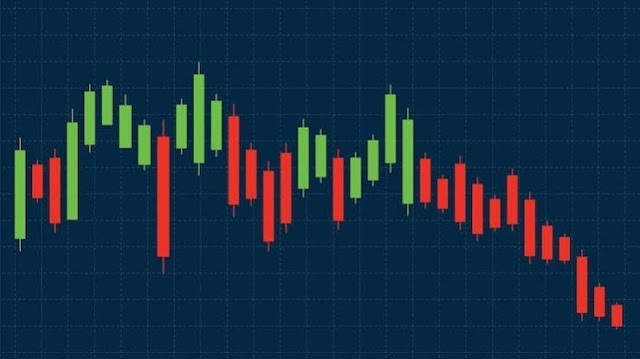
The forex market is different from a traditional stock exchange because it does not operate through one centralized physical exchange. Much of global foreign exchange trading takes place through an over-the-counter network involving banks, financial institutions, liquidity providers, corporations, brokers and other market participants.
This decentralized structure contributes to the market’s global reach and allows currency trading to continue across major financial centres during the working week.
Why Does the Forex Market Matter?
Foreign exchange is not simply a marketplace for speculative traders. It plays an important role in the global economy because international commerce depends on the ability to convert one currency into another.
A company importing goods from another country may need to exchange its domestic currency for the currency of its supplier. A multinational corporation may need foreign currency to pay employees or suppliers overseas. Governments and central banks also participate in foreign exchange markets as part of broader economic and monetary operations.
For investors and traders, currency prices can also provide information about changing expectations surrounding interest rates, economic growth, inflation, political developments and global risk sentiment.
This is why understanding forex requires more than studying charts. Currency markets are closely connected to the broader global economy.
Understanding the Forex Market
The forex market operates through a global network of financial centres rather than a single exchange. As major financial centres open and close, trading activity moves across different regions of the world.
The commonly discussed major trading sessions are:
- Asian session: Often associated with activity around Tokyo and other Asian financial centres.
- London session: One of the most important periods for global foreign exchange activity.
- New York session: A major trading period for North American and international participants.
There are periods when these sessions overlap. Such overlaps can attract increased participation and liquidity, although market conditions can vary from one day to another.
For traders, this means that time of day can influence market behaviour. Some currency pairs may experience greater activity during particular sessions because the currencies involved are connected to economies whose financial centres are active at that time.
What Moves Currency Prices?
Currency prices are constantly influenced by changing expectations. Traders and institutions continuously reassess the economic and political outlook for different countries and regions.
Some of the major forces that can influence currency markets include:
- Interest-rate expectations and central-bank policy.
- Inflation and changes in consumer prices.
- Economic growth and gross domestic product data.
- Employment conditions and labour-market reports.
- Political developments and government policy.
- Geopolitical tensions and international conflicts.
- Commodity prices, particularly for commodity-sensitive economies.
- Investor risk sentiment and demand for perceived safe-haven currencies.
A major economic announcement can therefore produce significant price movement within a short period. However, the direction of the move is not always obvious because markets react not only to the actual data but also to how that data compares with expectations.
Key Forex Terminology Every Beginner Should Know
Before developing a trading strategy, it is essential to understand the basic vocabulary used throughout the forex industry.
Currency Pair
A currency pair represents the exchange rate between two currencies. In GBP/USD, for example, GBP is the base currency and USD is the quote currency.
The first currency tells you what is being valued, while the second currency provides the price used to express that value.
Base Currency
The base currency is the first currency in a currency pair. In EUR/USD, the euro is the base currency.
Quote Currency
The quote currency is the second currency in a pair. In EUR/USD, the U.S. dollar is the quote currency.
Pip
A pip is a commonly used unit for measuring movement in a currency pair. For many major currency pairs, a pip is represented by the fourth decimal place, although pairs involving the Japanese yen traditionally use the second decimal place.
Modern trading platforms can also quote currencies in fractional pip increments, sometimes called pipettes. Understanding the value of a pip is important because it helps traders calculate potential gains, losses and position sizes.
Spread
The spread is the difference between the bid price and the ask price. It represents one of the basic transaction costs that traders encounter when entering a position.
Spreads can vary depending on the currency pair, market conditions, broker, liquidity and time of day. During periods of high volatility or reduced liquidity, spreads can widen.
Leverage
Leverage allows a trader to control a position larger than the amount of capital deposited in the trading account. While leverage can increase the potential return on a small amount of capital, it also increases the potential size of losses.
For this reason, leverage should never be viewed simply as a way to make larger profits. Used without proper risk controls, it can cause losses to accumulate rapidly.
Margin
Margin is the amount of funds required by a broker to maintain a leveraged trading position. It is important to distinguish margin from the actual amount a trader is willing to lose on a trade.
A trader may use a relatively small margin requirement while still being exposed to a much larger market position. Effective risk management must therefore focus on the potential loss of the position rather than simply the margin required to open it.
Liquidity
Liquidity refers to the ability to buy or sell an asset without causing a significant change in its price. Major currency pairs generally attract substantial trading activity, while less frequently traded pairs can behave differently.
Liquidity is particularly important because it can influence execution quality, spreads and the way prices behave during periods of intense market activity.
Build Your Forex Foundation With SkyPress
If you want to move beyond basic terminology and develop a structured understanding of forex trading, explore the SkyPress Forex Trading Full Course.
You can also explore more market education through the SkyPress Forex Markets section.
The Major, Minor and Exotic Currency Pairs
Currency pairs are often grouped according to their trading characteristics and the currencies they contain.
Major Currency Pairs
Major pairs generally involve the U.S. dollar and another highly traded global currency. Examples include EUR/USD, GBP/USD, USD/JPY, USD/CHF, AUD/USD, USD/CAD and NZD/USD.
These pairs tend to receive significant global attention and often benefit from substantial liquidity, although their trading conditions can change depending on market circumstances.
Minor Currency Pairs
Minor pairs, sometimes called cross-currency pairs, generally involve major currencies but do not include the U.S. dollar. Examples include EUR/GBP, EUR/JPY and GBP/JPY.
Exotic Currency Pairs
Exotic pairs generally combine a major currency with the currency of an emerging or smaller economy. They may offer different opportunities but can also involve wider spreads, lower liquidity and greater price volatility.
For beginners, understanding the characteristics of the pair being traded is more important than simply choosing a pair because it appears volatile or attractive.
Forex Trading Strategies
There is no universal forex strategy that guarantees consistent profits. A strategy is best understood as a structured set of rules that helps a trader determine when to enter a market, where to place a protective stop, how to manage an open position and when to exit.
The most appropriate trading style depends on several factors, including available time, trading experience, risk tolerance, account size, personality and ability to remain disciplined under pressure. A strategy that suits a full-time trader may be completely unsuitable for someone who can only monitor the market for a few hours each week.
Rather than constantly switching between strategies, developing traders should generally spend time understanding one approach, testing it under different market conditions and keeping detailed records of its performance.
Scalping
Scalping is a very short-term trading approach in which traders attempt to capture relatively small price movements. Positions may remain open for seconds or minutes, and some scalpers execute numerous trades during a single session.
Because the individual profit target on each trade can be small, transaction costs, execution speed and market liquidity become particularly important. Scalping also requires intense concentration and the ability to make decisions quickly.
The fast pace of scalping can make it psychologically demanding. It may therefore be inappropriate for beginners who have not yet developed a clear trading plan, risk controls and emotional discipline.
Day Trading
Day trading involves opening and closing positions within the same trading day. The trader generally attempts to benefit from intraday price movements without intentionally carrying positions into the next trading session.
Day traders may combine technical analysis with economic-calendar awareness to identify potential opportunities. They often pay close attention to periods when liquidity and volatility increase, such as major market-session overlaps or significant economic announcements.
Although day trading can reduce certain overnight risks, it does not eliminate trading risk. Rapid market movements can still result in substantial losses, particularly when leverage is used aggressively.
Swing Trading
Swing trading focuses on capturing medium-term price movements. A position may be held for several days or, depending on the setup and market conditions, several weeks.
Swing traders often use support and resistance, trend analysis, chart patterns, moving averages and momentum indicators. Fundamental developments may also be considered because economic events can influence a trade that remains open for multiple sessions.
One advantage of swing trading is that it generally requires less constant screen time than scalping. However, traders must be prepared for overnight and weekend market risks when positions remain open.
Position Trading
Position trading is a longer-term approach in which trades can remain open for weeks, months or potentially longer. Instead of focusing primarily on short-term fluctuations, position traders seek to participate in broader economic and market trends.
This style may place greater emphasis on monetary policy, interest-rate expectations, economic growth, inflation, structural changes and long-term market trends.
Because positions can remain open for extended periods, patience and appropriate position sizing are particularly important. Short-term price movements that would concern a scalper may be relatively insignificant to a position trader whose thesis is based on a much longer timeframe.
Choosing a Trading Style
The goal should not be to select the strategy that appears capable of generating the largest returns. A better approach is to choose a method that fits your available time, knowledge, risk tolerance and ability to follow rules consistently.
Technical Analysis in Forex Trading
Technical analysis is the study of price behaviour and market data in an attempt to identify potential trading opportunities. Rather than beginning with an assessment of a country’s economy, technical traders primarily examine charts and historical market behaviour.
Technical analysis does not provide certainty about what will happen next. Instead, it gives traders a framework for identifying scenarios in which the probability of a particular outcome may appear favourable.
A strong technical-analysis process can include several complementary elements rather than relying on a single indicator.
Price Charts
Charts provide a visual representation of how a currency pair has moved over time. Common chart types include line charts, bar charts and candlestick charts.
Candlestick charts are particularly popular among forex traders because each candle can display the opening price, closing price, highest price and lowest price for a selected period.
By studying these movements, traders can evaluate momentum, volatility, trends and potential areas where buyers or sellers may become more active.
Support and Resistance
Support and resistance are fundamental concepts in technical analysis. A support area is a price region where buying interest has historically helped limit or slow downward movement. Resistance is an area where selling pressure has previously limited or slowed upward movement.
These levels should not automatically be treated as exact prices. Markets can move through a level temporarily before reversing, or break through an area and continue in the same direction.
For this reason, traders often consider confirmation, market structure and price behaviour around these areas rather than assuming that every support or resistance level will hold.
Trends and Market Structure
A trend describes the broader direction in which price is moving. Traders commonly identify upward trends through a sequence of higher highs and higher lows, while downward trends are often characterized by lower highs and lower lows.
A market can also move sideways within a range rather than establishing a clear directional trend. Recognizing whether a market is trending or ranging is important because a strategy that performs well in one environment may perform poorly in another.
This is one reason professional trading should begin with market context rather than immediately searching for an entry signal.
Technical Indicators
Technical indicators use mathematical calculations derived from market data to help traders interpret price behaviour. Popular examples include moving averages, the Relative Strength Index (RSI), Moving Average Convergence Divergence (MACD), Bollinger Bands and Average True Range (ATR).
Moving averages can help traders identify trends and smooth short-term price fluctuations. RSI is commonly used to evaluate momentum and identify conditions that may warrant closer examination. MACD can be used to study momentum and trend relationships, while ATR is frequently used as a measure of market volatility.
Indicators should not be treated as automatic buy or sell machines. Different indicators can produce conflicting signals, and an indicator that performs well in one market environment may become less useful in another.
For a deeper introduction to technical analysis, explore the SkyPress Technical Analysis Course .
Chart Patterns
Chart patterns are recurring formations that traders use to interpret potential changes in market direction or continuation of an existing trend.
Examples include:
- Head and Shoulders: Often studied as a potential reversal formation.
- Double Top and Double Bottom: Patterns that may indicate an attempted reversal after a strong directional movement.
- Triangles: Consolidation structures that can precede significant price expansion.
- Flags and Pennants: Short-term consolidation formations that traders may study within established trends.
A pattern should never be considered a guarantee. Context matters, and traders should consider volume where relevant, market structure, timeframe, nearby support or resistance and broader economic conditions.
Fundamental Analysis in Forex
Fundamental analysis approaches the forex market from a different perspective. Instead of concentrating primarily on historical price patterns, it examines economic, financial and political factors that may influence the relative value of currencies.
The central idea is that currencies are connected to the economic conditions and monetary policies of the countries or regions that issue them.
Interest Rates and Central Banks
Interest rates are among the most closely watched drivers of currency markets. Central banks use monetary policy to influence borrowing conditions, inflation and economic activity.
When expectations surrounding interest rates change, currency markets can respond rapidly as traders reassess the relative attractiveness of different currencies.
Major central banks, including the Federal Reserve, European Central Bank, Bank of England, Bank of Japan and others, can therefore have a significant influence on global currency sentiment.
Inflation
Inflation measures the rate at which the prices of goods and services increase over time. Traders pay attention to inflation data because persistent changes in inflation can influence central-bank decisions.
Consumer Price Index (CPI) releases are among the economic reports frequently monitored by forex participants. However, a single inflation report does not automatically determine the direction of a currency. Market expectations and the broader economic context also matter.
Employment Data
Employment figures provide information about the health of an economy. Strong or weak labour-market data can influence expectations surrounding economic growth and monetary policy.
For currencies such as the U.S. dollar, major employment releases can produce substantial short-term volatility because traders immediately reassess what the data could mean for future interest-rate decisions.
Gross Domestic Product
Gross domestic product, commonly known as GDP, measures the value of economic activity within an economy over a particular period. Stronger-than-expected growth can influence perceptions of economic strength, while weaker growth can contribute to concerns about slowing activity.
Forex traders generally compare economic releases with market expectations rather than looking only at whether a figure increased or decreased.
Geopolitical Events
Political elections, diplomatic tensions, conflicts, trade disputes and changes in government policy can affect currency markets by changing perceptions of economic stability and risk.
Geopolitical developments can also increase demand for currencies that investors perceive as relatively defensive during periods of uncertainty.
Technical vs. Fundamental Analysis: Which Is Better?
The debate over whether technical or fundamental analysis is superior has continued for decades. In practice, traders do not necessarily need to choose one and completely reject the other.
Technical analysis can help answer questions such as:
- Where is the market currently trading?
- Is the market trending or ranging?
- Where are important support and resistance areas?
- Where could a trade potentially be invalidated?
- What price behaviour could confirm or weaken a setup?
Fundamental analysis can help answer different questions:
- What is happening in the underlying economy?
- What are central banks expected to do?
- Are interest-rate expectations changing?
- Which economic releases could affect the currency?
- What broader risks could influence market sentiment?
Combining the two approaches can therefore provide a broader framework. A trader might use fundamental analysis to establish a directional bias and technical analysis to identify potential entry, stop-loss and exit areas.
Take Your Analysis Further
SkyPress provides educational resources designed to help traders understand both sides of market analysis. Explore Technical and Fundamental Analysis to develop a more complete market-analysis framework.
You can also continue learning through the SkyPress Forex Markets and Trading Insights section.
Building a Complete Forex Trading Framework
A trading strategy becomes more useful when it is transformed into a complete decision-making framework. Instead of entering trades based on isolated signals, a trader should define the conditions that must be present before a position is opened.
A practical framework may include:
- Market context: Determine whether the market is trending, ranging or undergoing a major transition.
- Fundamental context: Review relevant economic developments, central-bank expectations and scheduled high-impact events.
- Technical setup: Identify a clearly defined price structure or technical condition.
- Entry trigger: Establish what specific behaviour must occur before entering.
- Risk level: Determine where the trade idea would be considered invalid.
- Position size: Calculate the trade size according to the amount of capital being risked.
- Exit plan: Establish profit-taking and trade-management rules before entering.
- Review: Record the result and evaluate whether the trade followed the original plan.
This process helps separate disciplined trading from emotional decision-making. The objective is not to predict every market movement correctly, but to create a repeatable process for managing uncertainty.
Risk Management in Forex Trading
If there is one area that separates a structured trading approach from reckless speculation, it is risk management. No technical indicator, trading strategy or market prediction can eliminate uncertainty. Every trade carries the possibility of loss.
The objective of risk management is therefore not to prevent every losing trade. Instead, it is to ensure that individual losses remain controlled and that a series of unsuccessful trades does not cause catastrophic damage to the trading account.
A trader can have a strategy with a reasonable historical performance and still lose money if position sizes are excessive, leverage is poorly controlled or losses are allowed to grow beyond the original plan.
Core principle: Your first responsibility as a trader is to protect your trading capital. Profit is the potential reward for taking calculated risk; capital preservation allows you to remain in the market long enough to learn and improve.
How Much Should You Risk on One Trade?
Many traders use a small percentage of their account balance as the maximum amount they are prepared to lose on an individual trade. A commonly discussed guideline is risking around 1% of trading capital per position, although the appropriate amount depends on an individual’s circumstances, strategy and risk tolerance.
For example, if a trader has a $5,000 account and chooses to risk 1%, the maximum planned loss would be approximately $50 before trading costs and potential execution differences.
The important point is that the percentage should be determined before the trade is opened. Position size should then be adjusted according to the distance between the entry price and the stop-loss level.
Risking a fixed percentage can also help protect an account during a losing streak. Several consecutive losses can still reduce the account balance, but controlled position sizing makes it less likely that a short-term period of poor performance will completely destroy the account.
Position Sizing
Position sizing determines how large a trade should be relative to the amount of capital being placed at risk. It is one of the most important calculations in a trading plan.
A simplified risk-management framework can be expressed as:
Position Size = Amount of Money Willing to Risk ÷ Risk Per Unit
In actual forex trading, calculating position size requires consideration of the currency pair, account currency, pip value, trade size and stop-loss distance. Trading platforms and position-size calculators can assist with the arithmetic, but traders should understand the underlying principle rather than relying blindly on a calculator.
The key relationship is straightforward: a wider stop-loss generally requires a smaller position if the trader wants to keep the monetary risk constant. A tighter stop can allow a larger position for the same planned monetary risk, although placing a stop too close to normal market fluctuations can increase the probability of being stopped out unnecessarily.
Using Stop-Loss Orders
A stop-loss is an order or predefined exit mechanism designed to limit a trade’s loss if the market moves against the trader.
A stop-loss should be connected to the logic of the trade rather than selected randomly. For example, if a trader enters because a particular support area is expected to hold, the stop may need to be positioned beyond a level where that trade thesis would no longer make sense.
However, a stop-loss does not guarantee an exact exit price in every market condition. During periods of extreme volatility, low liquidity or significant price gaps, execution can differ from the intended stop level.
This is another reason why position sizing matters. Traders should not assume that a stop-loss completely removes market risk.
Risk-to-Reward Ratio
The risk-to-reward ratio compares the potential loss of a trade with its potential profit. For example, a trade risking $50 in pursuit of a potential $100 gain has a nominal risk-to-reward ratio of 1:2.
A favourable risk-to-reward relationship can be useful because a trader does not necessarily need to win every trade to remain profitable over a large sample of trades. However, a high ratio by itself does not make a trade good.
A trade targeting a very large profit while having an extremely low probability of reaching that target may still be unattractive. The relationship between win rate, average win, average loss, transaction costs and execution quality is what ultimately matters.
Understanding Drawdown
Drawdown refers to a decline in trading capital from a previous peak to a subsequent low before the account recovers.
For example, if an account grows from $10,000 to $12,000 and later falls to $10,800, the decline from the $12,000 peak represents a drawdown of $1,200, or 10%.
Drawdowns are a normal part of many trading systems. The challenge is ensuring that they remain within a level that the trader can financially and psychologically tolerate.
Large losses become increasingly difficult to recover from because the required percentage gain rises as the account falls. A 10% loss requires approximately an 11.1% gain to return to the original balance, while a 50% loss requires a 100% gain.
This demonstrates why protecting capital is often more important than attempting to maximize returns on every individual trade.
Leverage: Opportunity and Risk
Leverage is one of the most misunderstood concepts in forex trading. It allows traders to control a larger market position using a smaller amount of account capital.
While leverage can increase capital efficiency, it does not reduce the underlying market risk of the position. A leveraged position can generate gains quickly, but the same mechanism can accelerate losses.
A common mistake among inexperienced traders is to think about how much they can potentially make rather than how much they could lose if the market moves against them.
A disciplined trader therefore determines acceptable risk first and chooses the position size accordingly. The availability of high leverage does not mean that high leverage must be used.
Trading Psychology: The Human Side of Forex
A technically sound trading strategy can still fail when emotions consistently override the trading plan. Trading psychology refers to the mental and emotional factors that influence decision-making before, during and after trades.
Fear, greed, impatience, frustration and the fear of missing out can all influence behaviour. Understanding these psychological pressures is therefore an essential part of becoming a disciplined trader.
Fear of Losing
Fear can cause traders to hesitate when a valid setup appears, close positions prematurely or avoid taking the next trade after experiencing a loss.
One way to reduce emotional pressure is to determine the maximum acceptable risk before entering the position. When the amount at risk is small enough to be psychologically manageable, it becomes easier to follow the original plan.
Fear of Missing Out
FOMO occurs when a trader feels compelled to enter the market because price is moving rapidly and they fear missing an opportunity.
This often results in entering after a large move has already occurred, abandoning normal entry criteria or increasing position size without proper justification.
A disciplined trader accepts that not every market movement needs to be traded. Missing an opportunity is generally less damaging than entering a poor-quality trade simply because the market is moving.
Greed
Greed can encourage traders to increase position sizes, move profit targets without a clear reason or remain in trades after the original plan has changed.
The solution is not to eliminate ambition but to create predefined rules that prevent emotional decisions from controlling risk.
Revenge Trading
Revenge trading occurs when a trader attempts to recover a recent loss quickly by taking additional trades, increasing position sizes or abandoning established rules.
This behaviour can create a dangerous cycle: one loss produces frustration, frustration leads to an impulsive trade, the second loss increases emotional pressure, and the trader takes even greater risks.
A trading plan should therefore include rules for what happens after a significant loss or a sequence of losses. Sometimes the most productive decision is simply to step away from the market and return with a clear mind.
Developing a Professional Trading Mindset
Professionalism in trading does not mean winning every trade. It means treating each trade as one event within a larger process.
A disciplined trader understands that:
- A profitable trade does not automatically mean the decision was good.
- A losing trade does not automatically mean the strategy was bad.
- No setup is guaranteed to work.
- Risk should be defined before entering a position.
- Trading decisions should be based on a repeatable process rather than emotion.
- Performance should be evaluated over a meaningful sample of trades.
This mindset shifts attention away from the outcome of one trade and toward the quality of the overall process.
Keeping a Forex Trading Journal
A trading journal can turn trading activity into a source of measurable information. Instead of relying on memory, traders can record the reasoning behind each position and later examine what worked and what did not.
A useful trading journal can include:
- Currency pair traded.
- Date and time of entry.
- Entry price.
- Stop-loss level.
- Profit target or exit plan.
- Position size.
- Amount of capital risked.
- Trading setup and market conditions.
- Reason for entering the trade.
- Reason for closing the trade.
- Final result.
- Emotional state before and during the trade.
- Lessons learned.
Over time, these records can reveal patterns that are difficult to identify from individual trades. A trader may discover, for example, that performance deteriorates when trading outside preferred market hours, after a losing streak or during major economic announcements.
Explore More Forex Education From SkyPress
Risk management, analysis and psychology work together. Visit the SkyPress Forex Trading Full Course for a broader learning path covering the foundations of forex trading.
You can also browse the latest educational articles and market insights in the SkyPress Forex Markets category.
Risk Management Checklist Before Every Trade
Before placing a trade, a trader can use a simple checklist to reduce impulsive decisions:
- Do I understand why I am considering this trade?
- Is the market environment suitable for my strategy?
- Have I identified a clear entry condition?
- Where is the trade invalidated?
- Where will my stop-loss be placed?
- How much money am I willing to risk?
- Is the position size consistent with that risk?
- Is there a clearly defined exit plan?
- Are there major economic announcements that could affect the position?
- Am I entering because of my strategy or because of fear, greed or FOMO?
If several of these questions cannot be answered clearly, there may be a strong case for waiting rather than forcing a trade.
Choosing a Forex Broker and Trading Platform
Understanding the forex market is only one part of becoming a prepared trader. Before you can put your market knowledge into practice, you need access to a trading environment that is legitimate, transparent and appropriate for your needs.
A forex broker acts as an important gateway between the trader and the trading environment. The broker may provide the trading account, platform, pricing, execution infrastructure, market information and other services required to participate in the market.
That makes broker selection an important decision. A trader can have a carefully developed strategy and still encounter serious problems if the broker is poorly regulated, unclear about its fees, unreliable with withdrawals or unsuitable for the trader’s requirements.
For traders in Kenya, broker regulation deserves particular attention. Kenya has a regulatory framework governing online foreign exchange brokers, and the applicable regulations require firms conducting online forex brokerage activities to obtain the relevant licence. 0
1. Check the Broker’s Regulation
Regulation should be one of the first things a prospective trader investigates before depositing money. A broker’s website may display regulatory information, but traders should independently verify the firm’s licence with the relevant regulator rather than relying solely on marketing claims.
Regulation does not eliminate all trading or counterparty risk, but it can provide an important framework for supervision, disclosure and client protection. Regulators may impose requirements relating to financial resources, business conduct, client funds and complaint handling.
For example, Kenya’s online forex regulations contain requirements concerning client funds, conduct standards, risk disclosures and other obligations applicable to licensed brokers. 1
Internationally, regulatory requirements vary considerably between jurisdictions. A trader should therefore determine exactly which legal entity will hold the account and which regulator supervises that particular entity.
SkyPress principle: Never choose a broker simply because it promises high returns, unusually high leverage, bonuses or attractive promotional offers. Investigate the company behind the account and verify its regulatory status first.
2. Understand the Difference Between a Broker and a Trading Platform
A broker and a trading platform are not necessarily the same thing. The broker provides the trading account and associated services, while the platform is the software through which traders view prices, analyze charts and place orders.
Popular trading platforms may be available through multiple brokers. This means that recognizing a familiar platform should not automatically be interpreted as proof that the broker itself is trustworthy.
The platform should therefore be evaluated separately from the company providing access to it.
3. Compare Spreads and Commissions
Trading costs can have a significant effect on long-term results, particularly for traders who execute many positions.
The spread is the difference between the bid and ask prices. Some brokers primarily earn through spreads, while others may combine relatively tight spreads with a separate commission.
A broker advertising “zero commission” does not necessarily mean that trading is free. The cost may instead be reflected in the spread or other account charges. Investors should therefore examine the complete cost structure rather than focusing on a single advertised figure. 2
Potential costs to investigate include:
- Bid-ask spreads.
- Trading commissions.
- Overnight financing or swap charges.
- Deposit and withdrawal charges.
- Currency-conversion costs.
- Inactivity or account-maintenance fees, where applicable.
The cheapest-looking broker is not necessarily the best broker. Execution quality, regulation, platform reliability, customer support and the overall quality of service should also be considered.
4. Examine the Trading Platform
A trading platform should provide the tools necessary to analyze markets and manage positions efficiently.
Depending on your trading style, useful features may include:
- Real-time or appropriately delayed market prices.
- Multiple chart types and timeframes.
- Technical indicators.
- Drawing and annotation tools.
- Different order types.
- Position and account information.
- Economic-calendar integration or access to market information.
- Mobile and desktop access where appropriate.
- Reliable order execution and account reporting.
The best platform is not necessarily the one with the largest number of indicators. In many cases, simplicity can be an advantage. A trader should be able to locate important information quickly and execute the trading plan without unnecessary complexity.
5. Understand Order Types
Before trading with real money, it is important to understand how the platform handles different types of orders.
Market Orders
A market order instructs the broker or trading system to execute a position at the available market price, subject to the platform’s execution conditions.
Limit Orders
A limit order is generally used when a trader wants to enter or exit at a specified price or better, depending on the direction and type of order.
Stop Orders
Stop orders can be used to enter a trade when price reaches a specified level or as part of a predefined exit strategy.
The exact behaviour of orders can differ between brokers and market conditions. Traders should therefore understand the broker’s execution policy and order documentation before relying on a particular order type.
6. Test the Broker Before Committing Significant Capital
A demo account can be useful for becoming familiar with a platform before committing substantial capital. It allows a new trader to practice chart analysis, order placement and trade management in a simulated environment.
However, a demo account should not be treated as identical to live trading. The psychological pressure associated with real money is different, and execution conditions may also differ.
A sensible progression is to first learn the platform, then practice the trading process, and only consider live trading when the trader understands the mechanics and accepts the possibility of losses.
7. Examine Deposits and Withdrawals
A broker’s funding and withdrawal procedures deserve as much attention as its trading conditions.
Before depositing funds, determine:
- Which payment methods are supported.
- Whether deposits and withdrawals carry fees.
- How long withdrawals normally take.
- What identity-verification requirements apply.
- Whether the withdrawal must be made through a particular method.
- Which legal entity is responsible for the account.
Regulatory authorities have repeatedly warned investors about fraudulent forex dealers, including situations where customers experience problems withdrawing funds or are asked to make additional payments before their money can supposedly be released. 3
A trader should never assume that a professional-looking website or sophisticated mobile application automatically means that a company is legitimate.
8. Avoid Broker Selection Based on Leverage Alone
High leverage can appear attractive because it allows a trader to control a larger position with a smaller amount of capital. However, leverage also increases the potential impact of relatively small market movements.
The availability of high leverage should therefore not be used as the primary criterion for selecting a broker.
Instead, traders should first evaluate regulation, reputation, costs, execution, available markets, platform quality, customer service and the suitability of the account for their trading objectives.
9. Be Careful With Forex Promotions and Trading Signals
Forex marketing can sometimes create unrealistic expectations. Promises of guaranteed returns, instant wealth, risk-free trading or exceptionally high success rates should be treated with extreme caution.
The same applies to trading signals and social-media personalities who present winning trades without showing the complete record of their losing trades, costs or risk.
A successful trading education should teach traders how to analyze and make decisions for themselves rather than creating permanent dependence on another person’s signals.
10. Build Your Own Broker Due-Diligence Checklist
Before opening a live account, a trader can use the following checklist:
- Is the broker properly regulated in the jurisdiction relevant to my account?
- Have I independently verified the licence?
- Do I understand which legal entity will hold my account?
- Are the spreads and commissions clearly disclosed?
- Do I understand overnight and other potential charges?
- Is the trading platform reliable and suitable for my strategy?
- Have I tested the platform using a demo account?
- Do I understand the deposit and withdrawal procedures?
- Have I read the broker’s client agreement and risk disclosures?
- Am I choosing the broker for its overall suitability rather than promotional promises?
This type of due diligence may take some additional time, but it is a much better approach than selecting a broker based on an advertisement or the recommendation of an anonymous online account.
Continue Your SkyPress Forex Education
Choosing the right trading environment is only the beginning. Once you understand how the market works, the next step is developing a structured approach to analysis and execution.
Continue with the SkyPress Forex Trading Full Course or explore the wider Forex Markets section for additional educational resources.
Building a Complete Forex Trading Plan
Knowledge becomes much more useful when it is converted into a repeatable process. A trader may understand currency pairs, technical indicators, economic data and market structure, but without a clearly defined plan, those pieces of information can easily become overwhelming.
A forex trading plan is a written framework that explains how you intend to approach the market. It defines what you trade, when you trade, what conditions you look for, how you make decisions and how you evaluate your performance.
The purpose of a trading plan is not to predict every future price movement. Markets are uncertain. Instead, the plan gives you a consistent method for responding to different market conditions.
A useful principle: A trading plan should be specific enough to guide your decisions but simple enough that you can actually follow it.
1. Define Your Trading Objective
Before choosing a strategy, establish what you are trying to accomplish through forex trading.
Your objective might be to learn how financial markets work, develop a systematic trading skill, supplement your existing investment knowledge or eventually pursue trading as a serious business activity.
The objective matters because it influences the amount of time you can dedicate to research, the trading style you choose and the way you measure progress.
A beginner whose primary objective is education should not approach the market in the same way as an experienced trader managing a systematic strategy.
2. Choose a Trading Style That Fits Your Life
Your trading style should fit your available time rather than forcing your daily routine to revolve around the market.
If you have limited time during the day, constantly watching one-minute or five-minute charts may be impractical. A higher-timeframe approach may be more compatible with your schedule.
Similarly, someone who enjoys detailed market observation and can dedicate substantial time to the markets may prefer a shorter-term approach.
Consider:
- How many hours can I realistically dedicate to market analysis?
- Can I monitor positions during the trading session?
- Do I prefer fast decisions or slower analysis?
- How comfortable am I holding positions overnight?
- Can I remain patient when there is no valid setup?
The best trading style is not necessarily the fastest or most active one. It is the one that you can execute consistently.
3. Decide Which Currency Pairs to Trade
Trying to monitor every currency pair can create unnecessary information overload. Many traders find it more productive to build familiarity with a smaller group of instruments.
For example, a trader might focus primarily on major pairs such as EUR/USD, GBP/USD, USD/JPY, AUD/USD or USD/CAD.
The choice should be based on factors such as liquidity, volatility, trading costs, personal familiarity and the strategy being used.
A focused watchlist also makes it easier to understand how particular currency pairs behave around economic announcements and different market sessions.
4. Select Your Preferred Timeframes
Forex markets can look completely different depending on the timeframe being examined.
A currency pair may be trending upward on a daily chart while experiencing a short-term decline on a one-hour chart. Neither chart is necessarily wrong; they are simply showing different portions of the market’s behaviour.
A multi-timeframe approach can help traders establish context before making decisions.
For example:
- Higher timeframe: Used to understand the broader market structure and directional environment.
- Middle timeframe: Used to study the developing setup.
- Lower timeframe: Used by some traders to refine an entry.
The exact combination should depend on the trading strategy. There is no requirement to use multiple timeframes if doing so adds unnecessary complexity.
5. Define Your Market Conditions
A strong trading plan should explain the type of market environment in which the strategy is designed to operate.
For example, a trend-following strategy may be designed for markets displaying clear directional movement, while a range-based strategy may be designed for periods when price repeatedly moves between identifiable areas of support and resistance.
This distinction is important because many strategies perform differently depending on market conditions.
Before entering a trade, ask:
- Is the market trending?
- Is price consolidating?
- Is volatility increasing or decreasing?
- Is the market approaching an important technical area?
- Is a major economic announcement approaching?
The answers help provide context for the trading decision.
6. Create Clear Entry Rules
One of the biggest weaknesses in an informal trading approach is the absence of objective entry criteria.
A trader might say, “The chart looks bullish,” but that statement is too vague to form a repeatable strategy.
A stronger plan identifies specific conditions that must occur before entering a trade.
For example, an entry framework might require:
- A clearly defined market trend or structure.
- Price reaching a predetermined technical area.
- A specific price-action confirmation.
- No major event that invalidates the setup.
- Confirmation that the trade meets the trader’s predefined risk parameters.
The exact rules will differ between strategies. What matters is that the trader knows what constitutes a valid setup before entering.
7. Define When Not to Trade
A professional trading plan should include conditions for staying out of the market.
This is often overlooked because beginners tend to focus entirely on finding opportunities. However, knowing when to remain on the sidelines can be just as important as knowing when to participate.
Potential no-trade conditions might include:
- Unclear or highly erratic market structure.
- Extremely low liquidity.
- Trading outside the strategy’s preferred session.
- Major economic announcements when the strategy is not designed for news volatility.
- Emotional or psychological fatigue.
- A setup that does not meet all predefined criteria.
There is no requirement to trade simply because the market is open.
8. Establish Entry and Exit Logic Before Entering
A trade should ideally have a defined plan before the position is opened. This includes the reason for entering, the conditions that would invalidate the idea and the circumstances under which profits may be taken.
This does not mean that every trade must have a rigid target that can never change. Markets evolve, and experienced traders may adapt their management rules. But those adjustments should be based on predefined principles rather than emotional reactions to short-term price movements.
Having an exit framework also reduces the temptation to make decisions based solely on fear or excitement once money is at stake.
9. Keep Your Strategy Simple
More indicators do not automatically produce better analysis.
A chart containing moving averages, oscillators, trend lines, Fibonacci tools, multiple market-structure indicators and numerous signals can become more confusing rather than more informative.
A simpler framework may be easier to understand, test and execute consistently.
For example, a trader could build a strategy around:
- Market structure.
- One or two key technical tools.
- Clearly identified support and resistance.
- A defined entry trigger.
- A predetermined trade-management process.
The goal is not to create the most complicated system. The goal is to create a system whose logic you understand well enough to evaluate objectively.
10. Separate Analysis From Execution
Good analysis does not automatically produce good trading decisions. A trader can correctly identify the broader direction of a currency pair and still enter at an unsuitable price or at the wrong time.
It can therefore be useful to separate the process into two stages.
Analysis asks: What is happening in the market?
Execution asks: Does the current situation satisfy the conditions of my trading plan?
This distinction can prevent traders from entering a position simply because they have developed a strong opinion about where price should go.
11. Create a Pre-Trade Routine
A pre-trade routine can help turn analysis into a consistent process.
A simple routine might look like this:
- Review the major market developments.
- Check the economic calendar.
- Identify the currencies and pairs worth monitoring.
- Assess the higher-timeframe market structure.
- Mark important technical areas.
- Wait for the strategy’s entry conditions.
- Review the trade against the written plan.
- Execute only if the setup qualifies.
The routine does not need to be complicated. Its purpose is to reduce impulsive decisions and ensure that important information is considered before a trade is placed.
12. Review Your Trading Plan Regularly
A trading plan should not be treated as a document that is written once and never revisited.
Markets change, personal circumstances change and strategies can reveal weaknesses after sufficient testing. Regular review allows traders to distinguish between temporary poor performance and genuine problems with their methodology.
However, there is an important distinction between reviewing a strategy and changing a strategy after every losing trade.
Constantly modifying a system based on a small number of outcomes can prevent a trader from ever collecting enough data to understand whether the original approach works.
Trading Plan Example
A simple trading plan might be structured around the following framework:
| Category | Example Rule |
|---|---|
| Market | Major currency pairs |
| Style | Swing trading |
| Higher timeframe | Daily chart |
| Setup timeframe | 4-hour chart |
| Analysis | Market structure + fundamental context |
| Entry | Predefined technical confirmation |
| Exit | Predefined invalidation and profit-management rules |
| Review | Trading journal and periodic performance analysis |
This is only an educational example, not a recommended trading system. The important lesson is that a trading plan should convert broad ideas into specific, testable rules.
Build Your Knowledge Before Building Your Strategy
A strong trading plan depends on a solid understanding of both market analysis and trading principles. Continue your learning through the SkyPress Forex Trading Full Course.
For readers who want to strengthen their chart-reading skills, the SkyPress Technical Analysis Course provides a dedicated learning path.
How to Read the Forex Market Like a Trader
Successful market analysis begins with learning to read the market as a developing environment rather than searching for a single indicator that tells you what to buy or sell.
Every currency pair is constantly responding to a combination of market expectations, economic information, liquidity, sentiment and price behaviour. The trader’s task is to organize that information into a logical framework.
This means asking a series of questions: What is the market doing? Why might it be doing it? Where are important price areas? What could change the current outlook? And, most importantly, does the current environment actually provide a valid opportunity according to the trading plan?
Start With the Bigger Picture
Before examining a short-term chart, it can be useful to understand the broader market environment.
A higher timeframe can reveal whether a currency pair has been trending, consolidating or moving through a major transition. It can also help identify important price areas that may not be obvious when looking at a smaller timeframe.
For example, a trader may see a short-term bullish pattern on an hourly chart while the daily chart shows that price is approaching a major resistance area. The shorter-term setup may still work, but the larger context changes how the opportunity should be interpreted.
This is why market context should generally come before entry signals.
Understanding Market Structure
Market structure refers to the way price develops a sequence of highs and lows over time. It provides a framework for understanding whether buyers or sellers appear to have greater control.
Higher Highs and Higher Lows
A series of higher highs and higher lows is commonly associated with an upward market structure. It suggests that buyers have been able to push price to progressively higher levels while maintaining higher areas of support.
Lower Highs and Lower Lows
A sequence of lower highs and lower lows is commonly associated with a downward market structure. It suggests that sellers have been able to establish progressively lower areas of price.
Ranges and Consolidation
Not every market is trending. Sometimes price moves sideways between broadly defined support and resistance areas. Such periods are often described as consolidation or range-bound conditions.
Recognizing a range is important because trend-following strategies can behave differently in a sideways environment.
Think in probabilities, not certainties. Market structure can provide useful context, but it does not guarantee that the current trend will continue. A strong trend can reverse, and a breakout can fail.
Trend Analysis
Identifying the prevailing trend is one of the most basic forms of market analysis. Traders may use price structure, trend lines, moving averages or other tools to determine the broader direction of the market.
A common approach is to distinguish between:
- Uptrend: Price generally forms higher highs and higher lows.
- Downtrend: Price generally forms lower highs and lower lows.
- Range: Price moves between relatively defined boundaries without establishing a sustained directional trend.
However, trends exist across different timeframes. A pair can be bullish over several months while experiencing a bearish correction over several days.
This is why traders should define the timeframe that their analysis is intended to address.
Support and Resistance in Market Context
Support and resistance are among the most widely used concepts in forex analysis.
Support represents an area where buying interest has previously emerged, while resistance represents an area where selling pressure has previously appeared.
These should generally be treated as zones rather than perfectly precise lines. Price can move slightly beyond a level before reversing, and market conditions can cause a previously important area to lose its influence.
Traders may pay attention to previous highs and lows, consolidation areas, psychologically important price levels and regions where price has repeatedly reacted.
Breakouts and False Breakouts
A breakout occurs when price moves beyond an established technical boundary such as support, resistance or a consolidation range.
Breakouts can sometimes mark the beginning of a significant directional movement. However, not every breakout succeeds.
A false breakout occurs when price moves beyond a level but subsequently returns inside the previous range. These situations can trap traders who enter immediately without waiting for additional confirmation.
Instead of assuming that every breakout represents a new trend, traders can examine factors such as the strength of the move, subsequent price behaviour, market structure and the broader economic environment.
Understanding Momentum
Momentum describes the strength or speed of price movement. Strong momentum can indicate that buyers or sellers are aggressively participating in the market, although momentum can change quickly.
Indicators such as RSI and MACD are sometimes used to study momentum, but traders can also assess momentum directly through price behaviour.
For example, a market making increasingly strong directional candles may display different momentum characteristics from a market that is gradually drifting higher with frequent pullbacks.
Momentum should therefore be interpreted in context rather than treated as an independent buy or sell signal.
Understanding Volatility
Volatility refers to the magnitude and speed of price changes. High-volatility periods can create larger opportunities but also greater uncertainty.
Volatility often increases around major economic announcements, central-bank decisions, unexpected geopolitical developments and significant changes in market expectations.
Low-volatility periods can produce narrow ranges and slower price movements, although a prolonged period of compression can sometimes be followed by a sharp expansion.
Understanding volatility can help traders decide whether the current environment is appropriate for their chosen strategy.
Using the Economic Calendar
Technical analysis should not be conducted in isolation from major scheduled economic events.
A trader watching EUR/USD, for example, may want to know whether major European or U.S. economic releases are scheduled before making a short-term trading decision.
Important events can include:
- Central-bank interest-rate decisions.
- Inflation reports.
- Employment reports.
- Gross domestic product releases.
- Manufacturing and services surveys.
- Retail-sales data.
- Central-bank speeches and policy statements.
The significance of an announcement depends on market expectations as well as the actual result. A number that appears positive on its own may still produce a negative market reaction if investors expected an even stronger result.
Price Action and Market Context
Price action refers to the study of price movement itself rather than relying exclusively on technical indicators.
Traders may examine candlestick formations, rejection of price areas, breakouts, pullbacks, momentum and changes in market structure.
A candlestick pattern becomes more meaningful when considered within its surroundings. For example, a bullish rejection candle appearing at an important support zone during an established uptrend may provide a different context from the same candle appearing in the middle of an unclear range.
This illustrates a broader principle: the location and context of a signal can matter as much as the signal itself.
Multi-Timeframe Analysis
Multi-timeframe analysis involves examining the same currency pair across different chart periods.
A trader might begin with a weekly or daily chart to establish broad context, move to a four-hour chart to study the developing structure and then use a lower timeframe to refine an entry if the strategy calls for it.
The purpose is not to find confirmation from every possible timeframe. Instead, it is to understand how different layers of market structure relate to each other.
Too many timeframes can create confusion. A trader may find one bullish signal on one chart and a bearish signal on another, resulting in analysis paralysis. The best approach is to define in advance which timeframes are relevant to the strategy.
Combining Technical and Fundamental Context
One of the strongest approaches to market analysis can be to combine price information with an understanding of the economic environment.
Consider a simplified example. Suppose a central bank is expected to maintain relatively restrictive monetary policy while economic data remains stronger than anticipated. This could influence market expectations surrounding the country’s currency.
A technical trader could then monitor the relevant currency pair for a suitable chart structure rather than entering solely because the economic story appears favourable.
Conversely, technical analysis may show a strong setup while an upcoming major economic announcement introduces additional uncertainty. In such a situation, waiting may be more appropriate than forcing an immediate trade.
This approach turns market analysis into a process of context, confirmation and disciplined execution.
Deepen Your Technical and Fundamental Analysis Skills
If you want to study these concepts in greater depth, visit the SkyPress Technical and Fundamental Analysis resource.
You can also explore the SkyPress Technical Analysis Course for a more structured approach to chart analysis.
A Simple Market-Reading Framework
When approaching a currency pair, a trader can organize the analysis into five questions:
- Direction: What is the broader market structure?
- Location: Where is price relative to important technical areas?
- Momentum: Is buying or selling pressure strengthening or weakening?
- Fundamentals: What economic or geopolitical factors could influence the currency?
- Trigger: Has the specific condition required by the trading plan actually occurred?
This framework helps prevent traders from jumping directly from “I think the market will rise” to “I should buy now.”
Between an idea and an executed trade there should be a process. That process is what transforms market observation into a structured trading methodology.
Why Market Context Matters More Than Individual Signals
A common mistake among developing traders is to search endlessly for the perfect indicator or candlestick pattern. In reality, no individual signal can fully describe a complex financial market.
The same technical pattern can produce different outcomes depending on trend direction, liquidity, volatility, economic news and the timeframe being analyzed.
Developing the ability to interpret context therefore becomes more valuable than memorizing dozens of isolated patterns.
The goal is not to predict the market with absolute certainty. It is to recognize situations that fit your methodology, define what would invalidate your interpretation and remain disciplined when the market does something unexpected.
From Strategy to Consistency: Testing, Journaling and Improving Your Trading Process
Understanding the forex market and creating a trading plan are important milestones, but neither guarantees consistent results. A strategy still needs to be examined, tested and refined before a trader can determine whether its rules are practical.
This is where many developing traders make a critical mistake. They discover a strategy online, use it for a few trades, experience several losses and immediately abandon it for something else. Others change their rules after every losing position until they no longer know what their original strategy was designed to do.
A more professional approach is to treat trading as a process of testing, measuring, reviewing and improving.
Consistency does not come from finding a perfect strategy. It comes from developing a process that can be understood, tested, measured and followed with discipline.
What Is Backtesting?
Backtesting involves applying a trading strategy to historical market data to examine how the rules would have performed under previous market conditions.
Suppose a trader develops a strategy based on a particular market structure, technical confirmation and entry condition. Instead of immediately risking real money, the trader can go through historical charts and identify previous situations where the strategy’s conditions appeared.
The trader can then record what would have happened according to the predefined rules.
Backtesting can help answer questions such as:
- Does the strategy generate enough valid setups?
- How does it behave during trending markets?
- How does it perform during sideways conditions?
- Are the entry rules clear enough to apply consistently?
- What types of market conditions appear to produce the strongest results?
- Where does the strategy tend to struggle?
The objective is not to prove that a strategy will make money in the future. Historical performance cannot guarantee future results. Instead, backtesting provides evidence that can help a trader understand the behaviour of a methodology.
How to Conduct a Useful Backtest
A meaningful backtest should follow the rules of the strategy as consistently as possible.
For example, if the strategy requires a particular market structure and confirmation signal, the trader should not selectively record only the historical examples that eventually produced profitable trades.
A simple backtesting process can involve:
- Selecting a currency pair and timeframe.
- Defining the historical period to examine.
- Writing the strategy rules before reviewing the results.
- Moving through the historical chart systematically.
- Recording every qualifying setup.
- Recording losing, winning and invalid setups according to the same rules.
- Reviewing the results after collecting a meaningful sample.
The more objective the process, the more useful the resulting information becomes.
Do Not Change the Rules Halfway Through a Test
One of the biggest problems with informal backtesting is changing the strategy whenever the results become uncomfortable.
For example, a trader may initially decide that a particular confirmation is required. After seeing several losing trades, the trader may add another indicator. After another group of losses, another filter is introduced.
Eventually, the strategy may look impressive on the specific historical data that was used to develop it but perform poorly when exposed to new market conditions.
This is one reason traders should distinguish between developing a strategy and testing a strategy. Development involves making changes. Testing should provide a relatively stable set of rules against which performance can be measured.
Forward Testing
After historical testing, traders may use forward testing to observe how a strategy behaves on new market data.
This can be done through a demo environment or another method that does not require exposing substantial capital while the trader is still evaluating the methodology.
Forward testing provides a useful bridge between historical analysis and real-market execution because the trader does not know in advance what the next price movement will be.
It can also reveal practical issues that may not become obvious during historical testing, including execution delays, spreads, platform behaviour and the psychological difficulty of following rules in real time.
Why a Trading Journal Matters
A trading journal is one of the simplest tools a trader can use to improve decision-making.
Instead of relying on memory, the trader records what happened before, during and after each position.
A useful journal may include:
- Date and time.
- Currency pair.
- Trading timeframe.
- Market conditions.
- Reason for the trade.
- Entry and exit information.
- Relevant technical observations.
- Important fundamental or economic context.
- Whether the trade followed the written plan.
- Emotional state before and after execution.
- Lessons learned.
The purpose is not to create unnecessary paperwork. The purpose is to create a record that allows the trader to identify recurring patterns in their own behaviour.
Measure Process, Not Only Profit
Profit and loss are important, but they are not the only measures of trading performance.
Imagine a trader follows every rule of the strategy for ten consecutive trades, but the market environment happens to produce an unfavourable outcome. The financial result may be disappointing, yet the trader may have executed the process correctly.
Now imagine another trader makes money on a position after ignoring their strategy, entering impulsively and abandoning their predefined rules. The financial outcome was positive, but the process was poor.
If the second trader interprets the profitable trade as proof that the behaviour was correct, the same mistake could eventually produce a much larger loss.
This is why traders should distinguish between:
- Good trade, good outcome: The plan was followed and the result was favourable.
- Good trade, poor outcome: The plan was followed but the market did not produce the expected result.
- Poor trade, good outcome: The rules were violated but the position happened to make money.
- Poor trade, poor outcome: The rules were violated and the trade lost.
This framework encourages traders to evaluate the quality of the decision rather than judging every trade solely by its financial result.
Look for Recurring Patterns
After collecting enough journal entries, traders can begin searching for recurring patterns.
For example, a trader might discover that:
- Their strategy performs better during trending conditions.
- They make more mistakes during highly volatile news events.
- They tend to enter too early after a breakout.
- They perform better on higher timeframes.
- They frequently abandon profitable trades because of short-term price fluctuations.
- They take lower-quality setups when they have not traded for several days.
These observations can be far more valuable than simply knowing the total number of winning trades.
Understand Win Rate in Context
Many new traders focus heavily on win rate. A strategy that wins seven out of ten trades may appear attractive, while one that wins four out of ten may appear unsuccessful.
However, win rate alone does not determine whether a strategy is viable.
The size of average wins and losses, trading costs, frequency of opportunities and other characteristics of the strategy also matter.
A strategy can experience a relatively modest win rate while remaining viable if its profitable trades are sufficiently large relative to its losing trades. Conversely, a strategy can have a high win rate and still perform poorly if occasional losses are disproportionately large.
This is another reason why traders should evaluate the entire performance profile rather than becoming obsessed with one statistic.
Avoid Strategy Hopping
The internet contains thousands of forex strategies, indicators and trading systems. This abundance of information can become a disadvantage when traders constantly switch between methods.
One week a trader may focus on moving-average crossovers. The next week it may be price action. Then market structure, harmonic patterns, smart money concepts or another methodology.
Learning different approaches is not inherently bad. The problem occurs when a trader never spends enough time studying one coherent framework to understand its strengths and weaknesses.
Before replacing a strategy, ask:
- Was the strategy actually tested?
- Was it followed according to its original rules?
- Was the sample size meaningful?
- Were market conditions considered?
- Was the problem with the strategy or with execution?
These questions can prevent emotional decisions based on a handful of losing trades.
Continuous Improvement
Professional development in trading is an ongoing process. Even experienced traders continue reviewing markets, studying mistakes and adapting their methods as conditions change.
However, improvement should be deliberate rather than constant experimentation.
A useful cycle is:
Study → Build Rules → Test → Execute → Journal → Review → Improve → Test Again
This creates a feedback loop in which every stage contributes to the next.
Trading as a Long-Term Skill
Forex trading should not be approached as a shortcut to instant wealth. Developing competence requires time, practice and a willingness to learn from evidence rather than emotion.
The strongest traders are not necessarily those who can predict every market movement. They are often the traders who can operate within uncertainty, recognize when their setup is present, remain patient when it is absent and review their decisions objectively.
That mindset changes the central question from “How can I win this trade?” to “Did I execute my process correctly?”
Over time, that distinction can make a significant difference in how a trader approaches the market.
Continue Learning With SkyPress
Building consistency requires a strong foundation in market analysis. Continue exploring the SkyPress Forex Trading Full Course for structured forex education.
You can also explore the SkyPress Forex Markets section for additional market education, analysis and trading insights.
Common Forex Trading Mistakes That Can Derail Your Progress
Understanding the forex market is one thing; applying that knowledge consistently is another. Many traders do not struggle because they lack access to charts, indicators or market information. They struggle because their decisions become inconsistent when real money, uncertainty and emotions enter the equation.
Recognizing common mistakes can help developing traders build better habits before those mistakes become deeply established. The following issues are particularly important for anyone working toward a more structured approach to forex trading.
1. Trading Without a Clearly Defined Plan
One of the most common mistakes is entering the market without knowing exactly what qualifies as a trade.
A trader may see a currency pair moving rapidly and decide to enter simply because the market appears to be going in one direction. Another may open a position because a particular indicator has changed colour or because someone online predicted a move.
Without predefined rules, decisions can become inconsistent from one trade to another.
A trading plan provides a framework for deciding what to trade, what conditions to wait for and when to remain on the sidelines.
2. Chasing the Market Because of FOMO
Fear of missing out (FOMO) occurs when traders feel compelled to enter a position because they believe a major opportunity is happening without them.
This often happens after a currency pair has already made a significant move.
Instead of waiting for their planned setup, the trader enters late because they are afraid the market will continue without them.
The problem is that markets do not owe traders another opportunity at a particular price. Entering late can result in poor execution and expose the trader to a setup that no longer resembles the original opportunity.
A disciplined trader must be comfortable watching a move happen without participating when the trading plan does not provide an entry.
3. Overtrading
More trades do not automatically mean more opportunities for success.
Overtrading occurs when a trader takes positions too frequently or enters setups that do not meet their predefined criteria.
It can be triggered by boredom, excitement, frustration or the desire to recover from a previous loss.
A trader who has a clearly defined strategy should understand that periods without valid setups are a normal part of trading.
No trade can be a valid trading decision.
4. Revenge Trading
After experiencing a loss, some traders immediately look for another position in an attempt to recover the money.
This is commonly referred to as revenge trading.
The danger is that the second trade may be driven more by frustration than by market analysis. If that position also loses, the trader may increase activity further, creating an escalating cycle of emotional decisions.
A loss should instead become an opportunity to review the trade and determine whether the position followed the trading plan.
If it did, the outcome may simply be part of normal market uncertainty. If the rules were broken, the focus should be on correcting the process rather than immediately trying to recover the money.
5. Using Too Many Indicators
Another common mistake is assuming that adding more indicators will make a trading system more accurate.
A chart filled with indicators can create conflicting signals and make it difficult to identify the underlying market structure.
For example, one indicator may suggest bullish momentum while another shows an overbought condition. A third may generate a completely different signal.
The trader then spends more time interpreting indicators than understanding price behaviour.
A simpler analytical framework can often be easier to test and execute. Traders should use tools because they serve a clear purpose, not simply because they are available.
6. Following Trading Signals Blindly
Trading signals can appear attractive because they provide specific entry and exit suggestions. However, blindly following signals can prevent traders from developing their own analytical skills.
A signal may also be based on assumptions, timeframes or risk parameters that are completely different from those of the person receiving it.
Anyone considering a signal service should understand how the signals are generated, what methodology is used and whether the historical claims can be independently evaluated.
Education should ultimately make a trader more independent, not permanently dependent on another person’s calls.
7. Believing Every Market Prediction
Financial markets attract confident predictions. Headlines may announce that a currency is about to surge, collapse or reach a specific price.
The reality is that markets are influenced by numerous variables, and unexpected information can change the outlook quickly.
Even experienced analysts can be wrong.
Rather than asking, “Who is predicting the correct direction?” traders can ask:
- What evidence supports this view?
- What assumptions is the analysis based on?
- What could invalidate the thesis?
- Does the setup fit my own trading plan?
This encourages independent thinking instead of treating market commentary as certainty.
8. Ignoring Economic Events
Technical analysis can provide valuable information, but major economic announcements can significantly change market conditions.
A trader who ignores the economic calendar may enter a position shortly before a major central-bank decision, inflation release or employment report without appreciating the potential change in volatility.
This does not mean that traders must avoid every news event. Different strategies have different relationships with economic announcements.
The important point is to know when significant events are scheduled and understand whether they are compatible with your trading methodology.
9. Expecting Instant Wealth
Forex marketing sometimes presents trading as a fast route to financial freedom.
That expectation can encourage beginners to take unnecessary risks, trade excessively or deposit more money than they can reasonably afford to lose.
Developing trading competence is a process. It involves learning market mechanics, studying price behaviour, developing a methodology, testing ideas and building emotional discipline.
A realistic mindset focuses on acquiring skill rather than chasing a specific income target in a short period.
10. Confusing a Winning Trade With a Good Decision
A profitable trade is not automatically evidence that the decision was good.
A trader may ignore their rules, enter randomly and still make money because the market happened to move in their favour.
If that outcome reinforces the behaviour, the trader may repeat the same mistake until the market eventually moves against them.
The better question is whether the trade was consistent with the trading plan.
Likewise, a losing trade does not necessarily mean that the strategy was bad. A properly executed trade can still produce a loss because no trading methodology can predict every market movement.
11. Changing Strategies Too Quickly
Strategy hopping can prevent traders from learning what actually works for them.
After a few unsuccessful trades, a trader may abandon one approach and immediately move to another. The cycle can continue indefinitely.
Before changing a strategy, review the available evidence. Determine whether the methodology was tested adequately and whether the rules were followed consistently.
A strategy should not normally be judged on the basis of one or two trades.
12. Trading With Money You Cannot Afford to Lose
Forex trading involves the possibility of substantial financial loss. This makes the source of trading capital an important consideration.
Money required for essential living expenses, emergency needs, debt repayments or other important obligations should not be treated as speculative capital.
A trader should understand their own financial circumstances before deciding whether live trading is appropriate.
Risk management deserves detailed treatment of its own, and SkyPress provides dedicated educational material on the subject. In this broader guide, the key principle is simple: trading should never be approached as a necessity for meeting basic financial obligations.
13. Neglecting the Psychological Side of Trading
A trader can have an excellent technical strategy and still struggle because of emotional decisions.
Fear may cause premature exits. Greed may encourage excessive activity. FOMO may lead to late entries. Frustration may result in revenge trading.
The solution is not to eliminate emotions completely. Human beings naturally experience emotions.
The objective is to create a process in which emotional reactions have less influence over trading decisions.
Written rules, pre-trade checklists, trading journals and predefined conditions can all help create that structure.
14. Measuring Success Only by Money
Profitability is obviously important, but it should not be the only measure of progress, especially during the learning phase.
A developing trader can also measure:
- How consistently the trading plan is followed.
- Whether setups are being identified correctly.
- Whether trades are being documented.
- Whether emotional mistakes are becoming less frequent.
- Whether market analysis is becoming more structured.
- Whether the trader is learning from previous decisions.
These process-based measurements can reveal improvement before financial results become consistent.
Turning Mistakes Into a Learning Advantage
Mistakes are inevitable during the development of any complex skill. The important question is what happens after the mistake.
A trader who records a mistake, identifies its cause and changes the relevant process has gained useful information.
A trader who repeatedly makes the same mistake without reviewing it is unlikely to make meaningful progress.
This is why the trading journal introduced earlier in this guide can become such a valuable resource. Over time, it can reveal not only which market setups perform well, but also which behaviours repeatedly interfere with execution.
Keep Building Your Forex Knowledge
Avoiding common mistakes becomes easier when you understand the principles behind technical and fundamental analysis. Continue learning through the SkyPress Technical and Fundamental Analysis resource.
For broader forex education, visit the SkyPress Forex Trading Full Course and explore the Forex Markets section.
The Bigger Lesson
Most trading mistakes are not caused by a lack of another indicator or another market prediction. They are often connected to process, expectations and discipline.
The objective of a developing trader should therefore be to build a repeatable decision-making framework. Learn the market, define your approach, test your ideas, document your decisions and continuously evaluate your process.
That foundation provides a much stronger path toward long-term development than constantly searching for the next “perfect” forex strategy.
A Practical Roadmap to Forex Trading Success
Forex trading success rarely comes from one strategy, one indicator or one particularly accurate market prediction. It is better understood as the result of gradually developing several connected skills: market knowledge, analysis, planning, execution, discipline and continuous evaluation.
For a beginner, the sheer amount of information available online can make the learning process confusing. One trader may recommend price action, another may promote indicators, while someone else may focus entirely on economic news or institutional market concepts.
A structured learning roadmap can help separate the essential foundations from the noise.
Stage 1: Learn How the Forex Market Works
The first stage is understanding the environment in which you intend to operate.
Before attempting to develop a trading strategy, become familiar with currency pairs, bid and ask prices, spreads, pips, lots, leverage, margin, trading sessions and order types.
You should also understand why currencies move and how economic developments, central-bank policy, interest-rate expectations and geopolitical events can influence market sentiment.
This foundational knowledge gives you a framework for interpreting what you see on a chart.
A trader who understands the mechanics of the market is in a much stronger position than someone who simply memorizes buy and sell signals.
Stage 2: Learn to Read Price Charts
Once the basic mechanics are understood, the next step is learning how to interpret price behaviour.
Start with fundamental chart concepts such as:
- Candlestick charts.
- Trends.
- Market structure.
- Support and resistance.
- Breakouts and pullbacks.
- Consolidation.
- Momentum.
- Volatility.
The objective at this stage is not to master dozens of indicators. It is to become comfortable reading the basic story that price is communicating.
Ask yourself whether the market is trending, ranging, accelerating, slowing down or approaching an important area.
Stage 3: Study Technical and Fundamental Analysis
Technical analysis and fundamental analysis provide different perspectives on the same market.
Technical analysis focuses primarily on price behaviour and market data, while fundamental analysis considers economic and financial factors that may influence the value of a currency.
A trader does not necessarily have to become an expert economist to understand fundamental analysis. However, it is useful to know how major economic developments can change expectations surrounding currencies.
Combining the two approaches can provide broader context.
For example, fundamental analysis may explain why a currency is attracting or losing interest, while technical analysis can help identify how that changing sentiment is appearing in the price structure.
Build Stronger Market Analysis Skills
Continue your studies through the SkyPress Technical and Fundamental Analysis resource.
Stage 4: Choose One Trading Methodology
After learning the fundamentals of market analysis, avoid the temptation to master every trading methodology at once.
Choose one approach that you understand and study it thoroughly.
Your methodology might be based primarily on:
- Price action.
- Trend following.
- Breakout trading.
- Swing trading.
- Market structure.
- Technical indicator combinations.
- Fundamental and macroeconomic analysis.
These approaches can overlap. What matters most is that your methodology has clear rules and that you understand why those rules exist.
A strategy becomes much easier to evaluate when you can explain exactly what creates a valid setup and what conditions invalidate it.
Stage 5: Build a Trading Plan
Once you have selected a methodology, turn it into a written trading plan.
Your plan should answer practical questions such as:
- Which currency pairs will I trade?
- Which trading sessions will I focus on?
- Which timeframes will I analyze?
- What market conditions do I want?
- What qualifies as an entry?
- What invalidates the setup?
- How will I manage an open position?
- When will I stay out of the market?
- How will I review my performance?
The purpose is to eliminate as much unnecessary decision-making as possible.
Stage 6: Test Before Trusting the Strategy
Never assume that a strategy works simply because someone on the internet claims it does.
Test it.
Historical backtesting can help you understand how the rules would have behaved under previous market conditions. Forward testing can then provide an opportunity to observe the strategy in a live market environment without immediately committing significant capital.
The testing process should be systematic and based on clearly defined rules.
Keep records of the setups you identify and the outcomes that follow. Over time, the data can reveal whether the strategy behaves differently in trending, ranging, high-volatility or low-volatility conditions.
Stage 7: Develop Execution Discipline
Having a good strategy is not enough if you cannot follow it.
Execution discipline means waiting for your conditions rather than entering because of excitement, fear or impatience.
A disciplined trader understands that missing a trade is not the same as losing a trade. If the setup disappears before the trader enters, the correct response may simply be to wait for another opportunity.
Likewise, a trader should avoid changing the rules in the middle of a position simply because the market has become uncomfortable.
Consistency comes from repeatedly applying the same decision-making framework.
Stage 8: Keep a Detailed Trading Journal
A trading journal turns individual trades into a source of information.
Record not only the financial result but also the reasoning behind each decision.
Over time, your journal can help answer questions such as:
- Which setups produce the best results?
- Which market conditions cause problems?
- Do I perform better on certain currency pairs?
- Am I entering too early?
- Am I consistently ignoring particular rules?
- Do emotional decisions occur at specific times?
These insights can help you improve your process using evidence rather than guesswork.
Stage 9: Understand Risk Without Making It the Entire Strategy
Risk management is fundamental to trading, but it should not be confused with a trading strategy.
A strategy determines how you identify and execute opportunities. Risk management determines how you control the potential impact of those decisions on your trading capital.
Because risk management is covered extensively in dedicated SkyPress educational resources, this guide will not repeat an entire risk-management course here.
Instead, remember the central principle: never allow one trade or a short sequence of trades to determine the survival of your trading account.
Before trading live, make sure you understand position sizing, leverage, stop-loss concepts, drawdowns and the amount of capital you can genuinely afford to put at risk.
Stage 10: Start Small and Focus on Learning
When a trader eventually transitions from practice to live trading, the objective should be to continue learning how the strategy behaves under real conditions rather than immediately trying to generate a large income.
Real-money trading introduces psychological factors that are difficult to reproduce completely in a demo environment.
Even a small position can feel very different when the trader knows that real money is involved.
Starting cautiously allows the trader to evaluate execution, emotional reactions and adherence to the trading plan without making the size of the account the central focus.
Stage 11: Learn to Accept Uncertainty
One of the most important psychological transitions in trading is accepting that uncertainty cannot be removed from the market.
No trader knows with certainty what the next candle will look like. Economic releases can surprise the market. Political developments can change expectations. Technical patterns can fail.
The objective is therefore not to achieve perfect prediction.
The objective is to build a process that remains useful even when individual predictions are wrong.
This is a major difference between speculation based on impulse and structured trading based on probabilities.
Stage 12: Think Like a Business Operator
Traders who want to approach forex seriously can benefit from thinking in terms of processes rather than individual trades.
A business does not normally judge its entire performance based on one transaction. It examines revenue, expenses, operations, customer behaviour, efficiency and performance over time.
Trading can be approached with a similar mindset.
Instead of asking whether the next trade will make money, focus on whether the overall process is being executed correctly across a meaningful sample of trades.
This mindset can reduce the emotional importance of any single position.
What Forex Trading Success Really Means
The phrase “forex trading success” can mean different things to different people.
For a beginner, success may initially mean understanding how currency markets operate and avoiding costly beginner mistakes.
For a developing trader, it may mean building and testing a coherent strategy.
For an experienced trader, it may mean consistently executing a proven methodology while adapting appropriately to changing market conditions.
Financial results matter, but sustainable development requires more than a series of winning trades.
A successful learning journey should gradually produce:
- Better market understanding.
- More structured analysis.
- Clearer decision-making.
- Greater consistency.
- Better emotional control.
- More objective performance evaluation.
- A deeper understanding of uncertainty.
Your Forex Learning Roadmap at a Glance
| Stage | Primary Objective |
|---|---|
| 1. Foundations | Understand how the forex market works. |
| 2. Chart Reading | Understand price structure and market behaviour. |
| 3. Analysis | Combine technical and fundamental context. |
| 4. Methodology | Choose and understand one coherent approach. |
| 5. Trading Plan | Convert ideas into objective rules. |
| 6. Testing | Evaluate the methodology using historical and forward data. |
| 7. Execution | Apply the rules consistently. |
| 8. Review | Journal, measure and improve the process. |
| 9. Development | Build experience while respecting the risks of live trading. |
The Long-Term Perspective
Forex trading should be viewed as a skill that develops through education, observation, practice and experience.
There will be periods when the market behaves exactly as expected and periods when it does something completely different. There will be successful trades, unsuccessful trades, missed opportunities and lessons that only become obvious after experience.
The trader’s responsibility is to build a process capable of learning from all of them.
If you approach forex with realistic expectations, develop your knowledge systematically and focus on process rather than quick profits, you give yourself a much stronger foundation for navigating the market.
Continue Your Forex Education With SkyPress
Ready to take the next step? Explore the SkyPress Forex Trading Full Course for a structured learning journey covering the essential areas of forex trading.
You can also visit the SkyPress Forex Markets section for more educational articles, market insights and forex analysis.
For technical analysis training, visit the SkyPress Technical Analysis Course .
Key Takeaways: Unlocking Forex Trading Success
Forex trading success is not built around discovering a secret indicator or predicting every market movement correctly. It comes from developing a structured understanding of the market and applying that knowledge consistently.
- Understand the market first: Learn how currency pairs, trading sessions, spreads, pips, leverage and other fundamental concepts work before attempting to trade actively.
- Learn to read price: Understand trends, market structure, support and resistance, breakouts, pullbacks and changing volatility.
- Use analysis as a framework: Technical analysis can help interpret price behaviour, while fundamental analysis provides insight into the economic forces influencing currencies.
- Choose a methodology: Avoid constantly jumping between strategies. Develop a coherent approach that you can understand, test and execute.
- Create a trading plan: Define what you trade, when you trade, what qualifies as a setup and when you stay out of the market.
- Test before trusting: Backtesting and forward testing can provide valuable evidence about how a methodology behaves under different conditions.
- Keep a trading journal: Record your decisions and results so you can identify recurring strengths, weaknesses and behavioural patterns.
- Respect uncertainty: No strategy can eliminate losing trades or guarantee future results. The objective is to operate within a structured probability-based process.
- Control emotional decisions: FOMO, revenge trading, impatience and overconfidence can undermine even a well-designed strategy.
- Think long term: Treat forex as a skill that requires continuous learning, testing, review and development rather than a shortcut to instant wealth.
The central lesson: Forex trading is not about knowing what the market will do next with certainty. It is about developing a disciplined process for responding to what the market actually does.
Frequently Asked Questions About Forex Trading
1. What is forex trading?
Forex trading is the buying and selling of currencies in the foreign exchange market. Currencies are quoted in pairs, such as EUR/USD or GBP/USD, allowing traders to speculate on changes in the relative value of one currency against another.
2. Is forex trading suitable for beginners?
Beginners can study forex trading, but they should approach it as a complex financial activity rather than an easy way to make money. Learning the market, practising with appropriate tools, developing a trading plan and understanding the possibility of loss are important before committing significant capital.
3. How much money do I need to start forex trading?
There is no universal amount that is appropriate for every trader. Broker requirements differ, and the amount needed can depend on account type, position size and applicable regulations. More importantly, traders should only consider capital they can afford to lose without affecting essential financial obligations.
4. What is the best forex trading strategy?
There is no single strategy that is guaranteed to be the best for everyone. Scalping, day trading, swing trading, position trading, trend following and price-action approaches all have different characteristics. The more useful question is whether a strategy fits the trader’s objectives, time availability, experience and ability to execute its rules consistently.
5. Is technical analysis enough for forex trading?
Technical analysis can provide valuable information about price behaviour, but it does not eliminate uncertainty. Many traders also consider fundamental factors such as interest-rate expectations, inflation, economic growth, employment data and central-bank policy when forming a broader market view.
6. Why do currency prices move?
Currency prices can respond to many factors, including interest rates, economic data, central-bank expectations, inflation, political developments, geopolitical events, capital flows and changes in market sentiment. Different factors can become more important depending on prevailing market conditions.
7. What is a pip in forex?
A pip is a standardized unit used to describe a small movement in the exchange rate of a currency pair. For many major currency pairs, a pip is commonly associated with the fourth decimal place, while Japanese-yen pairs generally use the second decimal place.
8. What is leverage in forex trading?
Leverage allows a trader to control a position that is larger than the amount of capital deposited as margin. While leverage can increase the market exposure available to a trader, it can also magnify losses. The exact leverage available depends on the broker, jurisdiction, account type and applicable regulations.
9. How long does it take to become a successful forex trader?
There is no fixed timetable. Trading competence depends on factors such as education, practice, methodology, discipline and experience. Anyone promising guaranteed forex success within a specific number of days or weeks should be approached with caution.
10. Should I use a demo account before trading with real money?
A demo account can be useful for learning platform functionality and practising a trading methodology without immediately putting substantial capital at risk. However, demo trading may not reproduce every psychological aspect of trading with real money.
11. How important is trading psychology?
Trading psychology is extremely important because emotions can influence decision-making. Fear, greed, impatience, overconfidence and FOMO can cause traders to deviate from otherwise sensible plans. Developing routines and objective rules can help reduce the influence of emotional decisions.
12. Can forex trading provide a regular income?
Forex trading does not provide a guaranteed or predictable income. Market conditions change, individual strategies can experience losing periods and financial results vary between traders. It should therefore not be treated as a guaranteed replacement for employment or other sources of income.
13. What should I do after losing a trade?
A losing trade should be reviewed objectively rather than automatically followed by another trade. Determine whether the position followed your plan, whether the market behaved differently from your expectations and whether there is a genuine lesson to be learned. Avoid allowing one outcome to dictate the next decision.
14. How can I improve my forex trading skills?
Focus on structured education, chart analysis, strategy development, historical testing, forward testing, journaling and continuous review. Progress generally comes from repeatedly studying and evaluating your decision-making process rather than constantly searching for a new strategy.
15. Where can I continue learning about forex?
SkyPress provides educational resources designed to help readers build their understanding of financial markets and forex trading. Visit the SkyPress Forex Trading Full Course for structured learning, or explore the Forex Markets category for additional educational articles and market insights.
Final Thoughts
The foreign exchange market is one of the world’s most active financial markets, offering a fascinating environment for studying currencies, economics, market behaviour and global events.
But accessibility should not be confused with simplicity.
The ability to open a trading account within minutes does not mean that profitable trading is easy. The real challenge lies in developing the knowledge, patience and discipline required to make decisions in an environment where outcomes are never guaranteed.
For anyone beginning the journey, the strongest foundation is education. Learn how the market works. Understand what moves currencies. Study price behaviour. Develop a methodology. Test your ideas. Keep records. Review your decisions. Continue learning.
Most importantly, do not measure your entire trading journey by the outcome of one position.
Forex trading success is a process, not a single trade.
Start Your Forex Education With SkyPress
If this guide has helped you understand the foundations of the forex market, continue building your knowledge through SkyPress.
Forex Trading: Explore the SkyPress Forex Trading Full Course
Technical Analysis: Study the SkyPress Technical Analysis Course
Technical & Fundamental Analysis: Learn how both analytical approaches can complement each other
More Forex Insights: Explore SkyPress Forex Markets
SkyPress Editorial Disclaimer
Disclaimer: The information provided in this article is intended for general educational and informational purposes only. It does not constitute financial, investment, trading, tax or legal advice, and it should not be interpreted as a recommendation to buy, sell or hold any currency, financial instrument or investment product.
Forex and other financial markets involve significant risk, and losses can exceed expectations depending on the products and trading arrangements involved. Past market performance, historical examples, strategies, simulations or educational illustrations do not guarantee future results.
Readers should conduct their own research and carefully consider their financial circumstances, objectives, experience and risk tolerance before participating in financial markets. Where appropriate, seek advice from a qualified and appropriately regulated financial professional.
SkyPress does not guarantee the accuracy, completeness, timeliness or future performance of any information, strategy or market observation presented in this article. Market conditions can change rapidly, and information that is accurate at one point may become outdated.
SkyPress is an independent financial education and publishing platform. Readers are responsible for their own financial decisions and should verify information independently before acting on it.
SkyPress by Skyrexx
Practical Financial Education, Market Insights & Global Financial News