
Yen Wavers After Tokyo Intervention as Dollar Rebounds on Fed Signals and Middle East Tensions

Yen Slips After Tokyo Intervention as Dollar Stabilizes Amid Global Uncertainty

The Japanese yen retreated on Friday, giving back part of the substantial gains recorded in the previous session after Tokyo reportedly intervened in currency markets. Meanwhile, the U.S. dollar regained its footing following a challenging April, as investors balanced geopolitical uncertainty, shifting central bank expectations, and renewed safe-haven demand.
Financial markets remain highly alert after Japanese authorities were widely believed to have entered the foreign exchange market once the U.S. dollar breached the closely watched 160-yen threshold earlier this week. The intervention triggered an immediate and powerful rally in the yen, underscoring Tokyo’s determination to defend its currency against excessive volatility.
“Without sustained follow-up action, the dollar could eventually climb back toward the 160 level,” several major Wall Street currency strategists warned, highlighting the limitations of one-off intervention efforts.
Tokyo Steps In as Yen Faces Renewed Pressure
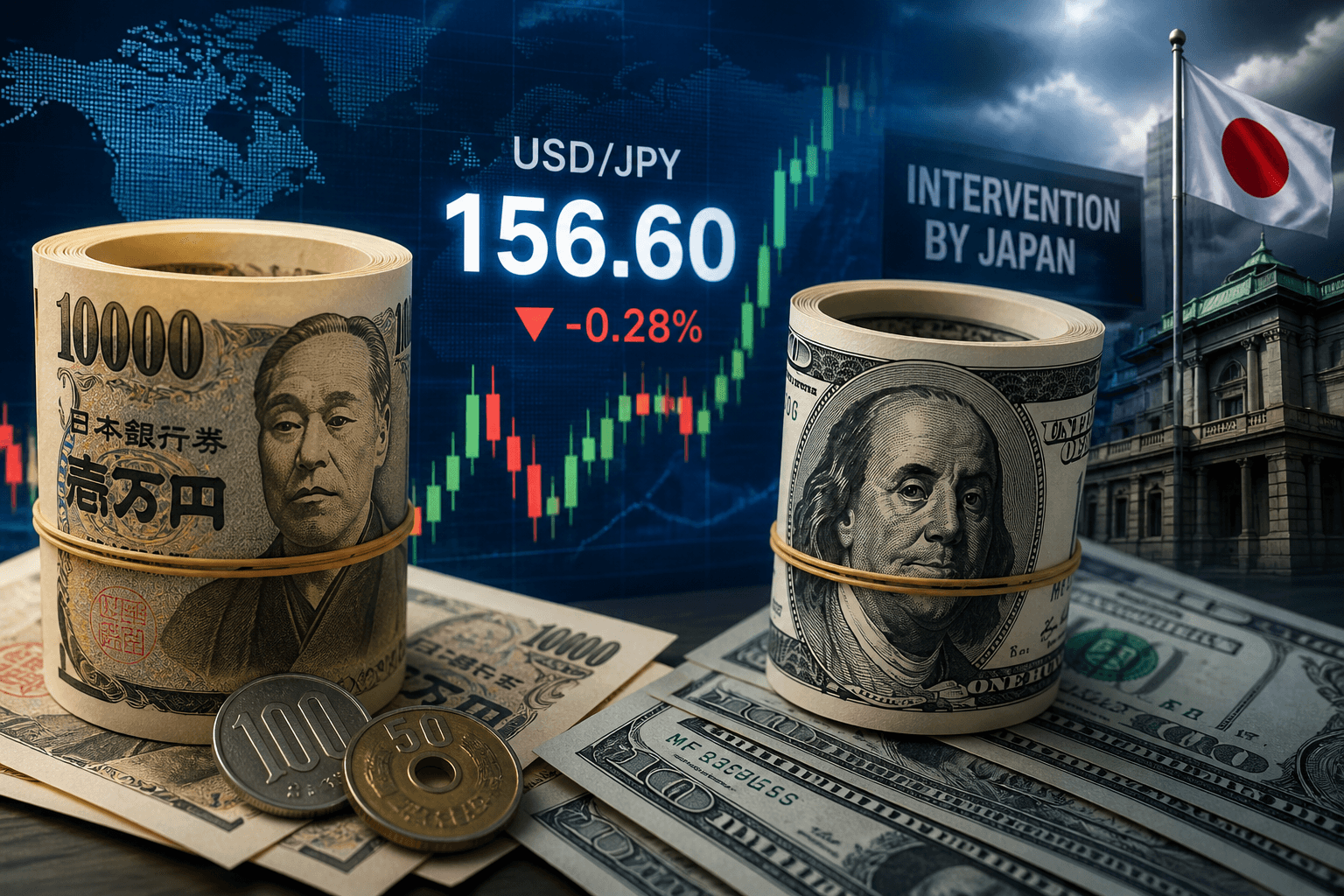
During Friday’s Asian trading session, USD/JPY hovered near 156.60, reversing a significant portion of Thursday’s dramatic decline. The earlier plunge of more than 2% was widely attributed to direct intervention by Japanese officials.
Currency traders now expect Japanese authorities to maintain heightened vigilance, especially with multiple public holidays reducing market liquidity across Asia. Thin trading conditions often amplify price swings, increasing the likelihood of additional intervention if speculative pressures intensify.

However, the yen’s rebound proved short-lived after Tokyo’s consumer price index for April came in below expectations. The softer inflation reading suggested that government subsidies on utilities and food continue to suppress price pressures, potentially slowing the Bank of Japan’s tightening cycle.
This weaker inflation data partially offset the Bank of Japan’s increasingly hawkish rhetoric. Earlier this week, policymakers raised inflation forecasts and signaled that additional interest rate hikes remain possible in the months ahead.
Dollar Finds Support After April Pullback
The U.S. dollar index steadied on Friday after suffering its steepest monthly decline in nearly a year during April. Improved risk appetite had initially weighed on the greenback, but escalating geopolitical tensions in the Middle East have since restored some of its safe-haven appeal.
Investors are closely monitoring the deteriorating relationship between Washington and Tehran. Diplomatic efforts have shown little progress, while reports suggest that military options remain under active consideration.
The Strait of Hormuz, a critical artery for global energy supplies, continues to experience reduced shipping flows, raising concerns about potential disruptions to oil markets and broader financial stability.

Federal Reserve Reinforces Hawkish Tone
Adding further support to the dollar, the Federal Reserve this week signaled growing reluctance to cut interest rates anytime soon. Several policymakers expressed concern that rising energy prices and prolonged geopolitical conflict could reignite inflationary pressures.
As a result, traders have sharply reduced expectations for multiple Fed rate cuts in 2026, providing additional underpinning for the greenback against major global currencies.
Euro and Pound Hold Steady
In Europe, the euro traded little changed after the European Central Bank left interest rates unchanged, a widely anticipated decision. However, policymakers reportedly engaged in extensive discussions about the possibility of further tightening should inflation remain persistent.
The British pound edged slightly lower after the Bank of England also held rates steady while outlining potential economic scenarios linked to the escalating Middle East conflict.
Markets Brace for Heightened Volatility
Global foreign exchange markets are likely to remain highly volatile in the days ahead. Investors must navigate a complex landscape shaped by intervention risks, central bank policy shifts, inflation trends, and geopolitical uncertainty.
For the yen, the key question remains whether Tokyo is prepared to act again. For the dollar, sustained strength will depend largely on the trajectory of Middle East tensions and the Federal Reserve’s policy path.