
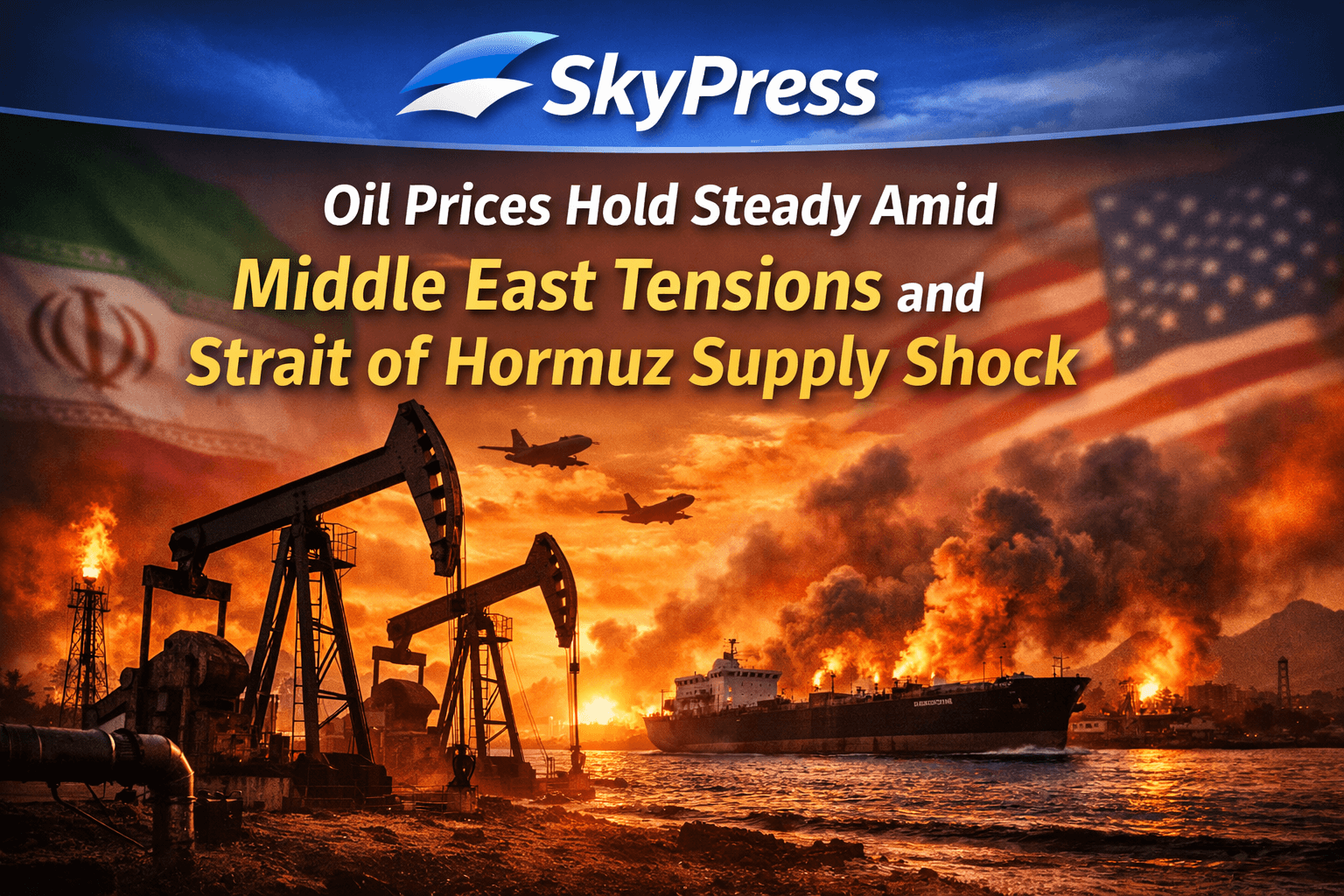
Oil Prices Hold Steady Amid Middle East Tensions and Strait of Hormuz Supply Shock

Oil Prices Steady as Middle East Tensions Offset Ceasefire Hopes
Oil markets remained largely stable at the start of the week, as traders balanced escalating geopolitical risks in the Middle East against renewed diplomatic efforts aimed at easing tensions between the United States and Iran. Despite minor fluctuations, prices remain near historically elevated levels, reflecting persistent supply concerns and ongoing uncertainty in global energy markets.
U.S. benchmark West Texas Intermediate (WTI) crude futures for May delivery slipped modestly by $0.82 to trade near $110.72 per barrel, while Brent crude, the international benchmark, declined by $0.69 to approximately $108.34 per barrel. Analysts note that this limited downside reflects the market’s cautious stance amid continued geopolitical risk.
Geopolitical Pressure vs Diplomatic Uncertainty
The market remains highly sensitive to developments surrounding the standoff between the United States and Iran. Mediators from Pakistan, Egypt, and Turkey have reportedly proposed a 45-day ceasefire framework, aiming to de-escalate the situation and restore a degree of stability to the region.
However, uncertainty remains after officials indicated that President Donald Trump has yet to approve the proposal. This hesitation has kept traders cautious, limiting any meaningful downside in oil prices. The market’s reaction suggests that investors are pricing in both the potential for a ceasefire and the risk of further escalation.
Adding to tensions, Trump issued a firm ultimatum to Iran, demanding the reopening of the strategically critical Strait of Hormuz by Tuesday evening. Failure to comply, he warned, could result in targeted strikes on Iranian infrastructure, including energy facilities and transport networks. These threats have heightened risk premiums in oil prices, as the Strait handles a significant portion of global crude shipments.
Strait of Hormuz Disruption Drives Supply Shock
At the core of the crisis lies the Strait of Hormuz, a vital chokepoint through which nearly 20% of global oil supply typically flows. Ongoing hostilities have effectively restricted access to the route, triggering what analysts are calling one of the largest oil supply disruptions in modern history.
- Sharp increases in crude, diesel, jet fuel, and gasoline prices
- Significant delays in global energy shipments
- Heightened volatility across commodities markets
- Rising insurance premiums for tankers operating in the region
According to estimates from TD Securities, nearly 1 billion barrels of supply could be lost by the end of April, including both crude oil and refined products. This tightening supply outlook continues to underpin prices despite short-term fluctuations. Comparatively, similar disruptions in 2019–2020 resulted in price spikes of 5–8% within days, highlighting the potential for further volatility.
OPEC+ Response and Production Challenges
In response to rising supply concerns, members of OPEC+ agreed to increase production by 206,000 barrels per day starting in May. While this measure signals a willingness to stabilize markets, the effectiveness of this increase remains uncertain due to ongoing blockages at key export routes and infrastructure vulnerabilities.
Additionally, recent drone attacks on operational facilities in Kuwait have highlighted the fragility of energy assets in the region. Repairing damaged infrastructure is expected to be both costly and time-consuming, prolonging the supply deficit and maintaining upward pressure on prices.
Analysts from the International Energy Agency (IEA) noted that even with the OPEC+ production increase, the market could experience persistent tightness until regional stability is restored. The agency warned that oil prices could fluctuate between $105 and $115 per barrel in the near term if tensions continue.
Historical Context and Market Sensitivity
Comparing current levels with the past year, WTI has risen approximately 25% since early 2025, largely driven by supply constraints and geopolitical risks. Brent crude has followed a similar trajectory, underscoring the market’s heightened sensitivity to Middle East developments. Historical patterns suggest that even short-lived conflicts in key chokepoints can trigger rapid, volatile price swings.
Traders are closely monitoring other indicators as well, including U.S. crude inventories, refinery utilization rates, and shipping congestion in the Persian Gulf. Any significant deviations could influence short-term pricing and investor sentiment.
Broader Economic Implications
Rising oil prices have ripple effects across global economies. Higher energy costs can contribute to inflationary pressures, impact transportation and manufacturing sectors, and influence central bank policy decisions. Countries heavily reliant on imports are particularly vulnerable to supply shocks, while energy exporters may benefit from elevated revenue streams.
Market participants are also considering the potential impact on commodity-linked currencies, such as the Canadian dollar and Norwegian krone, which tend to respond to fluctuations in oil prices.
Market Outlook: Volatility to Persist
Looking ahead, oil markets are expected to remain highly reactive to geopolitical headlines. While ceasefire negotiations offer a glimmer of hope, traders continue to weigh the risks of further escalation in the region. Analysts predict that price swings could remain pronounced in the short term, with traders closely monitoring both diplomatic developments and disruptions at strategic chokepoints.
Investors and energy market participants are advised to maintain caution, as even minor news from the Middle East can trigger sharp price movements. Risk management strategies, including hedging and careful portfolio allocation, are likely to remain a priority for market players navigating this volatile environment.