
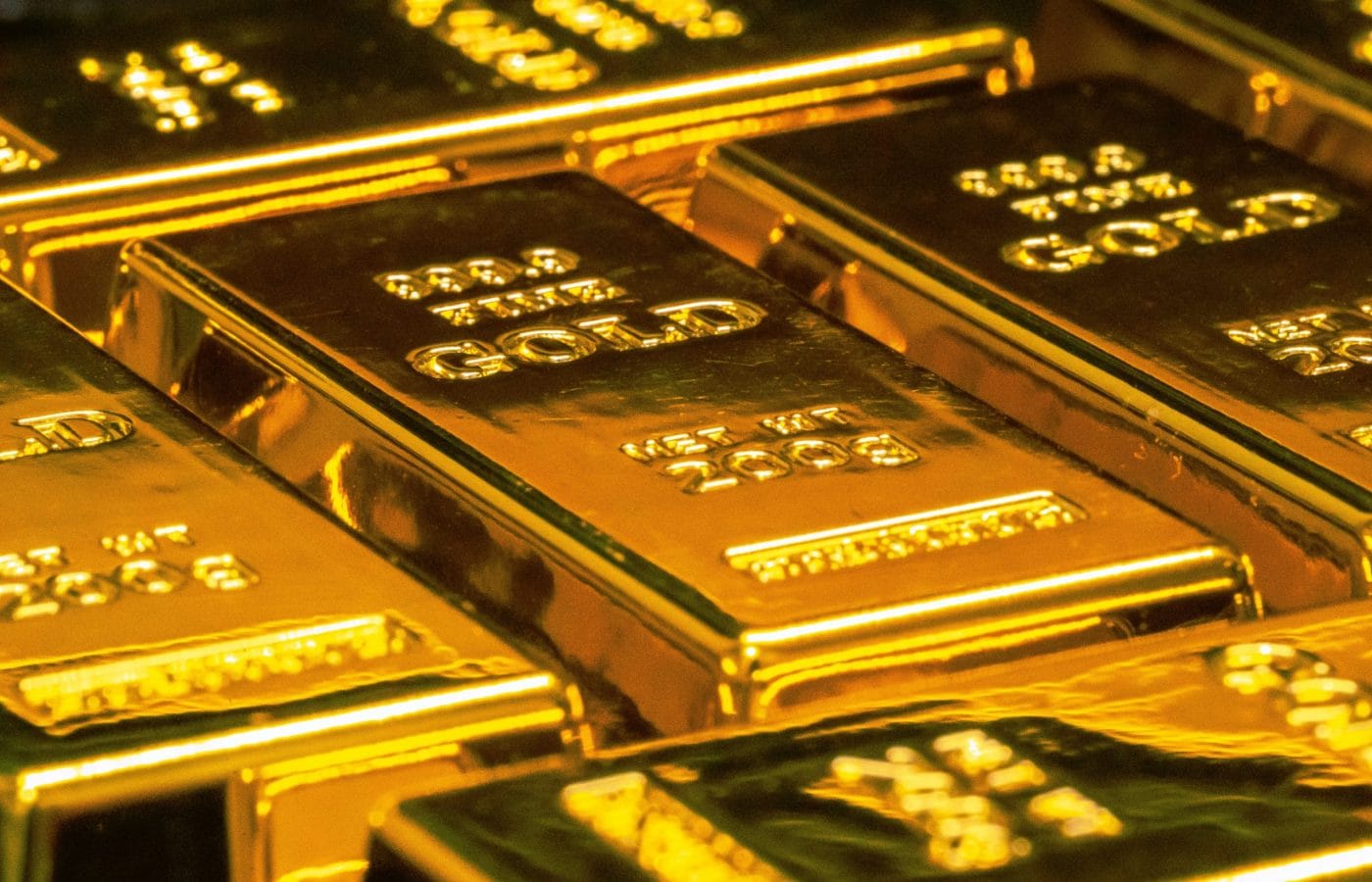
Gold Prices Plunge to One-Year Low as Strong Dollar and Fed Rate Hike Fears Trigger Heavy Selling

International gold prices suffered another sharp decline on Monday, November 16, falling to their lowest level in more than a year as a stronger US dollar, rising Treasury yields and growing expectations of further monetary tightening by the Federal Reserve intensified pressure on the precious metals market.
Spot gold touched approximately $3,830 per troy ounce during Monday’s trading session, its lowest level since October 2025, before recovering some of its losses. The metal was subsequently reported trading around $3,874 per ounce in a later market update, illustrating the volatility surrounding the sell-off.
The latest decline extends a difficult period for bullion. Gold had already lost approximately 4.5% during the previous trading week, marking its steepest weekly decline since early June, according to Reuters market reporting.
The sell-off is particularly significant because gold has traditionally attracted investors seeking protection against inflation, geopolitical uncertainty and financial market instability. However, the latest developments demonstrate how expectations surrounding US monetary policy can temporarily outweigh its traditional safe-haven appeal.
Gold Slides as the US Dollar Strengthens
One of the immediate factors weighing on gold is the strength of the US dollar.
Gold is internationally priced in dollars. When the dollar appreciates against other currencies, bullion becomes more expensive for buyers using different currencies, potentially reducing international demand.
Reuters reported on November 16 that the US dollar was trading near its strongest level since April 2025, creating additional pressure on dollar-denominated precious metals.
The relationship between the dollar and gold is not always perfectly inverse. However, sustained dollar strength can create significant headwinds for bullion, particularly when accompanied by rising interest rates.
For international investors, the combination of a stronger dollar and declining gold prices has made the precious metal less attractive in the short term.
Federal Reserve Interest Rate Expectations Weigh on Bullion
Monetary policy expectations have become another major driver of the gold market downturn.
Recent comments from US Federal Reserve officials have reinforced concerns that inflation remains above the central bank’s desired level. Kansas City Federal Reserve President Jeff Schmid and other policymakers have indicated that inflationary pressures still require attention.
These comments have encouraged financial markets to reassess the likelihood of additional interest rate increases in December.
According to Reuters reporting on Monday, market pricing indicated approximately a 90% to 91% probability of a 25-basis-point rate increase, with a smaller probability assigned to a larger 50-basis-point adjustment.
This matters because gold does not generate interest income. When investors anticipate higher interest rates, interest-bearing assets such as government bonds and cash instruments can become more attractive relative to bullion.
Consequently, expectations of tighter monetary policy can encourage investors to reduce their exposure to gold.
Investors are also watching Federal Reserve Chair Kevin Warsh’s remarks and the minutes of the October Federal Open Market Committee meeting for additional indications about the direction of US monetary policy.
Inflation Concerns and Treasury Yields Add to Selling Pressure
The recent inflation environment has complicated the outlook for gold.
Higher energy prices have raised concerns about persistent inflation, increasing the possibility that the Federal Reserve may maintain restrictive monetary conditions for longer than previously anticipated.
US consumer inflation figures released earlier in the week added to these concerns. Subsequently, producer price data offered some relief, with the October Producer Price Index for final demand increasing by 0.3%, compared with an upwardly revised 1.4% increase in September.
The October producer inflation figure was below the 0.4% increase anticipated in a Reuters poll. However, the moderation was not sufficient to reverse the broader market concerns surrounding inflation and interest rates.
Rising US Treasury yields have added another challenge for gold. Higher yields increase the opportunity cost of holding an asset that does not pay interest or dividends.
As a result, investors have become increasingly sensitive to economic releases and Federal Reserve commentary.
Gold’s Decline Extends Beyond a Single Trading Session
Monday’s decline should be considered within the context of the metal’s recent performance rather than viewed as an isolated market event.
Gold had experienced a substantial recovery earlier in November, with spot prices reaching approximately $4,149 per ounce on November 9, according to historical trading figures reported by Kitco.
However, the metal subsequently lost ground as inflation concerns, stronger bond yields and expectations of further Federal Reserve tightening gained prominence.
On November 12, spot gold declined approximately 2.7% in one reported market snapshot, while December US gold futures settled nearly 2.9% lower.
By November 13, bullion was heading towards a weekly decline of approximately 4.5%. The renewed weakness on November 16 pushed prices to another important low.
The move below $4,000 is also technically significant because that level had attracted considerable market attention during the earlier recovery.
However, a price decline alone does not establish that gold has entered a prolonged bear market. Investors will need to assess whether selling pressure continues or whether lower prices attract sufficient buying interest to support a recovery.
Silver and Other Precious Metals Also Under Pressure
The weakness has not been limited to gold. Other major precious metals have also experienced substantial selling pressure.
Monday’s reported market prices showed broad declines across the precious metals complex.
| Precious metal | Reported price | Reported change |
|---|---|---|
| Gold (spot) | $3,874.49 per ounce | -0.1% |
| Silver (spot) | $47.38 per ounce | -2.8% |
| Platinum (spot) | $1,472.48 per ounce | -1.4% |
| Palladium (spot) | $980.61 per ounce | -2.0% |
Source: Reuters market reporting, November 16, 2026. Figures represent a reported intraday market snapshot, not final closing prices. Gold reached a lower intraday level of approximately $3,830 per ounce earlier in the session.
Silver’s sharper decline reflects its exposure to both investment sentiment and industrial demand. Unlike gold, silver has significant industrial applications, making its price sensitive to developments in manufacturing and other economic activities.
Research published by the Metals Focus consultancy for the Silver Institute also projected a 5% decline in global silver demand in 2026, to approximately 1.08 billion ounces, adding another consideration for the wider precious metals market.
What the Gold Sell-Off Means for Kenyan Investors
The international decline could have implications for Kenyan consumers, jewellery businesses, gold traders and investors who follow global commodity markets.
Kenya’s domestic gold market is influenced by international bullion prices, exchange-rate movements, local trading premiums and other transaction costs.
Consequently, a decline in international gold prices does not automatically translate into an equivalent reduction in the price Kenyan consumers pay for jewellery or physical gold.
The USD/KES exchange rate is particularly important. If the Kenyan shilling weakens against the US dollar, it can partly offset a decline in international gold prices when those prices are converted into local currency. Conversely, a stronger shilling could amplify the impact of falling international prices.
For prospective buyers, lower international prices may create opportunities to compare local offers and assess whether retailers are passing on the decline. However, consumers should distinguish between international spot prices and the final retail cost of jewellery, which includes workmanship, margins and applicable charges.
Investors considering gold exposure should also understand that falling prices can continue for extended periods. Buying simply because an asset has become cheaper does not guarantee that it has reached its lowest point.
What Investors Should Watch Next
The next direction for gold will depend heavily on developments in the United States and broader financial markets.
Several factors deserve close attention over the coming trading sessions:
- Federal Reserve communication: Statements from policymakers and the October FOMC meeting minutes could influence expectations for December interest rates.
- US inflation data: Further evidence of persistent inflation could strengthen expectations of tighter monetary policy, potentially weighing on gold.
- US dollar performance: Continued dollar strength could make it more difficult for bullion to recover.
- Treasury yields: Higher yields could encourage investors to favour interest-bearing assets over gold.
- Geopolitical developments: Changes in international tensions could restore demand for traditional safe-haven assets.
- Physical gold demand: Buying activity in major consumer markets could provide support if lower prices encourage additional purchases.
Traders will also be monitoring whether gold can stabilise around the recent lows or whether further selling pushes prices towards lower technical support areas.
Gold Market Outlook: Is a Recovery Possible?
Despite the recent decline, the longer-term investment case for gold has not necessarily disappeared.
Concerns surrounding government debt, geopolitical instability, currency uncertainty and central bank reserve diversification remain relevant to the global gold market.
However, these longer-term considerations are currently competing with immediate monetary policy pressures. A stronger dollar and expectations of higher US interest rates have become dominant short-term influences.
A sustained recovery would likely require a combination of softer US inflation data, a less restrictive Federal Reserve outlook, declining Treasury yields or renewed investment demand.
On the other hand, continued inflationary pressure and additional hawkish signals from policymakers could expose gold to further declines.
For now, the market remains vulnerable to sharp movements as traders reassess the outlook for US interest rates. Investors should avoid treating the recent decline as an automatic buying opportunity without considering their investment horizon, risk tolerance and the possibility of additional losses.
Key Takeaways
- Gold touched approximately $3,830 per troy ounce on November 16, its lowest level since October 2025.
- The US dollar’s strength and rising Treasury yields have intensified selling pressure.
- Markets have increasingly priced in a possible Federal Reserve interest rate increase in December.
- Gold had already declined approximately 4.5% during the previous week.
- Silver, platinum and palladium also recorded losses on Monday.
- Kenyan gold prices will depend on international bullion prices as well as USD/KES exchange-rate movements and local market costs.
- Federal Reserve communication and upcoming economic data remain important catalysts for the next market direction.
Frequently Asked Questions
Why is gold falling so sharply in November 2026?
Gold is facing pressure from a stronger US dollar, elevated Treasury yields and growing expectations of Federal Reserve interest rate increases. These conditions reduce the relative attractiveness of holding non-interest-bearing bullion.
What was the lowest gold price recorded on November 16, 2026?
Spot gold touched approximately $3,830 per troy ounce during Monday’s trading session, its lowest level since October 2025.
Will gold prices continue falling?
Further declines are possible if the US dollar strengthens, Treasury yields rise and the Federal Reserve maintains a hawkish position. However, softer inflation data or renewed safe-haven demand could support a recovery. No market direction is guaranteed.
Does falling international gold mean cheaper gold in Kenya?
Not necessarily. Domestic prices also depend on the USD/KES exchange rate, local premiums, retail margins and other transaction costs. International price movements may therefore be reflected differently in the Kenyan market.
Is this a good time to buy gold?
Lower prices may attract long-term buyers, but a sharp decline does not establish that the market has reached its bottom. Buyers should assess their financial objectives, investment horizon and exposure to price volatility before making decisions.
Related Market Coverage
- Forex Markets: Currency Movements and Market Analysis
- Commodities: Global Commodity Market Developments
- Business News: Global Economic and Financial Developments
- SkyPress Academy: Financial Education and Market Learning
Sources and Editorial Transparency
This report was independently prepared by SkyPress using market figures, economic data and reporting from multiple sources. The article’s analysis, explanations and presentation are original SkyPress editorial work. No other publisher’s article has been reproduced.
- Reuters – Gold hits over one-year low on resilient dollar as hawkish Fed bets build, November 16, 2026.
- Reuters market report – Gold dips on firmer dollar ahead of Warsh comments, November 16, 2026.
- Kitco News – Gold market performance and weekly price developments, November 13, 2026.
- Moneycontrol – Gold and silver market developments, November 16, 2026.
- Bernama – Gold futures close lower tracking weaker COMEX, November 16, 2026.
Disclaimer: This article is published for informational and educational purposes only. It does not constitute financial, investment or trading advice. Precious metals and other financial markets involve risk, and prices can fluctuate significantly. Past performance does not guarantee future results or profits. Readers should conduct independent research and consult qualified financial professionals where appropriate.
SkyPress Desk | SkyPress Market News