
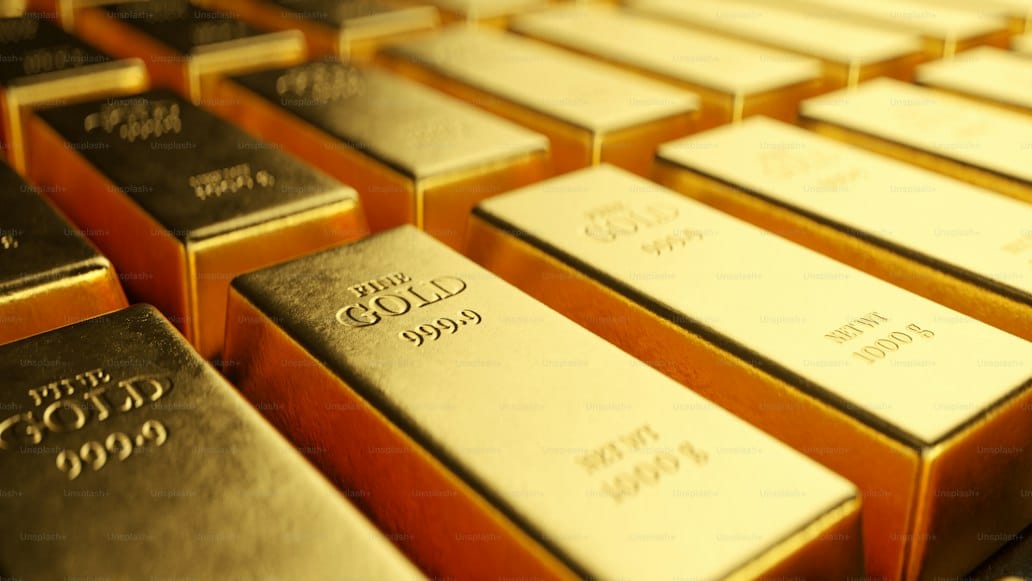
Gold Prices Edge Higher as US Inflation Data Puts Fed Rate Outlook in Focus

COMMODITIES • GOLD MARKET NEWS
Gold prices recovered modestly on Wednesday, September 30, as investors awaited fresh US inflation figures that could influence Federal Reserve interest-rate expectations. Despite the intraday gains, bullion remained on course for a monthly decline amid persistent inflation concerns, elevated energy prices and uncertainty over the direction of US monetary policy.
Gold Edges Higher Ahead of US PCE Inflation Report
Gold prices moved higher in Wednesday’s trading session as financial markets prepared for the release of the US Personal Consumption Expenditures (PCE) price index, a key inflation indicator monitored by Federal Reserve policymakers.
According to market figures reported earlier in the session, spot gold rose approximately 0.1% to $4,187.64 per ounce, while US gold futures advanced 1.0% to $4,219.30. Spot gold had lost roughly 6% over the preceding month, leaving the metal vulnerable to a further monthly decline.
Reuters also reported a modest recovery in spot gold during Wednesday’s session, with prices rising to $4,195.56 per ounce as investors assessed inflation risks and the possibility of further US interest-rate increases.
The difference between quoted prices reflects the timing of market observations. Gold prices can change rapidly during the trading session.
For additional developments, visit the SkyPress Commodities News section.
Why US Inflation Data Matters for Gold Prices
The main focus for precious-metals traders is whether the latest inflation figures will reinforce expectations that the Federal Reserve may need to maintain restrictive monetary policy for longer.
The PCE price index measures changes in the prices of goods and services purchased by households. Its core measure excludes food and energy prices, helping policymakers assess underlying inflation trends.
Ahead of the release, forecasts cited in the supplied market report pointed to a monthly increase of 0.3% in core PCE inflation for August, compared with 0.2% previously. Headline PCE inflation was projected to rise by 0.4%, up from 0.2%.
On an annual basis, the report projected headline PCE inflation at 3.7% and core PCE inflation at 3.3%. These figures were forecasts available before publication, not confirmed results.
The US Bureau of Economic Analysis scheduled the August Personal Income and Outlays report, which includes PCE inflation data, for September 30, 2026.
Official release schedule:
US Bureau of Economic Analysis.
Federal Reserve Rate Expectations Remain Central to the Outlook
Interest-rate expectations are an important driver of gold prices because bullion does not pay interest or dividends.
When market participants anticipate higher interest rates, interest-bearing assets may become more attractive relative to gold. Higher US Treasury yields and a stronger dollar can also increase the cost of holding bullion for buyers using other currencies.
Conversely, softer inflation data could reduce expectations for additional monetary tightening, potentially easing pressure on gold.
The Federal Reserve’s September 15–16, 2026, meeting produced updated economic projections, reflecting policymakers’ assessments of inflation, economic growth and the appropriate path for monetary policy.
However, the release of new inflation figures does not automatically determine the Fed’s next decision. Policymakers also assess employment conditions, economic activity and the persistence of price pressures.
Read the official projections:
Federal Reserve September 2026 Economic Projections.
Oil Prices and Middle East Tensions Add to Inflation Concerns
Energy-market developments remain another factor influencing the outlook for gold and monetary policy.
Diplomatic efforts involving Qatar, the United States and Iran have included discussions concerning the Strait of Hormuz, a strategically important shipping route for global energy supplies.
Any sustained disruption to shipping through the strait could place upward pressure on oil prices and increase transportation and production costs. Such developments may complicate efforts by central banks to bring inflation back towards their targets.
The prospect of improved oil flows could help ease some supply concerns. Nevertheless, the direction of energy prices will depend on actual supply conditions, shipping security and the progress of diplomatic negotiations.
Higher oil prices do not necessarily translate immediately into higher core inflation, but prolonged energy-cost increases can affect broader prices and inflation expectations.
For more market developments, follow SkyPress Latest News.
What Could Move Gold Next?
The near-term direction of gold will depend partly on how incoming economic data changes expectations for US monetary policy.
1. Inflation comes in above expectations
A stronger-than-expected PCE reading could reinforce concerns that inflation remains persistent. If markets respond by anticipating higher interest rates or pushing Treasury yields and the US dollar higher, gold could face additional selling pressure.
2. Inflation comes in below expectations
A softer reading could reduce pressure on the Federal Reserve to tighten policy further. Lower yields or a weaker dollar could provide support for bullion, although other market developments could offset that response.
3. Energy prices remain elevated
Continued increases in oil prices could sustain concerns about inflation and complicate the outlook for interest rates. At the same time, geopolitical uncertainty can sometimes increase demand for gold as a perceived safe-haven asset.
The combined effect is not always straightforward: inflation concerns may weigh on bullion through interest-rate expectations, while geopolitical risks may support demand for defensive assets.
Key Takeaways
- Gold recorded modest gains on Wednesday, September 30, after a period of weakness.
- The supplied report placed spot gold at $4,187.64 per ounce and US gold futures at $4,219.30.
- Markets were awaiting the August US PCE inflation report for further clues about the Federal Reserve’s policy outlook.
- Stronger inflation could reinforce expectations for tighter monetary policy, while softer data could ease some pressure on gold.
- Oil prices and developments around the Strait of Hormuz remain additional variables for inflation expectations and precious metals.
- Market forecasts are not confirmed economic outcomes, and gold prices can move in either direction as new information emerges.
Frequently Asked Questions
Why are gold prices rising ahead of US inflation data?
Gold was recovering modestly after recent losses as investors positioned themselves ahead of the PCE inflation release. Changes in interest-rate expectations, Treasury yields, the dollar and safe-haven demand can all influence prices.
What is the PCE inflation index?
The Personal Consumption Expenditures price index measures changes in prices paid for goods and services consumed by households. The Federal Reserve uses PCE inflation to assess progress towards its inflation objective.
How do higher interest rates affect gold?
Higher interest rates can make interest-bearing assets more attractive relative to gold, which does not generate interest income. The effect also depends on movements in the dollar, bond yields, inflation expectations and investor demand.
Can geopolitical tensions push gold prices higher?
Yes. Geopolitical uncertainty can increase demand for gold as a perceived safe-haven asset. However, the price response depends on other factors, including monetary policy expectations and currency movements.
Does a monthly decline mean gold will continue falling?
No. A monthly decline describes past price performance and does not establish the next market direction. Future prices depend on incoming data, monetary policy, investor positioning and global developments.
Sources and Further Reading
- Reuters — Gold on track for monthly decline as investors brace for US inflation data
- US Bureau of Economic Analysis — Economic release schedule
- Federal Reserve — September 2026 economic projections
- SkyPress — Commodities News
- SkyPress — Forex Markets