

U.S. Treasury Yields Surge to Multi-Year Highs as Markets Reprice Inflation and Rate Risks

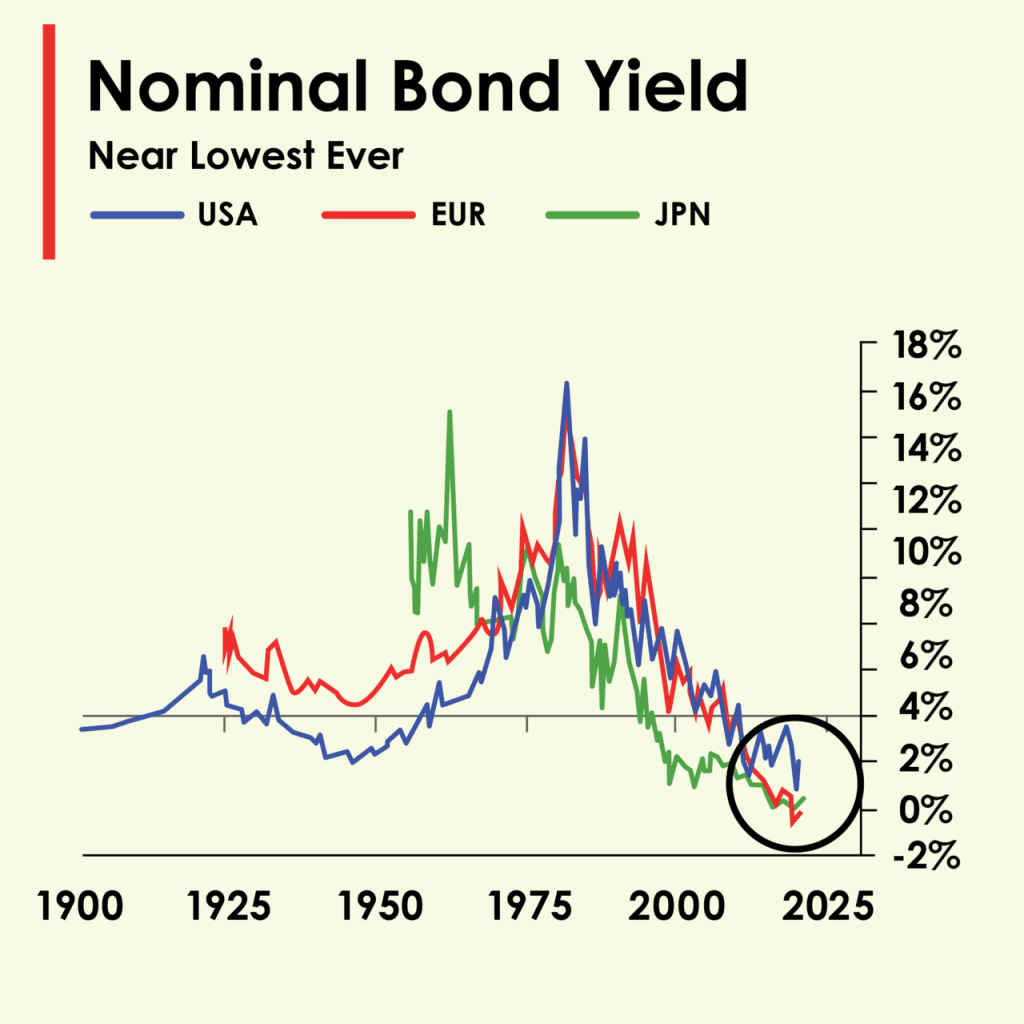
U.S. Treasury yields climbed sharply on Friday as investors continued to demand higher compensation for inflation, government borrowing and longer-term interest-rate risk. The move pushed benchmark Treasury yields to their highest levels in years and kept pressure on global financial markets as traders reassessed the outlook for monetary policy and economic growth.
The U.S. 10-year Treasury yield traded near 5.18% after reaching an intraday high around 5.23%, according to market data cited by Investing.com. The 30-year yield also moved above 5.50% during the session before easing back toward 5.47%.
The surge extends a broader sell-off in government bonds that has gathered momentum in recent weeks. Reuters reported on Friday that global stocks were still holding up despite the bond-market pressure, helped by renewed enthusiasm around artificial intelligence companies and hopes for improving energy conditions in the Middle East.
Treasury yields climb as investors reassess the cost of money
The latest move represents a significant repricing in the U.S. fixed-income market. The 10-year Treasury yield, which influences borrowing costs across mortgages, corporate credit and other financial assets, has now risen for a sixth consecutive week.
The 30-year Treasury yield has also moved sharply higher. Long-term Treasury securities are particularly sensitive to expectations surrounding future inflation, government borrowing and the amount of compensation investors require to hold debt for extended periods.
That distinction is important. Shorter-term Treasury yields tend to respond more directly to expectations for Federal Reserve policy, while longer-term yields can also reflect expectations for inflation, economic growth, fiscal borrowing and the term premium investors demand for holding long-duration bonds.
The recent bond sell-off therefore goes beyond a simple change in expectations for the next Federal Reserve meeting.
Why the bond market is under pressure
Several forces are converging in the Treasury market.
1. Inflation remains above the Federal Reserve’s target
The Federal Reserve raised its benchmark interest-rate range by 25 basis points at its September 15–16 meeting, taking the federal funds target range to 3.75%–4.00%. The central bank said economic activity remained solid, domestic spending was resilient and inflation remained elevated.
The latest policy decision has kept attention firmly on inflation. If price pressures remain persistent, investors may have to price a longer period of restrictive monetary policy than previously expected.
That would generally increase the attractiveness of short-duration assets while placing additional pressure on longer-duration bonds.
2. Strong economic activity is complicating the rate outlook
One of the unusual features of the current environment is the resilience of the U.S. economy despite elevated interest rates.
Recent economic data have continued to show pockets of strong demand and investment. The Federal Reserve has also highlighted robust productivity growth and capital investment, factors that can support economic activity while complicating efforts to bring inflation back to its 2% objective.
For bond investors, stronger-than-expected economic activity can create a difficult combination: growth remains sufficiently strong to reduce the urgency for monetary easing, while inflation remains high enough to keep the possibility of further tightening on the table.
Energy prices add another inflation risk
Energy markets are another major variable for the Treasury market.
Oil prices have remained sensitive to developments surrounding the conflict involving the United States and Iran and the security of major energy routes. Reuters reported Friday that negotiations were exploring a possible phased path toward reopening the Strait of Hormuz, helping push oil prices lower during the session.
A sustained decline in oil prices could eventually reduce some inflation pressure. But a renewed disruption to energy supplies could have the opposite effect by raising transportation, production and consumer costs.
That makes energy prices particularly important for investors watching the next inflation reports and Federal Reserve communications.
The Fed remains central to the Treasury market
Federal Reserve officials have continued to emphasize the difficulty of returning inflation to target while maintaining economic stability.
St. Louis Fed President Alberto Musalem said this week that additional rate increases could be necessary to curb persistent inflation, while noting that price pressures extend beyond oil and include areas such as import prices and commodity costs.
Other Fed officials have also stressed that inflation remains a significant concern. Minneapolis Fed President Neel Kashkari said inflation was still too high across several areas of the economy, rather than being limited to energy and food.
These comments have reinforced the market’s focus on whether additional tightening could be required.
What higher Treasury yields mean for investors
A sustained increase in Treasury yields can affect financial markets through several channels.
- Government borrowing costs: Higher yields increase the cost of issuing and refinancing U.S. government debt.
- Mortgage rates: Longer-term Treasury yields can influence mortgage and other long-duration borrowing costs.
- Corporate financing: Companies generally face higher financing costs when benchmark government yields rise.
- Equity valuations: Higher risk-free yields can increase the discount rate used to value future corporate earnings.
- U.S. dollar: Higher U.S. yields can influence demand for dollar-denominated assets, although currency movements also depend on global growth and monetary policy.
- Emerging markets: Higher U.S. yields can tighten global financial conditions and increase pressure on countries and companies that rely heavily on dollar financing.
For these reasons, the Treasury market is not isolated from the stock, currency, commodity or property markets. A prolonged rise in long-term yields can gradually change the cost of capital throughout the financial system.
Key Takeaways
- The U.S. 10-year Treasury yield moved above 5% and reached its highest level in years.
- The 30-year Treasury yield also climbed above 5.50% intraday.
- Persistent inflation and resilient economic activity are keeping pressure on the Federal Reserve.
- Energy-market developments remain an important source of inflation risk.
- Higher Treasury yields can affect mortgages, corporate borrowing, equities, currencies and emerging-market assets.
- The next major test for markets will come from incoming U.S. economic data and the September employment report.
AI investment is adding to competition for capital
Another factor attracting attention is the enormous amount of capital being committed to artificial intelligence infrastructure.
Technology companies, data-center operators, energy providers and other businesses involved in the AI investment cycle are raising substantial amounts of capital to finance new infrastructure.
When corporate borrowers issue large quantities of long-duration debt at the same time that the U.S. government is supplying substantial amounts of Treasury securities, investors have more fixed-income assets competing for available capital.
This does not mean corporate borrowing alone is responsible for the Treasury sell-off. Rather, it adds another layer to a market already dealing with inflation uncertainty, government borrowing requirements and changing expectations for monetary policy.
What does a 5% Treasury yield mean for stocks?
The relationship between Treasury yields and equities is not mechanical, but the level of long-term government bond yields matters for stock valuations.
When investors can obtain a higher yield from relatively low-credit-risk government securities, the return required from riskier assets can increase.
This becomes particularly important for companies whose valuations depend heavily on earnings expected many years into the future. Higher discount rates can reduce the present value investors assign to those future cash flows.
That does not automatically mean stocks must fall. Strong corporate earnings, productivity gains and technological investment can continue to support equities even when bond yields rise.
Indeed, Reuters reported Friday that global stocks were advancing for the week despite the bond-market sell-off, with enthusiasm around artificial intelligence and hopes for improving Middle East energy supplies helping risk appetite.
The more important issue for investors is whether higher yields remain elevated for an extended period.
Markets now watch the 6% threshold
With the 10-year Treasury yield already above 5%, attention is increasingly turning toward the possibility of another major move higher.
A move toward 6% would represent a substantial increase in long-term U.S. borrowing costs compared with the levels that prevailed through much of the post-financial-crisis period.
However, 6% should be viewed as a market threshold rather than a predetermined trigger. Whether such a level would produce forced selling or broader stress would depend on the speed of the move, liquidity conditions, economic data, positioning and the response of investors across different asset classes.
Economic calendar: What to watch next week
The week of September 28 to October 2, 2026, could provide several important tests for the Treasury market. Investors will be looking for evidence about economic growth, consumer confidence, labor demand, inflation and employment.
| Date | Event | Why Markets May Watch It |
|---|---|---|
| Monday, Sept. 28 | Dallas Fed Manufacturing Survey | Provides another reading on regional manufacturing activity and business conditions. |
| Tuesday, Sept. 29 | JOLTS Job Openings; Consumer Confidence | The labor-market data and household confidence will help investors assess demand and employment conditions. |
| Wednesday, Sept. 30 | ADP Employment; Q2 GDP third estimate; Personal Income & PCE; Dallas Fed Energy Survey | Growth, income and inflation data could influence expectations for future Fed policy, while the energy survey adds information on the energy sector. |
| Thursday, Oct. 1 | U.S. economic data and market positioning | Markets will digest the previous day’s growth and inflation releases ahead of the employment report. |
| Friday, Oct. 2 | September Employment Situation | The monthly jobs report will provide a major test of the strength of the U.S. labor market and the outlook for monetary policy. |
The New York Fed’s economic calendar lists consumer confidence and JOLTS on September 29, followed by ADP employment, the third estimate of GDP and the Personal Income and PCE Deflator reports on September 30.
The U.S. Bureau of Labor Statistics is scheduled to release the September 2026 Employment Situation on Friday, October 2, at 8:30 a.m. Eastern Time.
Why the September jobs report matters
The employment report will be one of the most closely watched releases of the coming week because the Federal Reserve has to balance inflation against the health of the labor market.
The August report showed average hourly earnings rising 0.3% during the month and 3.1% from a year earlier. June and July payroll figures were also revised higher by a combined 55,000 positions.
A strong September employment report could reinforce expectations that the economy remains resilient. A weaker report could shift attention toward whether restrictive monetary policy is beginning to weigh more heavily on employment.
For Treasury investors, the market reaction will depend not only on the headline payroll number but also on unemployment, wage growth, labor-force participation and revisions to previous months.
What investors should watch in the Treasury market
Several indicators are likely to remain important as the new week begins:
- 10-year Treasury yield: Whether it remains above 5% or extends the recent advance.
- 30-year Treasury yield: A key measure of long-term borrowing and term-premium pressure.
- 2-year Treasury yield: A useful gauge of changing expectations for Federal Reserve policy.
- Oil prices: Energy-market developments could influence inflation expectations.
- U.S. dollar: Yield movements can interact with demand for dollar assets and global capital flows.
- S&P 500 and Nasdaq: Higher discount rates could remain an important valuation consideration for equities.
- Gold: Investors may continue watching gold as markets assess inflation, real yields and geopolitical risk.
The next Fed decision is still weeks away
The Federal Reserve does not have another scheduled FOMC meeting next week. According to the Fed’s official calendar, the next regular meeting is scheduled for October 27–28, 2026.
That means incoming economic data and speeches from Federal Reserve officials will play an important role in shaping expectations before policymakers meet again.
The September meeting already delivered a 25-basis-point increase, taking the federal funds target range to 3.75%–4.00%. The Fed said inflation remained elevated while economic activity was expanding at a solid pace.
What comes next for global markets?
The Treasury sell-off has become one of the most important cross-market developments to monitor as the third quarter draws to a close.
The combination of elevated inflation, resilient economic activity, large government borrowing requirements, energy-market uncertainty and strong corporate investment has created a challenging environment for fixed-income investors.
At the same time, the reaction across other asset classes has so far been mixed rather than uniform. Equity markets have shown resilience, oil prices have responded to developments around the Middle East, and investors continue to reassess the path of U.S. monetary policy.
The coming week could therefore be important not because one economic report will necessarily determine the market’s direction, but because several data points will help investors assess whether the current rise in Treasury yields reflects a temporary repricing or a more persistent change in the cost of capital.
SkyPress Market Watch
The key question entering next week is whether economic data continue to justify higher long-term yields or begin to provide evidence that tighter financial conditions are slowing demand.
Investors will particularly watch the September employment report on October 2, alongside JOLTS, consumer confidence, GDP, PCE and other economic releases during the week.
Frequently Asked Questions
Why are U.S. Treasury yields rising?
Treasury yields are being influenced by several factors, including elevated inflation, resilient U.S. economic activity, expectations for Federal Reserve policy, government borrowing needs and uncertainty surrounding energy prices.
Why does the 10-year Treasury yield matter?
The 10-year Treasury is a major benchmark for global financial markets. Its yield influences borrowing costs, asset valuations, mortgage rates and the return investors demand from other financial assets.
Could higher Treasury yields affect stocks?
Yes. Higher Treasury yields can increase the discount rate applied to future corporate earnings and make government bonds relatively more competitive with equities. However, stock-market performance also depends on earnings, economic growth, investor positioning and other factors.
When is the next Federal Reserve meeting?
The next scheduled FOMC meeting is October 27–28, 2026.
What is the most important economic release next week?
The September U.S. Employment Situation report, scheduled for October 2, is likely to receive significant attention because labor-market conditions are an important part of the Federal Reserve’s monetary-policy assessment.
Sources
Market data and developments: Investing.com and Reuters. Federal Reserve monetary-policy information: Federal Reserve Board. Economic calendar and employment-release dates: Federal Reserve Bank of New York and U.S. Bureau of Labor Statistics.
Article Disclaimer
This article is provided for educational and informational purposes only. It does not constitute financial, investment or trading advice. Financial markets can move rapidly and involve significant risk. Past market movements do not guarantee future results. Readers should conduct their own research and consider seeking advice from a qualified financial professional before making financial decisions.
© 2026 SkyPress by Skyrexx. All rights reserved.