
Forex Trading Introduction: A Complete Beginner’s Guide
Forex Trading Introduction
Build a strong foundation in forex trading by understanding how the global currency market works, why currencies move, who participates, and what every beginner should know before placing a trade.
Forex Trading for Beginners: A Complete Introduction
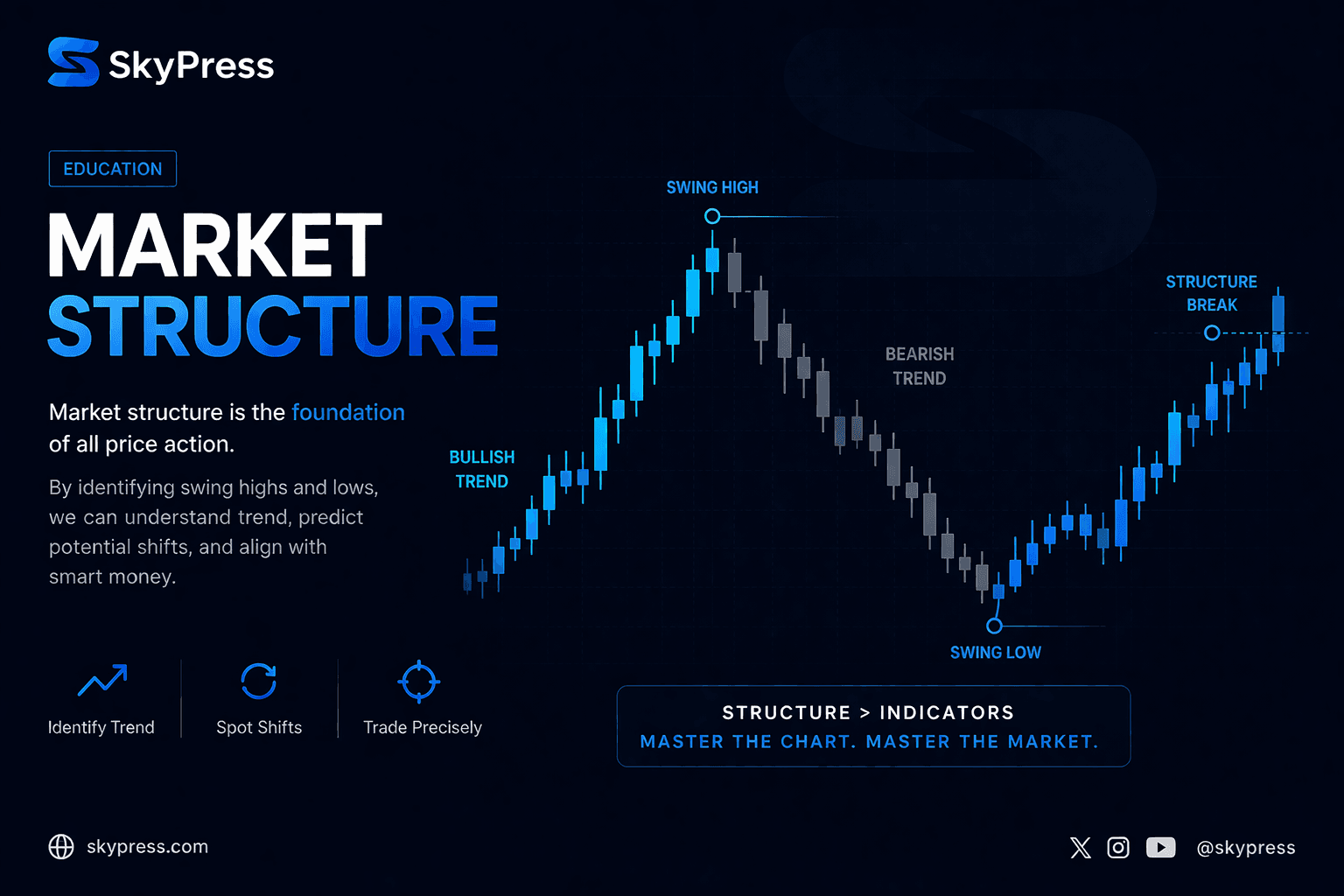
Welcome to Module 1 of the SkyPress Forex Academy. Before learning advanced strategies, technical indicators, market structure or sophisticated trade execution techniques, every trader needs to understand the market itself. This module provides that foundation.
Forex trading can appear complicated when you first encounter charts, currency pairs, candlesticks, spreads, leverage and economic news. However, the underlying idea is relatively straightforward: forex is the global market where one currency is exchanged for another.
Traders participate in this market for different reasons. Banks may exchange currencies to facilitate international payments, businesses may use the market to manage foreign-currency exposure, investors may seek opportunities from changing exchange rates, and retail traders may speculate on whether one currency will strengthen or weaken against another.
The important distinction for a beginner is that understanding how the market works is not the same as knowing how to trade it profitably. Forex offers substantial opportunities, but it also carries significant risk. A professional approach begins with education, realistic expectations, disciplined risk management and continuous practice.
- What the foreign exchange market is and why it exists
- How currency pairs are quoted and traded
- Who participates in the global forex market
- Why exchange rates move
- How forex trading differs from other financial markets
- The basic concepts every new trader should understand
- The opportunities and risks associated with forex trading
1. What Is Forex Trading?
Forex is short for foreign exchange. The foreign exchange market is the global marketplace where currencies are exchanged. Whenever one currency is converted into another, a foreign-exchange transaction is taking place.
For example, when a Kenyan business needs to pay a supplier in the United States, it may need to convert Kenyan shillings into US dollars. Similarly, a traveller exchanging money before an international trip is participating in a basic form of foreign exchange.
Forex trading takes this concept further. Instead of exchanging currencies simply to make a payment or travel, traders may buy or sell a currency pair because they expect the exchange rate to change.
A Simple Example
Suppose EUR/USD is trading at 1.1000. This means that one euro is currently worth 1.1000 US dollars.
If a trader believes the euro will strengthen against the US dollar, they may buy EUR/USD. If the exchange rate subsequently rises, the position may generate a profit before trading costs.
If the exchange rate moves in the opposite direction, however, the trader may incur a loss. This simple relationship between price expectations and market movement is at the heart of speculative forex trading.
Forex Is a Global Market
Unlike a traditional stock exchange that operates through a centralized exchange, the spot forex market is primarily an over-the-counter (OTC) market. Transactions take place through a global network of banks, financial institutions, brokers, dealers and other participants rather than through one single physical marketplace.
This structure helps explain why forex is a truly international market. Trading activity is distributed across major financial centres around the world, with market activity moving from one region to another as different trading sessions open and close.
2. Why Does the Forex Market Exist?
Forex is not simply a market created for retail traders to speculate on price charts. It exists because the global economy requires currencies to be exchanged.
International trade, tourism, investment, cross-border payments and financial transactions all require currencies to be converted. A company based in one country may earn revenue in another currency. An investment fund may purchase foreign assets. A government may manage its foreign reserves. A bank may facilitate international payments for customers.
These activities create constant demand for foreign currencies and contribute to the enormous scale of the global foreign exchange market.
The Key Idea
Forex exists because people, businesses, financial institutions and governments need to exchange currencies. Speculative trading is only one part of this much larger global ecosystem.
Common Reasons for Currency Exchange
- International trade: Businesses need to pay suppliers and receive payments from customers in different currencies.
- International investment: Investors may need foreign currency to purchase overseas assets.
- Travel and tourism: Travellers exchange their domestic currency for the currency used at their destination.
- Cross-border banking: Banks process international payments and currency transactions.
- Risk management: Companies may hedge against unfavourable currency movements.
- Speculation: Traders attempt to benefit from changes in exchange rates.
3. How Forex Trading Actually Works
Forex trading is based on the relative value of two currencies. This is why currencies are quoted in pairs.
When you trade a currency pair, you are simultaneously buying one currency and selling another. The first currency is known as the base currency, while the second is known as the quote currency.
Understanding EUR/USD
EUR/USD = 1.1000
EUR = Base currency
USD = Quote currency
The quotation means that 1 euro is valued at 1.1000 US dollars.
If EUR/USD rises from 1.1000 to 1.1100, the euro has strengthened relative to the US dollar over that period. If EUR/USD falls from 1.1000 to 1.0900, the euro has weakened relative to the US dollar.
This relative relationship is fundamental to forex. A currency does not need to become stronger or weaker in isolation; its value is always considered against another currency.
Buying and Selling Currency Pairs
When a trader buys a currency pair, they are generally expressing the view that the base currency will strengthen relative to the quote currency.
When a trader sells a currency pair, they are generally expressing the view that the base currency will weaken relative to the quote currency.
Forex trading is not simply about deciding whether a currency is “good” or “bad.” The question is always relative: which currency is expected to perform better against the other?
4. Understanding Currency Pairs
One of the first concepts a new forex trader must master is the idea of a currency pair. Unlike buying a physical currency at a bank or exchanging money at an airport, forex trading is normally quoted as the value of one currency relative to another.
Every currency pair contains two currencies. The first is the base currency, and the second is the quote currency. The exchange rate tells you how much of the quote currency is required to purchase one unit of the base currency.
Example: GBP/USD
GBP/USD = 1.3000
This means that one British pound is valued at approximately 1.30 US dollars at that quoted exchange rate.
If GBP/USD rises, the pound is appreciating relative to the US dollar. If GBP/USD falls, the pound is depreciating relative to the US dollar.
Base Currency
The base currency is always the currency written first in a pair. In GBP/USD, GBP is the base currency. In USD/JPY, USD is the base currency.
Quote Currency
The quote currency is the currency written second. It represents the amount required to purchase one unit of the base currency.
Understanding this distinction becomes especially important when interpreting whether a currency pair is rising or falling. It also provides the foundation for understanding trade direction, profit and loss calculations, and later concepts such as pips and position sizing.
5. Major, Minor and Exotic Currency Pairs
Forex traders generally group currency pairs according to the currencies involved and the level of market activity they typically receive. The three broad categories beginners should know are major pairs, minor pairs and exotic pairs.
Major Currency Pairs
Major pairs are the most widely traded currency pairs and involve the US dollar together with another major global currency.
- EUR/USD — Euro / US Dollar
- GBP/USD — British Pound / US Dollar
- USD/JPY — US Dollar / Japanese Yen
- USD/CHF — US Dollar / Swiss Franc
- AUD/USD — Australian Dollar / US Dollar
- USD/CAD — US Dollar / Canadian Dollar
- NZD/USD — New Zealand Dollar / US Dollar
Major pairs generally receive substantial trading activity and are commonly available through retail forex brokers. Their relatively deep liquidity can make them popular among beginners and experienced traders alike.
Minor Currency Pairs
Minor pairs, sometimes called crosses, contain major currencies but do not include the US dollar.
- EUR/GBP — Euro / British Pound
- EUR/JPY — Euro / Japanese Yen
- GBP/JPY — British Pound / Japanese Yen
- AUD/JPY — Australian Dollar / Japanese Yen
- EUR/AUD — Euro / Australian Dollar
These pairs can provide different trading characteristics from the major pairs. Depending on market conditions, they may have different spreads, volatility and liquidity.
Exotic Currency Pairs
Exotic pairs generally combine a major currency with the currency of an emerging or smaller economy.
Examples can include USD/KES, USD/TRY, USD/ZAR and USD/MXN. Their trading conditions can vary considerably. Some may experience wider spreads, lower liquidity and sharper price movements than the most actively traded major pairs.
A larger number of available currency pairs does not automatically mean more opportunities. Beginners often benefit from studying a smaller selection of liquid pairs and learning how they behave under different market conditions.
6. What Makes Forex Prices Move?
Currency prices constantly change because the market is continually reassessing the relative value and future prospects of different economies and currencies.
At its simplest level, price is influenced by supply and demand. When market participants collectively demand a currency more strongly than they are willing to sell it, its value can rise relative to another currency. When selling pressure becomes stronger, its value can decline.
But supply and demand in forex are influenced by many factors. Economic conditions, monetary policy, interest rates, political developments, market expectations and global risk sentiment can all affect currency valuations.
Major Factors Behind Currency Movement
- Interest rates: Changes in interest-rate expectations can influence the attractiveness of holding assets denominated in a particular currency.
- Inflation: Persistent changes in consumer prices can influence monetary policy and expectations about future interest rates.
- Economic growth: Strong or weak economic activity can affect investor expectations about a country’s financial outlook.
- Employment: Labour-market conditions can provide important information about economic strength and influence central-bank expectations.
- Central-bank policy: Decisions and guidance from institutions such as the Federal Reserve, European Central Bank and Bank of England can have significant effects on currencies.
- Political developments: Elections, government decisions, geopolitical tensions and policy uncertainty can change market expectations.
- Market sentiment: Traders may shift between riskier and safer assets depending on their expectations and confidence in global markets.
- Commodity prices: Countries that depend heavily on commodity exports can see their currencies affected by major changes in commodity prices.
Why This Matters
A forex chart shows you what price is doing, but understanding the forces behind the movement helps explain why price may be behaving that way. Later modules will explore these forces in much greater depth, particularly through fundamental analysis and market structure.
7. The Forex Market Is Driven by Expectations
A common beginner mistake is to assume that markets react only after economic news is officially released. In reality, financial markets are forward-looking. Traders and institutions constantly form expectations about what may happen in the future and adjust their positions accordingly.
For example, suppose traders increasingly expect a central bank to raise interest rates. The currency may begin moving before the official decision because market participants are already positioning for the anticipated outcome.
When the actual announcement arrives, the market may rise, fall or barely move depending on how the result compares with what was already expected.
A Simple Market-Expectation Example
Imagine the market expects a central bank to increase interest rates by 0.25%.
If the central bank delivers exactly what traders expected, the currency may not experience a dramatic reaction because the information was already reflected in market prices.
If the central bank unexpectedly delivers a larger increase or provides guidance suggesting further increases, the currency could react more strongly because expectations have changed.
This concept of expectations versus reality becomes increasingly important as you progress through the SkyPress Forex Academy. It is one reason why simply reading an economic headline is not enough to understand a currency’s next potential move.
8. When Is the Forex Market Open?
The global forex market generally operates 24 hours a day, five days a week, from Monday through Friday. This is possible because trading activity moves between major financial centres around the world.
The major trading sessions are commonly described as the Asian session, European session and North American session. Different brokers and educational resources may use slightly different session boundaries because opening and closing times can vary with daylight-saving changes and the conventions being used.
Major Forex Trading Sessions
- Asian Session: Often associated with financial centres such as Tokyo, Sydney and other markets across the Asia-Pacific region.
- European Session: A major period of global forex activity, with London playing an important role in international currency trading.
- North American Session: Includes major financial activity from the United States and Canada, with New York being a particularly important centre.
Trading activity can increase when major sessions overlap because more market participants are active at the same time. These periods can sometimes provide greater liquidity and increased price movement, although market conditions vary from day to day.
“24-hour market” does not mean that every currency pair has identical liquidity or volatility throughout the entire day. Different currencies tend to become more active when their associated financial centres are operating.
9. Understanding Pips, Spreads and Lots
Before placing a forex trade, beginners need to become familiar with several basic trading terms. Three of the most important are pips, spreads and lots.
What Is a Pip?
A pip is a commonly used unit for expressing a small change in the exchange rate of a currency pair. For many major currency pairs, a pip is typically the fourth decimal place. For Japanese yen pairs, the convention is generally the second decimal place.
For example, if EUR/USD moves from 1.1000 to 1.1001, that represents a one-pip movement under the standard quotation convention.
Modern trading platforms may display fractional-pip pricing, often called pipettes, by showing an additional decimal place.
What Is the Spread?
The spread is the difference between the bid price and the ask price of a currency pair.
In simple terms, the bid is the price at which the market or broker is prepared to buy, while the ask is the price at which it is prepared to sell. The difference between these prices represents part of the trading cost.
Spreads can change depending on the currency pair, liquidity, market conditions, broker pricing and periods of increased volatility.
What Is a Lot?
A lot refers to the size of a forex position. Traditional terminology commonly describes a standard lot as 100,000 units of the base currency. Smaller position sizes include mini lots and micro lots, although exact trading conditions and minimum sizes vary between brokers.
Do not confuse the ability to open a small trade with low risk. Leverage can allow a trader to control a position much larger than the cash deposited in the account, which can magnify both potential gains and losses.
10. Who Participates in the Forex Market?
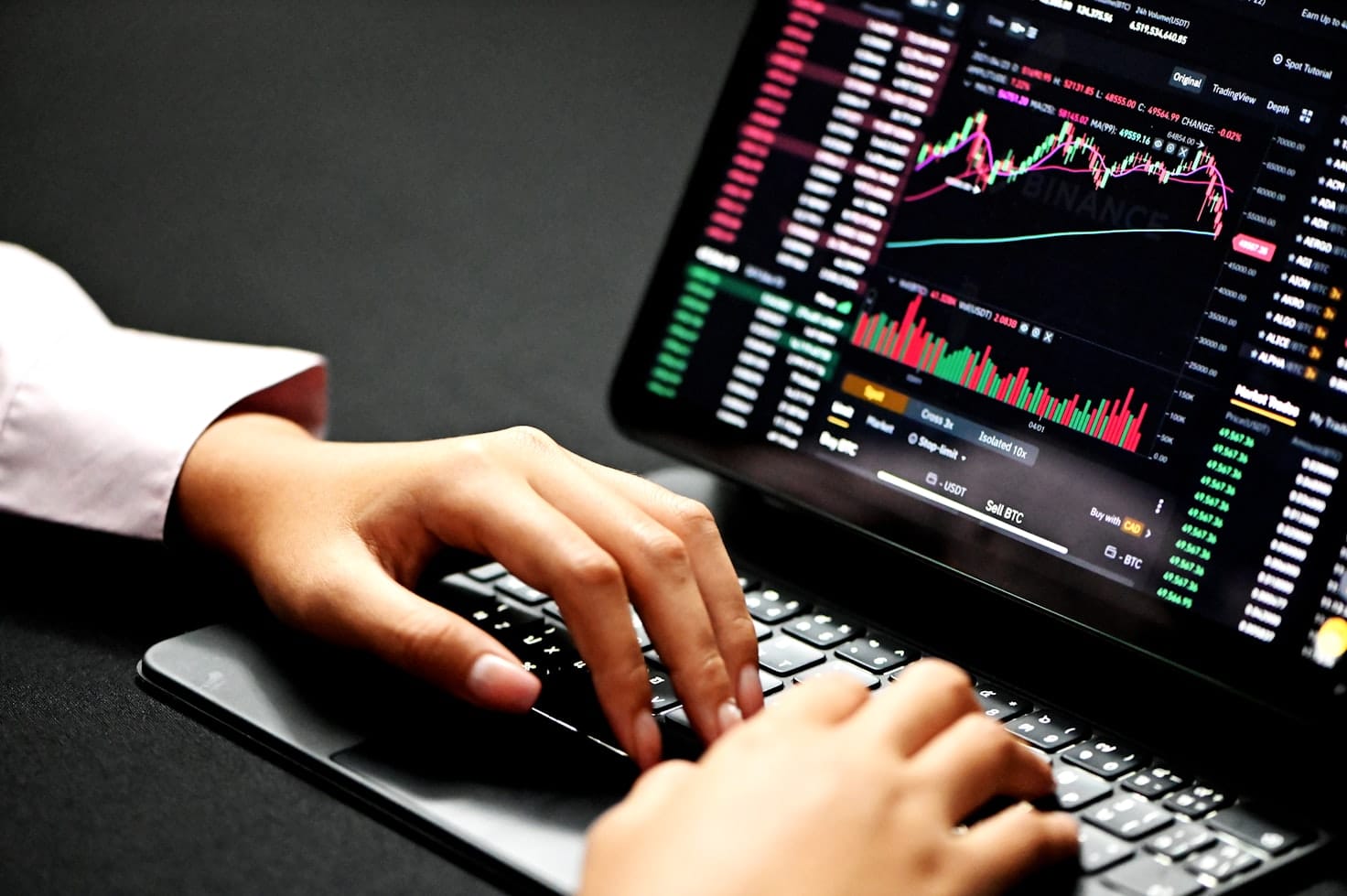
The forex market is much larger than the retail trading community that beginners typically encounter online. Behind the charts displayed on a retail trading platform is a global network of banks, central banks, corporations, investment institutions, brokers, governments and individual traders.
Each participant enters the market for different reasons. Some need currencies for genuine economic activity, while others manage financial risk or speculate on future price movements. Understanding these participants helps a beginner appreciate why the forex market behaves differently from a simple marketplace where everyone is trying to make the same type of trade.
Central Banks
Central banks are among the most influential participants in global currency markets. Institutions such as the Federal Reserve, European Central Bank, Bank of England and Bank of Japan make decisions concerning monetary policy, interest rates and other areas that can influence their economies and currencies.
Central-bank communication can therefore become extremely important to forex traders. Markets may react not only to an actual interest-rate decision, but also to speeches, policy statements, economic projections and changes in expectations about future policy.
Commercial and Investment Banks
Large banks facilitate enormous amounts of foreign-exchange activity for corporations, institutions, governments and other clients. Banks can provide liquidity, execute transactions and manage their own currency exposures.
Because of the scale of their operations, major financial institutions are an important part of the market’s underlying infrastructure.
Corporations and Multinational Businesses
International companies regularly deal with more than one currency. A company may receive revenue in one currency while paying employees, suppliers or lenders in another.
Currency fluctuations can therefore affect a company’s costs and revenues. Businesses may use the foreign-exchange market to convert currencies or reduce their exposure to unfavourable exchange-rate movements.
Investment Funds and Institutional Traders
Hedge funds, asset managers, pension funds and other institutional investors may participate in currency markets for investment, diversification, hedging or speculation.
Their decisions can contribute to substantial buying or selling pressure, particularly when large institutions adjust their exposure to global markets.
Retail Forex Traders
Retail traders are individuals who access the forex market through online brokers and trading platforms. The growth of internet-based trading has made currency markets accessible to people who previously would have had limited direct access.
However, accessibility should never be confused with simplicity. A trading account can be opened relatively easily in many jurisdictions, but developing the knowledge, discipline and risk-management skills required to trade responsibly takes considerably more time.
Retail traders are only one part of the forex ecosystem. Currency prices reflect the combined actions and expectations of participants operating for many different reasons.
11. Forex Trading vs. Currency Exchange
Beginners sometimes assume that exchanging money at a bank, bureau de change or mobile financial service is exactly the same as speculative forex trading. The underlying currency conversion is related, but the purpose and mechanics can be very different.
When someone exchanges Kenyan shillings for US dollars before travelling, the primary purpose is usually to obtain dollars for spending. A forex trader, by contrast, may enter a position because they expect the exchange rate between two currencies to change.
Retail forex trading also commonly involves trading platforms, margin requirements, bid and ask prices, spreads, position sizes and potentially leveraged positions.
| Currency Exchange | Forex Trading |
|---|---|
| Usually undertaken for practical currency needs | Usually undertaken to speculate on price movements or manage exposure |
| Often involves physical or account-based currency conversion | Usually conducted through an electronic trading platform |
| The exchanged currency may be held or spent | Positions are generally opened and closed according to a trading plan |
| May involve a conversion fee or exchange-rate markup | Trading costs may include spreads, commissions and financing charges |
12. Why Forex Appeals to New Traders
Forex has become popular among retail traders because it combines global accessibility with frequent price movement and a wide range of trading opportunities. Most brokers provide online platforms that allow traders to monitor charts and place orders from computers and mobile devices.
However, the characteristics that make forex attractive can also increase the risks. Easy access, leverage and frequent market movement can encourage inexperienced traders to take positions that are too large for their accounts.
Potential Advantages
- Global accessibility: Forex markets connect participants across many countries and financial centres.
- Extended trading hours: The market generally operates around the clock during the five-day trading week.
- High liquidity in major pairs: Popular currency pairs typically attract substantial trading activity.
- Different trading approaches: Traders may use fundamental analysis, technical analysis, price action, quantitative methods or combinations of these approaches.
- Two-way opportunities: Depending on the trading instrument and broker, traders can seek opportunities from both rising and falling markets by taking appropriate long or short positions.
The Risks Beginners Must Understand
- Leverage can magnify losses: A relatively small account can control a much larger position, meaning losses can accumulate quickly.
- Market volatility: Economic announcements and unexpected events can cause rapid price movements.
- Trading costs: Spreads, commissions and other charges can reduce trading performance.
- Emotional decision-making: Fear, greed, impatience and the desire to recover losses can lead to poor decisions.
- Lack of preparation: Entering the market without understanding position sizing, risk and trade execution can expose beginners to unnecessary losses.
Forex should not be presented as a quick path to wealth. Consistent profitability is difficult, losses are unavoidable in trading, and no strategy can guarantee a profit. The objective of forex education is to help you understand the market and manage risk—not to eliminate risk.
13. Understanding Leverage and Margin
Leverage is one of the most important concepts a new forex trader needs to understand before using a live account. It allows a trader to control a position larger than the amount of capital they have deposited, subject to the broker’s terms and applicable regulations.
Margin is the amount of account equity that a broker requires to support an open leveraged position. Margin is not the same thing as the maximum amount you can afford to lose. A leveraged position can lose money much faster than an inexperienced trader expects.
Simple Illustration
Imagine a broker provides leverage that allows a trader to control a position worth $10,000 using $1,000 of margin.
The trader has not magically turned $1,000 into $10,000 of personal wealth. Instead, the broker is allowing the trader to control a larger market position under specified margin conditions.
Because the position is larger relative to the trader’s own capital, a relatively small adverse price movement can produce a meaningful loss to the account.
This is why professional trading education places so much emphasis on position sizing and risk management. Leverage itself is not a trading strategy. It is a mechanism that changes the size of exposure and therefore changes the speed at which both gains and losses can occur.
14. What a Beginner Needs Before Trading Live
Opening a trading account should not be the first objective of someone beginning their forex journey. The first objective should be developing a basic understanding of the market and learning how to protect capital.
Before considering live trading, a beginner should understand the following:
- How currency pairs are quoted
- What buying and selling a currency pair means
- How pips and position sizes work
- What spreads and commissions are
- How leverage and margin affect risk
- How stop-loss and take-profit orders work
- How to calculate position size
- How economic news can affect volatility
- How to create and follow a trading plan
- How to maintain a trading journal
A demo account can also provide a useful environment for learning platform mechanics and practising trade execution without immediately exposing real money to market risk. However, demo trading cannot perfectly reproduce the psychological pressure associated with real financial losses.
Education Before Execution
The strongest foundation is not a collection of entry signals. It is an understanding of how the market works, why prices move, how trades are executed and how risk is controlled.
15. Forex Trading in Kenya
Forex trading has attracted significant interest in Kenya, with many individuals using online trading platforms to access international currency markets. The growth of internet connectivity, smartphones, digital payments and online financial education has made it easier for aspiring traders to learn about and access financial markets.
However, accessibility also creates a responsibility for traders to understand the regulatory environment and the risks involved. Before depositing money with a broker, a Kenyan trader should verify the broker’s regulatory status, understand the products being offered and carefully review the applicable terms and conditions.
The Role of the CMA
In Kenya, the Capital Markets Authority (CMA) plays an important role in regulating the capital-markets industry. Traders should therefore take regulatory verification seriously rather than relying solely on advertisements, social-media recommendations or claims made by online influencers.
A broker being visible online does not automatically mean that it is appropriate or authorised for a particular Kenyan customer. Always verify the current regulatory information directly through the relevant regulator before committing funds.
Do not choose a broker simply because it offers mobile-money deposits, high leverage, bonuses or attractive advertising. Regulation, transparency, withdrawal conditions, costs, risk disclosures and customer protections should all be considered.
Mobile Trading and Digital Payments
Kenya’s strong mobile-money ecosystem has also influenced how people interact with online financial services. Some forex brokers serving Kenyan customers may provide local payment methods, while others may use bank transfers or international payment systems.
Payment convenience, however, should never be treated as evidence that a trading opportunity is legitimate or profitable. The method used to fund an account has little to do with the underlying risk of the financial market.
16. Choosing a Forex Broker
A forex broker provides the infrastructure through which many retail traders access financial markets. Choosing a broker is therefore an important decision that should be based on more than attractive promotional offers.
Important Factors to Check
- Regulation: Check whether the broker is authorised by the relevant financial regulator for the jurisdiction in which you reside.
- Trading costs: Understand spreads, commissions, overnight financing and any other applicable charges.
- Execution conditions: Learn how orders are executed and understand the possibility of slippage during volatile markets.
- Available instruments: Confirm which currency pairs and other financial instruments are actually available.
- Withdrawal policies: Understand how withdrawals work, including processing requirements and potential charges.
- Platform reliability: A trading platform should provide dependable access to charts, orders, account information and risk controls.
- Customer support: Reliable support can be valuable when dealing with account or technical issues.
- Risk disclosures: Read the broker’s risk warnings and product documentation rather than ignoring them.
No legitimate broker or educator can guarantee that your trades will be profitable. Claims of guaranteed returns, risk-free trading or unusually high profits should be treated as major warning signs.
17. Forex Trading Platforms
A trading platform is the software through which traders analyse markets, monitor prices and execute orders. Popular platforms used in retail trading include MetaTrader 4 (MT4), MetaTrader 5 (MT5) and other broker-provided platforms.
The platform itself does not determine whether a trader becomes successful. It is simply a tool. A sophisticated platform cannot compensate for poor risk management, inadequate market knowledge or an undisciplined trading process.
Basic Functions of a Trading Platform
- Display live or near-live market prices
- Provide interactive price charts
- Allow traders to place and manage orders
- Display open positions and account information
- Provide tools for technical analysis
- Allow traders to set stop-loss and take-profit orders
- Provide historical price data for analysis
Beginners should first learn how their chosen platform works on a demo account. Understanding order types and platform controls is an essential part of trade execution.
18. Common Forex Order Types
A forex trader can use different types of orders depending on how they want to enter or manage a position. Understanding these orders is more important than memorising complex strategies.
Market Order
A market order is generally used when a trader wants to enter or exit a position at the best available price in the market at that moment. The actual execution price may differ from the displayed price, particularly during fast-moving conditions.
Limit Order
A limit order is used to seek execution at a specified price or a more favourable price, depending on the order direction and broker’s execution rules.
Stop Order
A stop order can be used to enter a trade after price reaches a specified level. Traders may also use stop orders as part of a risk-management or breakout strategy.
Stop-Loss Order
A stop-loss is designed to close a position when price reaches a predefined level, helping limit the intended loss on a trade. It is an important component of disciplined risk management, although execution can differ from the requested level during gaps or extreme market conditions.
Take-Profit Order
A take-profit order is designed to close a position when price reaches a predefined target. It can help traders follow a predetermined exit plan instead of making an emotional decision while a trade is open.
The Professional Mindset
A trading plan should answer three basic questions before a trade is opened:
- Where will I enter?
- Where will I exit if the trade is wrong?
- Where will I take profit if the trade works as expected?
These questions encourage traders to think about risk and execution before committing capital rather than trying to improvise after entering a position.
19. The Difference Between Trading and Investing
Forex trading is generally associated with shorter- or medium-term speculation on exchange-rate movements, although the holding period can vary significantly between traders.
Investing traditionally involves acquiring assets with the intention of benefiting from long-term growth, income or both. Forex trading, by contrast, focuses on changes in the relative value of currencies and can involve positions held for minutes, hours, days or longer.
Neither approach should automatically be considered superior. They involve different objectives, risks, time horizons and methods of analysis.
| Forex Trading | Long-Term Investing |
|---|---|
| Focuses on currency-price movements | Often focuses on long-term asset growth or income |
| Can involve short holding periods | Usually involves a longer investment horizon |
| Leverage may be available | Leverage varies by asset and investment method |
| Requires active trade management in many strategies | May require less frequent decision-making |
Understanding this distinction is important because a beginner should not approach a leveraged forex account with the same expectations they might have when building a long-term investment portfolio.
20. The Most Important Principle: Protect Your Trading Capital
New traders often focus heavily on finding the perfect entry. Experienced traders understand that risk management is just as important as identifying an opportunity.
A trading account is a limited resource. Every trade exposes some portion of that resource to market uncertainty. If a trader risks too much on a small number of positions, a short losing streak can cause severe damage to the account and make it difficult to continue trading rationally.
Good Risk Management Begins Before the Trade
- Determine the amount of capital you are genuinely prepared to risk.
- Decide where the trade idea becomes invalid.
- Calculate an appropriate position size.
- Understand the effect of leverage on your exposure.
- Avoid placing trades simply because you feel pressured to participate.
- Do not increase position size simply to recover a previous loss.
- Keep sufficient capital available to withstand normal market fluctuations.
Forex trading involves the possibility of losing some or all of the money committed to trading. Rent, food, emergency savings, school fees, debt repayments and other essential financial obligations should not depend on profits from forex trading.
15. Choosing a Forex Broker
A forex broker provides the trading infrastructure that allows retail traders to access the foreign exchange market. Your broker can affect your trading costs, order execution, available currency pairs, platform options, account conditions and overall trading experience.
Choosing a broker should therefore be treated as part of your trading preparation, not as an afterthought. A broker offering extremely high leverage or very attractive bonuses is not automatically a better broker. Beginners should focus first on regulation, transparency, execution quality, costs and the protection of client funds.
What to Check Before Opening an Account
- Whether the broker is properly licensed and regulated in the jurisdiction where you are based.
- The broker’s trading costs, including spreads, commissions and other applicable charges.
- Available trading platforms and whether they are reliable and easy to use.
- Minimum deposit requirements and account types.
- Deposit and withdrawal procedures.
- Available customer support and communication channels.
- Whether the broker clearly explains its trading conditions and risks.
- Whether the broker’s leverage and margin requirements are appropriate for your experience level.
If you are trading from Kenya, always verify the broker’s current regulatory and licensing information before depositing money. Do not rely solely on advertisements, social-media recommendations or claims made by influencers. Regulatory status can change, so information should be checked directly with the relevant regulator.
Why Regulation Matters
Regulation does not eliminate trading risk, but it can provide an important layer of oversight. A properly regulated broker is generally subject to rules concerning its operations, conduct and treatment of clients.
Beginners should also understand that regulation in one country does not necessarily mean that a broker is regulated in another. Always determine which legal entity will actually hold your account and which regulator supervises that entity.
Beginner Warning
Never choose a broker simply because it promises guaranteed profits, extremely high returns, risk-free trading, unusually large bonuses or signals that supposedly cannot lose. No legitimate forex broker can guarantee trading profits.
16. Understanding Trading Platforms
Once you have selected a suitable broker, you will normally use a trading platform to analyse prices, place orders, manage open positions and monitor your account.
A trading platform is essentially the interface between you and your broker’s trading environment. It allows you to interact with the market through charts, order tickets, account information and position-management tools.
Before trading real money, spend time learning how your chosen platform works. A trader who understands market analysis but does not understand how to place or modify an order can make avoidable and potentially expensive mistakes.
| Platform Feature | Purpose |
|---|---|
| Charts | Used to study price movements and market structure. |
| Order Window | Used to enter and manage trades. |
| Trade History | Shows previous transactions and trading results. |
| Account Information | Displays balance, equity, margin and other account metrics. |
| Economic Calendar | Helps traders monitor scheduled economic events when available. |
17. Basic Forex Order Types
An order tells your broker how you want to enter or manage a trade. Understanding the most common order types is essential before using a live account.
Market Order
A market order instructs the broker to execute a trade at the best available price under the broker’s execution conditions. Because markets move continuously, the final execution price may differ from the price you saw immediately before submitting the order.
Limit Order
A limit order is designed to enter the market at a specified price or a more favorable price. Traders often use limit orders when they want to participate only if price reaches a particular level.
Stop Order
A stop order becomes active when price reaches a specified trigger level. Traders can use stop orders for breakout entries or other predefined trading conditions.
Stop-Loss Order
A stop-loss is commonly used to limit the loss on a position if the market moves against the trader. It is one of the most important risk-management tools available to a forex trader.
Take-Profit Order
A take-profit order is designed to close a position when a predetermined profit target is reached. It can help traders follow a predefined exit plan rather than making emotional decisions after entering a trade.
The Important Principle
The purpose of learning order types is not to use every order available. It is to understand what each order does, when it may be appropriate and what risks or execution differences may be involved.
18. Going Long and Going Short in Forex
Forex trading differs from traditional investing in an important way: traders can potentially seek opportunities from both rising and falling currency prices.
When you buy a currency pair, you are generally expecting the base currency to strengthen relative to the quote currency. This is commonly described as going long.
When you sell a currency pair, you are generally expecting the base currency to weaken relative to the quote currency. This is commonly described as going short.
Simple Example
Suppose EUR/USD is trading at 1.1000 and your analysis suggests that the euro may strengthen against the U.S. dollar. You could consider a long EUR/USD position.
If your analysis instead suggests that the euro may weaken against the U.S. dollar, you could consider a short EUR/USD position.
In both cases, the trader is speculating on the future movement of the exchange rate.
19. Forex Trading Is Not the Same as Long-Term Investing
Beginners sometimes approach forex with the same mindset they would use when buying shares or holding a long-term investment. While there can be similarities in analysis and risk management, the objectives and mechanics can be very different.
| Forex Trading | Long-Term Investing |
|---|---|
| Often focuses on shorter-term price movements. | Often focuses on long-term value creation. |
| Currency pairs are traded relative to one another. | An investor may own an underlying asset such as shares or property. |
| Leverage is commonly available. | Leverage may be absent or used differently. |
| Trading costs and execution can be important. | Long-term holding costs and investment fundamentals may receive greater emphasis. |
| Losses can occur rapidly, particularly with leverage. | Investment horizons may be much longer. |
Neither approach is automatically superior. The important point is to understand what you are doing and what risks are involved. Forex should not be treated as a shortcut to building wealth.
20. How Economic Events Can Affect Forex Prices
One of the most important ideas for a new forex trader is that currencies do not move randomly. Their prices can respond to changing expectations about economies, interest rates, inflation, employment, government policy, geopolitical developments and global risk sentiment.
For example, if market participants begin expecting a central bank to maintain higher interest rates for longer, that expectation may influence demand for the country’s currency. Similarly, disappointing economic data can alter expectations and cause traders to reassess the currency’s future value.
This is why understanding forex requires more than simply looking at a chart. Price tells you what the market is doing, while fundamental analysis can help explain some of the forces behind that movement.
Preparing for Module 2
In this module, you are learning what the forex market is and how it works. The next stage is to understand why currencies move.
Module 2 will take a deeper look at economic fundamentals, interest rates, inflation, employment data, central banks, monetary policy and market expectations. These concepts will give you a stronger foundation for interpreting major currency movements.
21. A Beginner’s Practical Forex Preparation Checklist
Before placing your first live trade, make sure you can confidently answer the following questions:
If you cannot answer these questions comfortably, there is no need to rush into live trading. Continue learning and practise in a demo environment until the mechanics of trading become familiar.
Continue Learning
Build your foundation further with our Essential Steps Into Forex Trading guide, which provides additional practical guidance for beginners.
You can also return to the complete SkyPress Forex Trading Full Course to follow the academy in sequence.
22. Understanding the Difference Between Analysis and Prediction
One of the most important lessons for a new forex trader is learning that analysis is not the same as prediction. No trader can know with certainty what a currency pair will do next. Instead, traders analyse available information, identify possible scenarios and manage their risk if the market behaves differently from what they expected.
A professional approach therefore does not begin with the question, “Where will price go?” It begins with questions such as:
Better Questions to Ask
- What is the current market environment?
- What factors could influence this currency?
- What is the broader trend or market structure?
- What economic events could change expectations?
- Where would my trading idea become invalid?
- How much am I prepared to risk if I am wrong?
- Is the potential opportunity worth the risk?
This mindset becomes increasingly important as you progress through the SkyPress Forex Academy. Later modules will introduce technical analysis, price action, market structure, trade execution, risk management and advanced trading concepts. Each of these areas works best when uncertainty is accepted rather than ignored.
23. Why Forex Traders Need Both Technical and Fundamental Context
Forex analysis is commonly divided into two broad approaches: fundamental analysis and technical analysis.
Fundamental analysis examines economic and financial factors that can influence the value of a currency. This includes interest rates, inflation, economic growth, employment conditions, central-bank decisions and other developments that affect market expectations.
Technical analysis focuses primarily on price behaviour. Traders may study trends, support and resistance, chart patterns, market structure, candlesticks, indicators and other price-based information.
| Approach | Main Question | Examples |
|---|---|---|
| Fundamental Analysis | Why might the currency be changing in value? | Interest rates, inflation, employment, central banks |
| Technical Analysis | What is price doing? | Trends, support, resistance, patterns, indicators |
| Risk Management | What happens if the trade is wrong? | Position size, stop-loss, risk per trade |
| Trading Psychology | How will I behave under uncertainty? | Discipline, patience, emotional control |
You do not need to master every method immediately. The purpose of this introductory module is to show you how these areas fit together. The following modules will progressively develop each skill.
24. The Importance of Market Context
The same chart pattern can produce very different outcomes depending on the surrounding market conditions. A technical setup appearing during a quiet market may behave differently when major economic data is about to be released.
Likewise, a currency pair can experience a strong move when traders suddenly change their expectations about interest rates or economic conditions. Understanding the broader environment helps a trader avoid treating every price movement as an isolated event.
Simple Scenario
Imagine EUR/USD has been rising for several days. A trader looking only at the chart may conclude that the upward movement is likely to continue.
However, suppose an important European economic report is scheduled for release and market expectations are unusually strong. The actual result could cause traders to reassess their expectations, producing a rapid price movement in either direction.
The lesson is not that economic news always reverses a trend. The lesson is that market context matters.
25. The Role of a Forex Trading Plan
A trading plan is a structured set of rules that explains how you intend to approach the market. It helps replace impulsive decisions with predefined processes.
A beginner’s trading plan does not need to be complicated. It should simply answer the most important questions before a position is opened.
A Basic Trading Plan Can Include
- Markets: Which currency pairs will you trade?
- Timeframes: Which charts will you use for analysis?
- Entry conditions: What must happen before you enter?
- Stop-loss rules: Where is the trade idea considered invalid?
- Profit-taking: How will you manage potential profits?
- Risk limit: How much account capital are you willing to risk?
- Trading hours: When will you analyse and trade?
- News rules: How will you handle major economic announcements?
- Review process: How will you evaluate your decisions?
A trading plan is not designed to predict every market movement. Its purpose is to create consistency. When your rules are defined before a trade, you are less likely to change them simply because the market is moving against you.
26. Keeping a Forex Trading Journal
A trading journal is a record of your trading decisions and their outcomes. It can become one of the most useful learning tools you have because it allows you to evaluate your process rather than relying on memory.
A useful journal can record:
- Date and time of the trade
- Currency pair
- Market conditions
- Reason for entering
- Entry price
- Stop-loss level
- Take-profit level
- Position size
- Amount or percentage risked
- Trade outcome
- Emotional state
- What was done well
- What could be improved
Over time, a journal can reveal recurring mistakes. For example, you may discover that you enter trades too early, trade excessively after a loss, ignore major economic announcements or increase position sizes after winning trades.
Identifying these patterns is valuable because improvement in trading comes not only from finding better entries, but also from eliminating repeated mistakes.
27. Common Beginner Mistakes in Forex Trading
Many new traders focus heavily on finding profitable strategies while overlooking basic behavioural and risk-management mistakes. Understanding these common errors can help you avoid unnecessary losses.
1. Trading Without Understanding the Market
Opening a live account before learning basic forex terminology, order types, leverage and risk management creates unnecessary exposure.
2. Using Excessive Leverage
High leverage can make a small market movement produce a large change in account equity. It can therefore magnify losses just as easily as it magnifies potential gains.
3. Risking Too Much on One Trade
A single trade should never be allowed to determine whether your trading journey continues. Proper position sizing helps prevent one mistake from causing disproportionate damage to your account.
4. Trading Without a Stop-Loss Plan
Hoping that a losing position will eventually recover is not a risk-management strategy. Before entering a trade, you should know what conditions would invalidate your idea.
5. Chasing the Market
Traders sometimes enter after a large price movement because they fear missing an opportunity. This behaviour, often called FOMO, can lead to poor entries and unnecessary risk.
6. Revenge Trading
After a loss, some traders immediately attempt another trade to recover the money. This can create a cycle of increasingly emotional decisions and escalating losses.
7. Constantly Changing Strategies
A beginner may switch strategies every time a trade loses. This prevents the trader from collecting enough information to determine whether a method actually works under the conditions for which it was designed.
8. Treating Social-Media Signals as a Trading Plan
A trade idea posted online may not include the full reasoning, risk tolerance or account conditions of the person sharing it. Learning to analyse markets independently is far more valuable than blindly copying entries.
Remember
A losing trade does not automatically mean that your analysis was bad, just as a profitable trade does not automatically mean that your analysis was good. Evaluate the quality of the decision-making process, not only the final outcome.
28. Building the Right Mindset Before Going Live
Successful trading requires a realistic understanding of uncertainty. The market does not owe a trader an opportunity, and no strategy produces winning trades all the time.
A disciplined beginner learns to accept that losses are part of speculation. The objective is not to avoid every loss. The objective is to control losses so that individual trades do not cause catastrophic damage to the trading account.
The Professional Mindset
Think in terms of probabilities, process and risk rather than certainty, prediction and quick profits.
Your first goal should be to become competent at understanding and managing the market. Profitability, if it comes, should be treated as the result of a disciplined process rather than something that can be guaranteed.
29. How Module 1 Connects to the Rest of the Academy
This module has introduced the foundations you need before studying more advanced forex concepts. You now have a framework for understanding currency pairs, market participants, trading sessions, basic terminology, leverage, orders, brokers, market context and the importance of risk.
The next step is to understand the economic forces that influence currency values. This is where fundamental analysis becomes important.
Instead of simply observing that EUR/USD has moved higher or USD/JPY has fallen, you will begin asking what economic information, monetary-policy expectations and market developments may be contributing to those movements.
30. Key Takeaways From Module 1
Before moving into fundamental analysis, take a moment to review the most important concepts introduced in this module. A strong foundation makes the more advanced material in the following modules much easier to understand.
Key Lessons
- Forex is the global marketplace for currencies. Currency pairs show the value of one currency relative to another.
- Every forex pair contains a base currency and a quote currency. The exchange rate tells you how much of the quote currency is required to buy one unit of the base currency.
- Forex prices are constantly changing. Economic data, interest-rate expectations, central-bank decisions, geopolitical developments, market sentiment and capital flows can all influence currency prices.
- Major, minor and exotic pairs have different characteristics. Beginners should understand liquidity, spreads and volatility before deciding which pairs to trade.
- The forex market operates across global financial centres. Understanding trading sessions can help you recognise when different markets are most active.
- Pips, spreads and lot sizes are fundamental trading concepts. Understanding these terms is essential for calculating potential costs and managing positions.
- Leverage increases both potential gains and potential losses. It should be treated as a risk-management issue rather than simply an opportunity to control a larger position.
- Forex trading involves substantial risk. There is no guaranteed strategy, signal or method that can eliminate losses.
- Analysis is not prediction. Traders work with probabilities and scenarios rather than certainty.
- A trading plan creates consistency. Entry conditions, risk limits and exit rules should be considered before a trade is opened.
- A trading journal supports continuous improvement. Reviewing both successful and unsuccessful decisions can help identify recurring mistakes.
- Education should come before aggressive trading. Beginners should understand the market, practise their platform skills and develop risk-management habits before committing significant capital.
31. Frequently Asked Questions About Forex Trading
What is forex trading?
Forex trading is the buying and selling of currencies in the foreign exchange market. Because currencies are quoted in pairs, a forex trader is always dealing with the relative value of one currency against another.
How does a forex currency pair work?
A currency pair consists of a base currency and a quote currency. For example, in EUR/USD, EUR is the base currency and USD is the quote currency. If EUR/USD is 1.1000, it means one euro is being valued at 1.1000 U.S. dollars.
Can I make money trading forex?
It is possible to make profits from forex trading, but profits are not guaranteed. Forex trading is speculative and involves the possibility of losing some or all of the capital allocated to trading. Results depend on many factors, including strategy, market conditions, risk management, execution and trader behaviour.
Is forex trading suitable for beginners?
Beginners can learn forex trading, but they should approach it as a financial skill that requires education, practice and risk management. Starting with a demo account and learning the mechanics of the market can help reduce avoidable mistakes before considering live trading.
How much money do I need to start forex trading?
There is no universal amount that every trader needs. Broker minimum deposits vary, but the minimum required to open an account should not be confused with the amount of capital needed to trade responsibly. You should never deposit money that you cannot afford to lose.
What is leverage in forex?
Leverage allows a trader to control a position larger than the amount of capital deposited as margin. While leverage can increase the potential return on a small amount of capital, it also magnifies losses and can cause an account to lose money rapidly.
What is a pip in forex?
A pip is a commonly used unit for measuring a change in the exchange rate of a currency pair. For many major currency pairs, one pip is typically the fourth decimal place, although pairs involving the Japanese yen commonly use the second decimal place for the traditional pip convention.
What is a spread in forex trading?
The spread is the difference between the bid price and the ask price. It represents one of the costs that can be associated with entering and exiting a forex position. Spreads can vary depending on the currency pair, market conditions and broker.
What is the best currency pair for a beginner?
There is no single best currency pair for every beginner. Major pairs are often studied first because they generally have high liquidity and extensive market information, but traders should still understand their volatility, spreads and individual behaviour before trading them.
Can I trade forex from Kenya?
Forex trading is accessible to retail traders in Kenya through brokers that offer services to Kenyan clients. Before opening an account, however, traders should verify the broker’s current regulatory status, understand the applicable rules and carefully review the broker’s terms and conditions.
What is a forex trading demo account?
A demo account is a simulated trading account that allows users to practise using a trading platform and test strategies without exposing the same amount of capital as a live account. It can be useful for learning order placement, chart navigation and basic trade management.
Should beginners use high leverage?
Beginners should be particularly cautious with leverage. High leverage can make relatively small market movements produce significant changes in account equity. Understanding position sizing and risk management is more important than attempting to maximise leverage.
What is fundamental analysis in forex?
Fundamental analysis examines economic and financial factors that can influence currency values. These include interest rates, inflation, employment, economic growth, central-bank policy and market expectations. Module 2 explores these concepts in greater depth.
What is technical analysis in forex?
Technical analysis studies price and market data to identify trends, levels, patterns and potential trading conditions. It may involve charts, candlestick analysis, indicators and market structure. These concepts are developed further in later SkyPress Forex Academy modules.
Is forex trading the same as gambling?
Forex trading is a form of financial speculation and carries significant uncertainty. It should not be approached as a guaranteed way to make money. Unlike games of chance, traders can develop analytical methods and risk-management systems, but those methods do not remove uncertainty or guarantee profitable outcomes.
32. Your Next Step: Forex Market Fundamentals
You have now completed the introductory foundation of the SkyPress Forex Academy. You understand what the forex market is, how currency pairs are structured, who participates in the market, how prices are quoted and why risk management must be considered from the beginning.
But knowing how the market works is only the beginning. The next question is much more important: What causes currencies to rise and fall?
To answer that question, you need to understand the economic forces behind currency markets. Interest rates, inflation, employment, economic growth, central-bank decisions and market expectations can significantly influence how traders value a currency.
Forex Market Fundamentals
Move beyond the basics and learn how economic data, interest rates, inflation, central banks, monetary policy and market expectations influence currency prices.
Forex Market Fundamentals
Discover the economic forces that drive currency markets, including interest rates, inflation, employment data, central banks, monetary policy and market expectations.
33. Risk Disclaimer
Educational Disclaimer: The information provided in this SkyPress Forex Academy module is for educational and informational purposes only. It does not constitute financial, investment, trading or legal advice, and it should not be interpreted as a recommendation to buy or sell any currency, financial instrument or other asset.
Forex trading involves substantial risk and may result in the loss of your trading capital. Leverage can increase both potential profits and potential losses. Past performance does not guarantee future results, and no trading strategy, analysis, indicator or educational material can guarantee profitability.
Before participating in forex trading, consider your financial circumstances, level of experience and risk tolerance. Conduct your own research and, where appropriate, seek advice from a qualified financial professional.
SkyPress does not guarantee the accuracy, completeness or future relevance of market information, broker conditions or other third-party information discussed in educational material. Always verify important information independently before making financial decisions.
Build Knowledge Before You Build Risk
The strongest foundation for a forex trader is not a promise of quick profits. It is knowledge, discipline, realistic expectations and consistent risk management.
Continue through the SkyPress Forex Academy one module at a time, master each foundation before moving forward, and remember that becoming a better trader is a process rather than a single strategy or shortcut.