
Mastering Risk Management and Trading Psychology
Mastering Risk Management and Trading Psychology
Learn how professional traders protect capital, control risk, manage emotions, and develop the discipline required for consistent Forex trading. This advanced module combines practical risk management systems with trading psychology to help you make better decisions under real market pressure.
Mastering Risk Management and Trading Psychology
Welcome to Module 6 of the SkyPress Forex Academy. By this stage of your Forex education, you should already have a working understanding of how the currency market operates, how price charts are constructed, and how traders use technical and fundamental information to identify potential opportunities.
However, understanding the market is not enough. A trader can have an excellent strategy, identify technically attractive setups, and still lose money consistently if risk is poorly controlled or emotions repeatedly interfere with execution.
This is why risk management and trading psychology sit at the center of professional trading. They determine how much you can lose, how long you can remain in the market, how you respond to losing trades, and whether you can follow your strategy consistently when market conditions become uncomfortable.
In this module, we move beyond simply asking, “Where should I enter a trade?” Instead, we focus on the questions that determine long-term survival and consistency:
- How much should I risk on each trade?
- Where should my stop-loss logically be placed?
- How large should my position be?
- How much total exposure am I carrying?
- What happens if I experience several consecutive losses?
- How can I prevent fear, greed, revenge trading, and overconfidence from controlling my decisions?
- How can I evaluate my performance objectively rather than judging myself by one individual trade?
These questions transform Forex trading from a sequence of isolated bets into a structured decision-making process.
A professional trader does not focus primarily on how much can be made from one trade. The professional focuses on controlling downside risk so that no single trade, losing streak, or emotional decision can destroy the trading account.
If you are still building your understanding of the Forex market, revisit our complete beginner’s guide to Forex trading before continuing with the advanced concepts in this module.
Why Risk Management Is More Important Than Finding the Perfect Strategy

Many aspiring traders spend enormous amounts of time searching for the perfect indicator, the most accurate entry signal, or a strategy that supposedly never loses. This creates one of the most dangerous misconceptions in Forex trading.
No legitimate trading strategy can eliminate losses. Financial markets are uncertain, and even high-quality setups can fail because of unexpected economic announcements, changes in volatility, liquidity conditions, geopolitical developments, or normal statistical variation.
The purpose of risk management is therefore not to prevent every losing trade. Its purpose is to make individual losses manageable.
Consider two traders using the same strategy. Trader A risks 10% of the account on every position, while Trader B risks 1%. If both traders experience five consecutive losses, their financial and psychological experiences will be dramatically different.
Trader A could suffer severe account damage and become emotionally pressured to recover the losses quickly. Trader B experiences a much smaller drawdown and retains significantly more capital and psychological flexibility.
This illustrates one of the most important principles in professional trading: strategy creates opportunity, but risk management creates survival.
What Is Forex Risk Management?
Forex risk management is the systematic process of controlling potential losses while maintaining enough exposure to participate in opportunities that meet your trading criteria.
Effective risk management includes much more than placing a stop-loss. It can involve position sizing, risk-per-trade limits, maximum daily loss limits, account exposure, correlation management, risk-to-reward analysis, leverage control, and rules for dealing with drawdowns.
A strong risk-management framework should answer one question before every trade: “If this trade goes completely wrong, how much of my account am I prepared to lose?”
The 1% Risk Principle
One commonly used risk-management framework is the 1% rule. Under this approach, a trader limits the amount that can be lost on an individual trade to approximately 1% of account equity.
For example, if a trading account contains $5,000, a 1% maximum risk would equal $50. This does not mean simply choosing a position size worth $50. Instead, the trader calculates the position size according to the distance between the entry price and the stop-loss.
Basic Risk Calculation
Maximum monetary risk = Account equity × Risk percentage
Example: $5,000 × 1% = $50 maximum planned loss.
The 1% figure should not be treated as a universal law. Different traders may use different risk limits depending on their strategy, experience, account size, and financial circumstances. The important principle is that your risk should be deliberately defined before entering a trade rather than decided emotionally after the position is open.
Why Position Sizing Matters
Position sizing connects your risk limit to the actual trade. Two setups can have completely different stop-loss distances while carrying a similar monetary risk if the position size is adjusted appropriately.
For example, suppose one setup requires a 20-pip stop while another requires a 60-pip stop. Using exactly the same lot size for both trades can create substantially different levels of financial exposure.
A professional approach therefore adjusts position size according to the stop-loss distance and the amount of money the trader is prepared to risk.
This is one reason fixed-lot trading can become problematic. A trader who always uses the same lot size may unknowingly take significantly more risk when volatility expands or when the stop-loss needs to be placed farther away.
A Simple Position-Sizing Framework
- Determine your current account equity.
- Determine the maximum percentage you are prepared to risk.
- Convert that percentage into a monetary risk amount.
- Identify the technically logical stop-loss level.
- Calculate the appropriate position size using the stop distance and pip value.
- Confirm that the resulting trade does not exceed your overall exposure limits.
The objective is not necessarily to make every trade the same size. The objective is to make the risk more consistent.
Stop-Loss Placement: Protection, Not Prediction
A stop-loss is an order designed to close a position when price reaches a predetermined level. Its primary purpose is to limit downside risk.
However, stop-loss placement should not be arbitrary. Placing a stop simply because it represents a certain number of pips can cause a trader to exit unnecessarily when normal market volatility reaches that level.
A more structured approach is to place the stop where the original trade thesis would be invalidated.
For example, if a trader enters a long position after identifying a bullish support structure, the stop may logically belong below the structure that would invalidate the bullish setup. The trader can then adjust position size so that the wider stop still represents an acceptable monetary risk.
This separates two decisions that traders frequently confuse: where the trade is invalidated and how much money is risked.
Risk-to-Reward Ratio and Trading Probability
Risk-to-reward analysis compares the potential loss on a trade with its potential gain. A 1:2 risk-to-reward ratio means the trader is targeting two units of potential reward for every one unit of planned risk.
A favorable risk-to-reward relationship can be useful because a strategy does not necessarily need to win every trade to produce a positive long-term result.
However, risk-to-reward ratio should never be considered in isolation. A theoretical 1:5 opportunity is not automatically superior to a 1:2 opportunity if the probability of reaching the target is extremely low.
Professional risk assessment therefore considers both potential reward and probability.
The objective of risk management is not to eliminate uncertainty. It is to ensure that uncertainty remains survivable.
Risk Management Is a System, Not a Single Rule
One of the biggest mistakes developing traders make is believing that risk management means simply placing a stop-loss. A stop-loss is important, but professional risk management is much broader.
A complete risk framework should determine how much you risk per trade, how much you can lose in one trading session, how many correlated positions you can hold, how much leverage you are willing to use, and what actions you will take after a significant drawdown.
This creates a protective structure around your trading strategy.
Before moving to the psychological side of trading, remember this principle: your first responsibility as a trader is to preserve your ability to participate in the next opportunity.
Managing Total Market Exposure
Risk should never be evaluated one trade at a time without considering the rest of your open positions. A trader can technically risk only 1% on each trade while still exposing the account to excessive overall risk when several positions are open simultaneously.
Total market exposure refers to the amount of trading risk currently committed across all open positions. Managing this exposure becomes especially important when several trades are influenced by the same currency, economic event, or market theme.
For example, a trader might open long positions on EUR/USD, GBP/USD, and AUD/USD at the same time. Although these are different currency pairs, they can all be influenced by broad movements in the U.S. dollar. Treating each position as completely independent may therefore underestimate the trader’s actual exposure.
Professional risk management requires looking at the portfolio rather than only individual trades.
Questions to Ask Before Adding Another Position
- How much of my account is already at risk?
- Are my existing positions exposed to the same currency?
- Could one economic announcement affect several positions simultaneously?
- Would another trade create excessive concentration?
- Does the new position improve my portfolio or simply increase my exposure?
If several trades depend on the same market outcome, the combined risk should be treated accordingly.
Understanding Correlation Risk in Forex
Currency correlation describes the tendency of two or more currency pairs to move in related ways. Correlation can be positive, negative, or change over time depending on market conditions.
This matters because opening multiple trades that are highly correlated can effectively create one much larger position.
Consider a trader who is bullish on the U.S. dollar and simultaneously sells EUR/USD, GBP/USD, and AUD/USD. Although three different charts are being traded, the positions may share a common underlying thesis: U.S. dollar strength.
If the dollar moves against the trader, multiple positions may lose at approximately the same time.
Correlation does not remain constant, so traders should not assume that relationships between currency pairs are permanent. Nevertheless, awareness of correlation can help prevent accidental concentration of risk.
Professional Risk Question
Instead of asking only, “How much am I risking on this trade?”, ask, “How much am I risking if all of my related positions move against me at the same time?”
Understanding Drawdown
Drawdown is the decline in account equity from a previous peak to a subsequent low before a new peak is established. It is one of the most important performance measures in trading because losses are not experienced individually; they accumulate.
Suppose a trading account grows from $5,000 to $6,000 and later falls to $5,400. The account has experienced a $600 decline from its previous peak. The percentage drawdown from $6,000 is 10%.
Understanding drawdown changes the way traders evaluate performance. A strategy that generates strong returns but regularly experiences extremely large drawdowns may be psychologically and financially difficult to maintain.
Why Drawdown Matters
Drawdowns affect more than the account balance. They can also affect decision-making. As losses accumulate, traders may become fearful, reduce valid positions unnecessarily, abandon their strategy, or increase risk in an attempt to recover quickly.
This creates a dangerous cycle:
- A trader experiences losses.
- Confidence decreases.
- Emotions begin influencing decisions.
- The trader changes the strategy impulsively.
- Execution becomes inconsistent.
- Performance deteriorates further.
A predefined drawdown plan can help prevent this cycle.
Creating a Maximum Daily Loss Limit
A maximum daily loss limit is a predetermined amount that tells you when to stop trading for the day. The purpose is not to prevent losing days. Losing days are an unavoidable part of trading.
The purpose is to prevent a normal losing day from turning into a destructive emotional trading session.
For example, a trader might establish a rule that trading stops after reaching a predetermined percentage of daily account loss. Once the limit is reached, no additional trades are allowed until the next trading session.
The exact limit should be based on the trader’s own strategy and risk framework. What matters most is that the rule is established before emotions become involved.
Why Daily Loss Limits Work
After several consecutive losses, traders can become vulnerable to revenge trading. The desire to recover money immediately can cause them to abandon their normal position size, enter low-quality setups, trade outside their preferred session, or take excessive leverage.
A daily loss limit creates a mechanical circuit breaker.
It tells the trader: “The trading session is over. The market will still be here tomorrow.”
Understanding Risk of Ruin
Risk of ruin is a concept used to describe the probability of losing enough trading capital that continuing the strategy becomes extremely difficult or practically impossible.
The concept demonstrates why aggressive risk-taking can be dangerous even when a trader has a profitable strategy.
Consider a trader who risks a very large percentage of the account on every trade. A relatively small sequence of losses can cause substantial damage. Recovering from a major drawdown becomes increasingly difficult because the account needs a disproportionately larger percentage gain to return to its previous level.
For example, losing 20% of an account requires a 25% gain on the remaining capital just to return to breakeven. Losing 50% requires a 100% gain to recover.
| Account Loss | Gain Required to Recover |
|---|---|
| 10% | 11.1% |
| 20% | 25% |
| 30% | 42.9% |
| 40% | 66.7% |
| 50% | 100% |
This mathematical reality explains why preserving capital is so important. Large losses do not simply reduce your account by the same percentage that you need to earn back.
Leverage: Powerful but Dangerous
Leverage allows traders to control a larger position with a smaller amount of capital. It can increase market access, but it can also magnify losses when position sizes are excessive.
A common misunderstanding is that high leverage automatically means high risk. Leverage itself is not the complete risk measure. The actual risk depends on position size, stop-loss distance, market movement, and the amount of capital exposed.
Nevertheless, high available leverage can encourage traders to open positions that are much larger than their risk-management framework can safely support.
For this reason, professional traders generally focus on controlling position size and monetary risk rather than using the maximum leverage available.
Leverage Discipline
- Never increase position size simply because more leverage is available.
- Calculate your potential loss before entering the trade.
- Understand the margin requirements of your broker.
- Leave sufficient account capacity for normal market fluctuations.
- Remember that leverage can amplify losses as well as gains.
Leverage should be treated as a tool, not as a reason to increase risk.
Volatility and Dynamic Risk Management
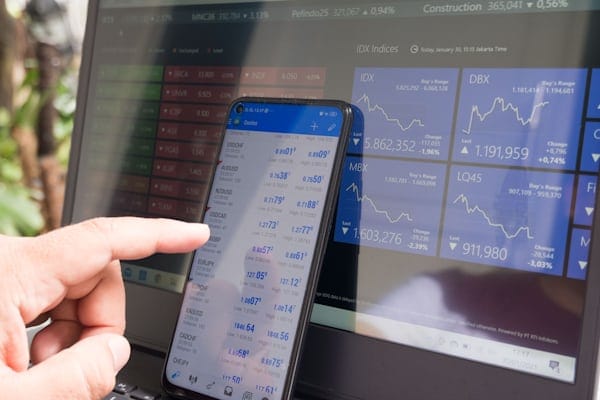
Market volatility changes continuously. A currency pair that normally moves within a relatively narrow range can experience significantly larger price movements during major economic events or periods of market uncertainty.
This means that a stop-loss distance that appears reasonable under normal conditions may be too tight during a high-volatility environment.
One approach traders use to evaluate volatility is Average True Range, commonly known as ATR. ATR measures the average range of price movement over a selected period and can provide useful context when assessing whether a market is relatively quiet or active.
For traders who are learning technical indicators, understanding volatility can complement other tools such as the Stochastic Oscillator and other technical-analysis techniques.
The important lesson is that volatility should influence position sizing. If market conditions require a wider stop, a trader may need to reduce position size so that the monetary risk remains within the predefined limit.
News Events and Event Risk
Economic announcements can produce rapid price movements and temporary increases in volatility. Major interest-rate decisions, inflation data, employment reports, central-bank communications, and other high-impact events can significantly affect currency markets.
A technically attractive setup can therefore carry additional event risk if an important announcement is approaching.
Before entering a trade, consider checking the economic calendar and asking:
- Is a major economic release approaching?
- Could the announcement directly affect the currency being traded?
- Could volatility increase substantially?
- Could execution conditions become less favorable?
- Does the trade still make sense given the additional event risk?
The goal is not necessarily to avoid every news event. Instead, the trader should understand the additional uncertainty and decide whether the position remains consistent with the trading plan.
Risk Management Checklist Before Every Trade
A simple checklist can turn risk management from an idea into a repeatable process.
Pre-Trade Risk Checklist
- Is this trade based on a valid setup?
- Where is the logical invalidation level?
- What percentage of the account am I risking?
- What is the exact monetary risk?
- Is the position size appropriate for the stop distance?
- What is my potential reward relative to my risk?
- Do I already have correlated positions open?
- Are important economic events approaching?
- Is current volatility compatible with my trading plan?
- Would I still take this trade if I had just experienced a loss?
If any answer is unclear, the trade deserves another review before execution.
From Risk Management to Trading Psychology
Risk management protects the account mechanically. Trading psychology protects the decision-making process emotionally.
Even a well-designed risk framework can fail if the trader repeatedly overrides it. A trader may know that they should risk 1%, yet increase their position after a losing streak. They may know where the stop belongs, yet move it farther away because they do not want to accept the loss.
This is where psychology becomes critical.
The next stage of this module explores the emotional and cognitive forces that influence trading decisions, including fear, greed, loss aversion, overconfidence, recency bias, revenge trading, and the psychological pressure created by uncertainty.
The Professional Mindset
You cannot control where the market goes next. You can control how much you risk, whether you follow your plan, and how you respond when the market does something you did not expect.
Understanding Trading Psychology
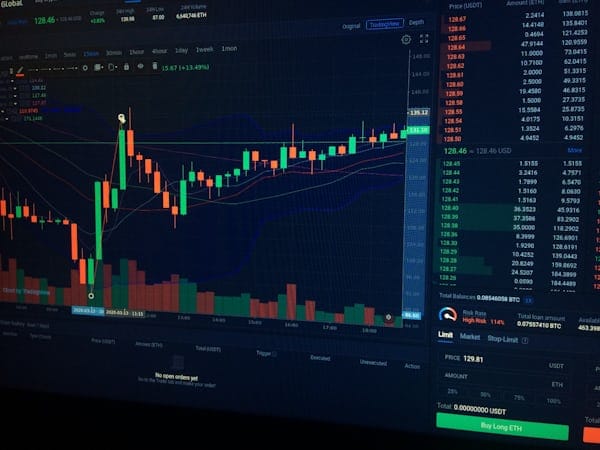
Trading psychology refers to the mental and emotional factors that influence how a trader analyzes the market, enters positions, manages risk, responds to losses, and takes profits.
Two traders can use exactly the same strategy and achieve completely different results because their psychological responses are different. One trader may follow the rules consistently, while another may abandon the strategy after a few losses or become excessively aggressive after a series of wins.
This is why becoming a better trader is not only about learning more technical analysis. It is also about understanding yourself.
The market does not know your account balance, your previous trades, your financial goals, or how badly you want a particular trade to succeed. Price simply responds to the forces affecting the market. Your responsibility is to build a process that allows you to respond objectively rather than emotionally.
Why Emotions Affect Trading Decisions
Trading creates a unique psychological environment because money, uncertainty, and rapid decision-making are combined. Every open position represents financial risk, and every movement in price can trigger an emotional response.
When a position moves against you, you may experience fear. When it moves strongly in your favor, you may experience excitement or greed. After a losing trade, you may feel the need to recover the money immediately. After several winning trades, you may begin believing that you cannot lose.
These reactions are normal human responses. The problem begins when they influence decisions that should be governed by a predefined trading plan.
Important Distinction
Professional trading does not require eliminating emotions. It requires developing a process that prevents emotions from controlling execution.
Fear in Forex Trading
Fear is one of the most common emotions experienced by traders. It can appear before entering a trade, while a position is open, or immediately after a loss.
Fear can manifest in several ways:
- Refusing to enter a valid setup after previous losses.
- Closing profitable trades too early because of fear of giving back profits.
- Moving a stop-loss farther away to avoid accepting a loss.
- Reducing position size randomly rather than according to the trading plan.
- Avoiding trades that meet the strategy’s criteria because the trader expects the market to fail.
Fear becomes particularly dangerous when it causes inconsistent execution. If your strategy has been tested over a meaningful sample of trades, changing the rules after every loss prevents you from evaluating whether the strategy actually works.
How to Manage Trading Fear
One of the most effective ways to reduce fear is to make sure the financial risk is small enough that you can emotionally tolerate the possible loss.
If a single losing trade causes intense anxiety, the position may be too large relative to your account or personal risk tolerance.
A properly sized position allows you to think about the trade as one event within a larger series of probabilities rather than as a life-changing financial decision.
Greed and the Desire for More
Greed can appear after a trader begins making money. Instead of following the original plan, the trader may increase position size, extend targets without justification, take additional setups, or remain in the market simply because price continues moving in the desired direction.
Greed often disguises itself as confidence.
For example, after several successful trades, a trader might think: “I have been right all week, so I can afford to take a much larger position.”
This is precisely when discipline becomes important. A winning streak does not guarantee that the next trade will win.
The market does not owe the trader another profitable position simply because previous trades were successful.
Loss Aversion
Loss aversion describes the tendency for people to experience losses more strongly than equivalent gains. In trading, this can produce behaviors that are damaging to long-term performance.
A trader affected by loss aversion may allow a losing position to remain open because closing it would make the loss psychologically real. At the same time, the trader may close a profitable position quickly because they fear that the profit will disappear.
The result can be a dangerous imbalance:
- Small profits are taken quickly.
- Losses are allowed to become larger.
- The original risk-to-reward structure is destroyed.
A stop-loss helps solve this problem mechanically. Once the invalidation level has been identified and the risk accepted before entering the trade, the trader does not need to renegotiate the decision emotionally while the position is open.
Recency Bias
Recency bias occurs when a trader gives excessive importance to recent events when making current decisions.
For example, imagine a trader experiences four consecutive losing trades. The next valid setup appears, but the trader refuses to take it because the recent losses have created the belief that the strategy has stopped working.
The opposite can happen after a winning streak. A trader who has recently experienced several profitable trades may become overconfident and increase risk beyond the normal trading plan.
The solution is to evaluate performance over a sufficiently large sample rather than allowing a small number of recent trades to determine your entire perception of the strategy.
Overconfidence After Winning Streaks
Winning streaks feel good, but they can create one of the most dangerous psychological conditions in trading: excessive confidence.
After several successful trades, a trader may begin to believe that they have developed an unusually strong ability to predict the market. This can lead to:
- Larger position sizes.
- More frequent trades.
- Lower-quality setups.
- Reduced attention to risk.
- Ignoring stop-loss rules.
- Trading outside the normal strategy.
The solution is simple but difficult: winning streaks should not change your risk rules.
If your normal risk-management framework is designed around a particular level of exposure, maintain it regardless of whether you have won or lost your previous five trades.
Revenge Trading
Revenge trading occurs when a trader attempts to recover losses quickly through emotionally driven trades.
It often begins with a simple thought: “I just need one good trade to get my money back.”
The trader then increases position size, lowers entry standards, takes trades outside the normal strategy, or enters the market repeatedly.
This can turn a manageable loss into a significant drawdown.
The Revenge Trading Cycle
- A trade produces a loss.
- The trader becomes frustrated.
- The trader feels pressure to recover immediately.
- Risk is increased or trading rules are relaxed.
- Another loss occurs.
- Frustration increases.
- The trader takes even greater risks.
A daily loss limit is one of the simplest mechanical defenses against this cycle.
When the predefined limit is reached, trading stops. There is no negotiation with the rule.
FOMO: Fear of Missing Out
Fear of missing out, commonly called FOMO, occurs when a trader feels compelled to enter a position because price is moving rapidly and they believe the opportunity will disappear.
FOMO frequently appears after a large breakout or sudden market movement.
The trader sees price moving strongly and enters late without waiting for the conditions required by the strategy.
This can create poor entries, unfavorable risk-to-reward ratios, and stops that are placed without proper technical justification.
One of the most important lessons in trading is: you do not need to participate in every market movement.
The market produces new opportunities continuously. Missing one move is usually less damaging than entering a low-quality trade because of emotional pressure.
Building Emotional Discipline
Emotional discipline does not mean becoming emotionless. It means following predetermined rules even when your emotions encourage you to do something else.
This requires preparation before the trading session begins.
1. Create a Written Trading Plan
Your trading plan should clearly define what you trade, when you trade, which setups qualify, where you place stops, how you determine position size, how much you are willing to risk, and under what circumstances you will stop trading.
A written plan removes many decisions from the emotional environment of live trading.
2. Use a Pre-Trade Checklist
Before entering a position, confirm that the setup meets your predefined criteria.
- Is the market condition suitable?
- Is the setup present?
- Is the entry technically justified?
- Is the stop-loss logical?
- Is the position size appropriate?
- Is the risk-to-reward relationship acceptable?
- Are there important economic events approaching?
- Am I entering because of my strategy or because I am afraid of missing the move?
If the trade does not meet your criteria, the correct decision may be to do nothing.
3. Establish Trading Circuit Breakers
Circuit breakers are rules that automatically stop trading when certain conditions occur.
Examples include:
- Reaching the maximum daily loss.
- Experiencing a predefined number of consecutive losses.
- Breaking a major trading rule.
- Experiencing unusual emotional stress or fatigue.
- Encountering abnormal market conditions outside your strategy.
These rules are designed to protect you from making increasingly emotional decisions.
Using a Trading Journal to Improve Psychology
A trading journal is one of the most valuable tools available to a developing trader. It allows you to evaluate your decisions using evidence rather than memory.
A useful journal should record more than entry price, exit price, and profit or loss.
Consider recording:
- Date and time of the trade.
- Currency pair.
- Trading session.
- Market conditions.
- Setup and entry reason.
- Stop-loss and target.
- Position size.
- Percentage risk.
- Profit or loss.
- Emotional state before entering.
- Emotional state during the trade.
- Whether the trading plan was followed.
- Lessons learned.
Over time, the journal can reveal patterns that are difficult to recognize while actively trading.
You may discover, for example, that your performance deteriorates after three consecutive losses, that you trade poorly when entering outside your preferred session, or that you frequently close profitable positions too early.
Once these patterns become visible, they can be addressed systematically.
The Difference Between a Good Trade and a Winning Trade
One of the most important psychological concepts in professional trading is the difference between process quality and outcome.
A good trade can lose money.
A bad trade can make money.
This sounds contradictory, but it is fundamental to understanding probability.
Suppose you identify a valid setup, calculate the correct position size, place the stop at the logical invalidation level, and execute the trade exactly according to your plan. The market then moves unexpectedly and hits your stop-loss.
The trade lost money, but the decision-making process may have been excellent.
Now imagine another trader enters a position without a valid setup, uses excessive leverage, has no logical stop-loss, and happens to make a profit because price moves temporarily in their favor.
The trade made money, but the process was poor.
If you judge yourself only by individual outcomes, you may accidentally reward bad behavior and punish good behavior.
Process Over Outcome
Your objective is not to make every individual trade profitable. Your objective is to execute a tested process consistently across a large sample of trades while keeping risk controlled.
Developing Patience as a Trading Skill
Patience is often underestimated in Forex trading. Traders sometimes believe that being active means being productive. In reality, professional trading frequently involves long periods of waiting.
There may be days when the market does not provide a setup that satisfies your criteria. The correct action may simply be to remain on the sidelines.
This can be psychologically difficult because traders may feel that they should always be doing something.
Remember: not taking a trade is also a trading decision.
A trader who waits for high-quality setups can potentially avoid many unnecessary losses created by boredom, FOMO, and overtrading.
Managing Stress During High-Volatility Conditions

High-volatility periods can create intense emotional reactions because price moves quickly and positions can gain or lose value rapidly.
During such conditions, traders should rely more heavily on their predefined rules rather than attempting to predict every short-term movement.
Practical techniques can include stepping away from the screen when emotionally overwhelmed, reducing unnecessary exposure, using predetermined stops, and taking a short pause before executing a new position.
Simple breathing exercises can also help create a short psychological pause between an emotional stimulus and a trading decision.
The objective is not to eliminate normal physiological reactions. It is to create enough space to prevent an emotional reaction from becoming an impulsive trade.
Building a Professional Trading Routine
Consistency becomes easier when trading is organized into a repeatable routine.
Before the Trading Session
- Review the broader market environment.
- Identify important support and resistance areas.
- Check scheduled economic events.
- Review your trading plan.
- Define acceptable risk for the session.
- Identify potential setups without forcing trades.
During the Trading Session
- Wait for qualifying setups.
- Calculate position size before entering.
- Follow predefined entry and exit rules.
- Avoid emotional adjustments.
- Monitor total exposure.
- Respect your daily loss limit.
After the Trading Session
- Record every trade.
- Review whether the rules were followed.
- Separate process mistakes from market outcomes.
- Identify emotional patterns.
- Review performance over multiple trades rather than one result.
This routine transforms trading from an emotional activity into a structured professional process.
Risk Management and Psychology Work Together
Risk management and trading psychology should never be treated as completely separate subjects.
When risk is excessive, emotional pressure increases. When emotional pressure increases, discipline becomes harder to maintain. When discipline deteriorates, risk often increases further.
This creates a feedback loop.
The opposite is also possible. When risk is controlled, the trader is better positioned to accept individual losses. When losses are psychologically manageable, it becomes easier to follow the trading plan. Consistent execution then provides better data for evaluating the strategy.
This is why the strongest trading framework combines: controlled risk + tested strategy + disciplined execution + objective review.
In the next part, we will take these concepts further by examining advanced risk assessment, technical and fundamental confluence, volatility, event risk, expectancy, performance measurement, and how to build a complete professional trading framework.
Advanced Risk Assessment: Thinking Beyond the Stop-Loss
Basic risk management begins with questions such as how much to risk and where to place a stop-loss. Advanced risk assessment goes further. It asks whether the entire trading idea is appropriate for the current market environment and whether the potential opportunity justifies the risks involved.
A trade can have a clearly defined stop-loss and still represent poor risk management if the market is experiencing unusual volatility, a major economic event is approaching, liquidity is deteriorating, or several correlated positions are already open.
Professional traders therefore evaluate risk from multiple perspectives before committing capital.
The Four Dimensions of Advanced Risk Assessment
- Technical Risk: How reliable is the market structure supporting the trade?
- Volatility Risk: Is current price movement compatible with the planned stop and position size?
- Fundamental Risk: Are economic developments capable of changing the market thesis?
- Portfolio Risk: How does this position interact with existing trades?
When these four dimensions are considered together, the trader can make a more informed decision instead of relying on a single indicator or entry signal.
Technical Structure and Risk
Technical analysis provides the framework for identifying potential entry and invalidation points. However, not every technical setup carries the same quality.
A support level that has repeatedly influenced price may be more meaningful than an isolated level that has never been tested. Likewise, a trend supported by multiple timeframes may provide stronger structural context than a trend visible only on a very short-term chart.
When assessing technical risk, consider:
- Is the broader market trending or ranging?
- Is the trade aligned with the higher-timeframe structure?
- Has the relevant support or resistance area been respected previously?
- Is price entering a significant opposing level?
- Where would the original trade thesis become invalid?
- Is there enough room for price to reach the target before encountering major obstacles?
A technically attractive entry becomes less attractive when the surrounding market structure does not support the trade.
Multi-Timeframe Risk Assessment
Looking at more than one timeframe can help traders understand the relationship between short-term price action and broader market structure.
For example, a trader might identify a bullish setup on a lower timeframe while the higher timeframe is approaching a major resistance zone. The lower-timeframe setup may still be valid, but the opposing higher-timeframe structure introduces additional risk.
A practical multi-timeframe process can involve:
- Higher timeframe: Identify the broader trend and major structural levels.
- Intermediate timeframe: Study market structure and potential zones of interest.
- Execution timeframe: Wait for the specific entry trigger defined by the strategy.
The purpose is not to add endless analysis. It is to understand the environment surrounding the trade.
Volatility-Adjusted Risk
Volatility is one of the most important factors affecting stop-loss placement and position sizing.
When markets become more volatile, price can travel greater distances within a short period. A stop that is appropriate during a quiet session may be too close during a highly volatile session.
This does not mean that a trader should simply widen every stop whenever volatility increases. A wider stop must be accompanied by an appropriately smaller position size if the monetary risk is to remain controlled.
The relationship can be summarized as:
Higher volatility + wider stop = potentially smaller position size.
The objective is to accommodate normal market movement without allowing the potential financial loss to exceed the predetermined risk limit.
Fundamental Risk and Economic Events
Technical analysis does not exist in isolation. Currency markets are influenced by interest rates, inflation, employment conditions, economic growth, central-bank policy, geopolitical developments, and changes in market expectations.
A technically valid setup can therefore change rapidly when new information enters the market.
For example, a trader may identify a bullish technical structure in a currency pair shortly before a major central-bank decision. If the announcement changes interest-rate expectations, the fundamental environment may shift quickly and invalidate the technical thesis.
This is why an advanced trading plan should include an awareness of scheduled economic events.
Questions Before High-Impact News
- What major economic releases are scheduled?
- Which currencies are directly affected?
- Is the current position exposed to the announcement?
- Would increased volatility make the existing stop inappropriate?
- Does the trading strategy specifically allow positions to remain open during major announcements?
There is no universal rule requiring every trader to avoid news. The important principle is to understand the additional risk and ensure that the decision is consistent with the trading plan.
Slippage and Execution Risk
Risk calculations often assume that a stop-loss will execute exactly at the selected price. In real market conditions, execution may differ from expectations.
Slippage occurs when an order is executed at a different price from the requested price. It can become more relevant during rapid market movements, periods of low liquidity, and major economic announcements.
This is another reason why traders should avoid assuming that their theoretical risk is always identical to their actual realized risk.
Good risk management therefore includes a margin of caution rather than operating permanently at the absolute maximum acceptable exposure.
Understanding Trading Expectancy
Trading expectancy is a useful concept for evaluating whether a strategy has the potential to produce a positive average outcome over a sufficiently large sample of trades.
A simplified expectancy framework considers the average amount won, the average amount lost, and the probability of winning and losing.
Simplified Expectancy Concept
Expectancy = (Win Rate × Average Win) − (Loss Rate × Average Loss)
This is a simplified framework for understanding the mathematics of a strategy. Actual trading performance can also be affected by spreads, commissions, slippage, execution quality, and changing market conditions.
For example, a strategy does not necessarily need a 70% win rate to be viable. A strategy with a lower win rate can potentially be profitable if its average winning trades are sufficiently larger than its average losing trades.
Conversely, a strategy with a high win rate can still lose money if its occasional losses are extremely large.
This reinforces an important principle: win rate alone does not determine trading performance.
Why a Losing Streak Does Not Necessarily Mean Your Strategy Is Broken
Even a strategy with positive expectancy can experience consecutive losses.
This is a normal consequence of probability. A trader who expects every small group of trades to reflect the long-term statistical characteristics of the strategy may become emotionally unstable during a losing streak.
For this reason, traders should evaluate performance over an appropriately large sample rather than reacting to a handful of trades.
A losing streak should lead to investigation, not automatic abandonment of the strategy.
During a Losing Streak, Review:
- Was the trading plan followed?
- Did market conditions change?
- Were the losses normal for the strategy?
- Did execution errors contribute to the results?
- Did risk remain within predefined limits?
- Are there enough trades to draw a meaningful conclusion?
This analytical approach prevents temporary results from becoming emotional judgments.
Building a Personal Risk Management Framework
Every trader should eventually develop a written risk framework that defines how capital will be protected under different market conditions.
A practical framework can include the following components.
1. Risk Per Trade
Define the maximum percentage or monetary amount you are prepared to lose on a single trade.
2. Maximum Daily Risk
Define the maximum amount you can lose during one trading session before trading stops.
3. Maximum Open Exposure
Determine the maximum amount of combined risk you are willing to carry across simultaneous positions.
4. Correlation Rules
Define how you will handle multiple positions that have similar currency or market exposure.
5. Drawdown Protocol
Establish what happens if the account experiences a significant drawdown. Possible actions may include reducing position size, reviewing the trading journal, temporarily stopping live trading, or returning to a demo environment while evaluating performance.
6. News and Volatility Rules
Define how your strategy handles major economic announcements and unusually volatile market conditions.
7. Review Schedule
Decide when you will review performance. A scheduled review is generally more useful than changing the strategy after every individual trade.
Risk Management Example: Putting Everything Together
Consider a hypothetical trader with a $10,000 account who chooses a maximum risk of 1% per trade.
The trader’s planned monetary risk is therefore $100.
A valid setup appears, but the technical structure requires a relatively wide stop because the market is volatile. Instead of moving the stop artificially closer to reduce the distance, the trader calculates a smaller position size that keeps the planned loss around the $100 risk limit.
Before entering, the trader checks for major economic events, reviews existing positions for correlation, and confirms that the potential reward is reasonable relative to the risk.
If the trade reaches the stop-loss, the trader accepts the predefined loss and records the result in the trading journal.
There is no revenge trade.
There is no doubling of the next position.
There is no moving of the stop simply because the trader does not want to accept the loss.
This is what disciplined risk management looks like in practice.
From Risk Control to a Winning Trading Mindset
Risk management provides the financial structure required for survival. Psychology provides the mental structure required to follow that framework consistently.
The strongest traders understand that their job is not to predict every movement in the market. Their job is to identify opportunities that satisfy their criteria and manage the uncertainty surrounding those opportunities.
A winning mindset therefore does not mean believing that every trade will work.
It means accepting that losses are part of the process while refusing to allow individual outcomes to dictate future decisions.
Think in Probabilities, Not Certainties
A trading setup is an opportunity, not a guarantee. Once you accept that uncertainty is unavoidable, risk management becomes easier to understand and emotional decision-making becomes easier to control.
Key Takeaways From Advanced Risk Assessment
- Risk should be evaluated across the entire portfolio, not only one position.
- Correlated trades can create much greater exposure than expected.
- Drawdown is an important measure of both financial and psychological risk.
- Leverage should never be confused with a reason to increase position size.
- Volatility can influence stop placement and position sizing.
- Major economic events can introduce additional uncertainty.
- Slippage means actual execution risk can differ from theoretical calculations.
- Win rate should be evaluated alongside average wins, average losses, and overall expectancy.
- A losing streak does not automatically mean a strategy has stopped working.
- A written risk framework helps reduce emotional decision-making.
The next stage is to combine these risk principles with a structured psychological framework. Successful traders do not simply know their rules; they develop systems that make those rules easier to follow when fear, greed, frustration, and uncertainty appear.
Building a Winning Trading Mindset
Risk management protects your trading capital, but psychology determines whether you will actually follow your risk-management rules. A trader may understand position sizing, stop-loss placement, drawdown, and risk-to-reward ratios perfectly and still damage an account by abandoning those principles when emotions become intense.
Developing a professional trading mindset therefore means learning to separate what you can control from what you cannot. You cannot control whether the next trade wins. You cannot control how far price will move after your entry. You cannot control unexpected economic news or sudden changes in market sentiment.
What you can control is your preparation, your position size, your maximum risk, your entry criteria, your exit rules, and your response to both winning and losing trades.
This shift in perspective is one of the most important psychological developments a trader can make.
Think Like a Risk Manager, Not a Predictor
Many beginners approach Forex trading as a prediction exercise. They want to know whether EUR/USD will rise, whether GBP/USD will fall, or whether gold will break a particular resistance level.
Professional trading is different. Instead of attempting to predict every market movement with certainty, the trader develops scenarios and evaluates the risk associated with each one.
A professional mindset asks:
- What is my trading thesis?
- What evidence supports the thesis?
- What would invalidate the thesis?
- How much am I risking if I am wrong?
- Is the potential opportunity attractive enough to justify the risk?
- What will I do if price behaves differently from my expectations?
This approach reduces the emotional need to be right.
Trading is not a competition to prove that your prediction was correct. It is a process of making decisions under uncertainty while protecting capital.
Accepting That Losses Are Part of Trading
One of the hardest psychological lessons for new traders is accepting that losing trades are unavoidable.
Even a carefully planned trade can lose. The market can move against a technically sound setup, invalidate a structure, react unexpectedly to news, or simply produce an outcome that falls within the normal statistical distribution of the strategy.
The professional response is not to eliminate every loss. It is to ensure that individual losses remain manageable.
A stop-loss should therefore be viewed as part of the original trade plan rather than as evidence that the trader has failed.
If the setup becomes invalid and the predetermined stop is reached, accepting the loss can actually represent successful execution of the plan.
A Better Definition of Failure
A losing trade is not automatically a trading mistake. A more meaningful failure occurs when a trader repeatedly violates the rules that were designed to protect the account.
Process Over Outcome
Professional traders evaluate the quality of their decisions separately from the immediate financial outcome.
Consider two hypothetical trades.
In the first trade, the trader follows every rule. The setup is valid, the position size is appropriate, the stop-loss is logical, and the exit plan is respected. The trade loses money.
In the second trade, the trader ignores the strategy, enters because of FOMO, uses excessive position size, and has no logical stop-loss. The trade unexpectedly produces a large profit.
If the trader evaluates performance only by profit and loss, the second trade appears successful while the first appears unsuccessful.
From a process perspective, the opposite is true.
The first trade reinforced disciplined behavior. The second rewarded poor behavior by chance.
This distinction is essential because repeatedly rewarding bad decisions can eventually produce catastrophic results.
Developing a Growth Mindset
A growth mindset encourages traders to treat mistakes, losses, and setbacks as information that can improve future performance.
Instead of saying: “I lost money, so I am a bad trader,” ask: “What does this result teach me about my process?”
This does not mean making excuses for poor decisions. It means analyzing them objectively.
After a Losing Trade, Ask:
- Was the setup valid?
- Did I follow my entry rules?
- Was the position size correct?
- Was the stop-loss placed according to the plan?
- Did I move the stop emotionally?
- Was the trade affected by an unexpected event?
- Did I experience fear, FOMO, or revenge-trading pressure?
These questions turn a loss into useful information.
Separating Strategy Problems From Execution Problems
A trader must learn to distinguish between a strategy problem and an execution problem.
Suppose a strategy has been tested and historically produces a particular range of outcomes. If the trader repeatedly ignores the rules during live trading, poor results may be caused by execution rather than the strategy itself.
Conversely, a trader can follow a strategy perfectly and discover through sufficient data that the strategy does not perform adequately under current market conditions.
The solution to these two problems is different.
An execution problem requires improving discipline. A strategy problem requires analysis, testing, and potentially modification.
Confusing the two can lead to constant strategy-hopping, where a trader abandons one method after a few losses and immediately searches for another.
Avoiding Strategy-Hopping
Strategy-hopping occurs when traders continually move from one system to another because of short-term results.
One week they may trade moving-average crossovers. The following week they may switch to support and resistance. After a losing streak, they may move to scalping, then indicators, then price action, then another strategy entirely.
The problem is not that these approaches exist. The problem is that the trader never gives one clearly defined process enough time and data to evaluate it properly.
A disciplined trader defines the conditions under which a strategy will be reviewed before changing it.
This might include:
- A minimum number of trades.
- A defined evaluation period.
- Maximum acceptable drawdown.
- Changes in market conditions.
- Evidence of repeated execution problems.
This approach replaces emotional strategy changes with evidence-based review.
Managing the Emotional Impact of Winning
Trading psychology is not only about handling losses. Winning can create psychological problems too.
A trader who experiences a strong winning streak may become increasingly confident and begin believing that their market analysis is nearly infallible.
This can produce:
- Oversized positions.
- More frequent trading.
- Lower-quality setups.
- Less respect for stop-losses.
- Ignoring daily risk limits.
- Trading with money that should not be exposed to market risk.
The solution is to treat winning streaks as periods when discipline is equally important.
A profitable trade does not justify increasing risk unless the trading plan specifically allows for it.
Managing the Emotional Impact of Losing
Losses can produce frustration, disappointment, anxiety, anger, or the desire to recover money immediately.
The most dangerous response is to turn a single loss into a personal challenge against the market.
The market cannot be defeated or forced to return your money.
Once a trade is closed, the outcome is already part of your trading history. Your next decision should be based on the next valid setup rather than an emotional desire to recover the previous loss.
This is why a trading plan should contain a clear procedure for dealing with losing streaks.
The Power of a Trading Pause
Sometimes the best trading decision is to stop.
If you notice that your decisions are becoming emotional, your attention is deteriorating, or you are increasingly focused on recovering previous losses, taking a break can protect your account.
A pause can be particularly useful after:
- Several consecutive losses.
- A significant unexpected loss.
- A major rule violation.
- A period of excessive trading.
- A major emotional reaction to market movement.
A pause does not mean giving up. It creates an opportunity to reset and review the process before returning to the market.
Visualization and Mental Preparation
Visualization can be used as a preparation technique before a trading session.
Instead of imagining only successful trades, mentally rehearse both favorable and unfavorable outcomes.
Imagine entering a valid setup and watching price move toward the target.
Then imagine the same setup moving against you and reaching the stop-loss.
The purpose is to normalize uncertainty.
When a trader has already accepted the possibility of losing before entering, the actual loss may produce less emotional shock.
This reinforces the principle that the outcome of one trade should not determine the trader’s emotional state or the next trading decision.
Creating a Pre-Trade Mental Checklist
Mental Readiness Checklist
- Am I calm enough to make an objective decision?
- Am I following my strategy?
- Am I entering because of a valid setup?
- Am I trying to recover a previous loss?
- Am I trying to increase profits because I recently won?
- Am I experiencing FOMO?
- Is the position small enough for me to accept the potential loss?
- Would I still take this trade if I could not see my current account balance?
If the answers reveal emotional pressure, stepping away from the market may be the most professional decision.
Building a Trading Journal That Measures Psychology
A strong trading journal should track both quantitative and qualitative information.
Quantitative information includes entry price, exit price, stop-loss, target, position size, risk percentage, profit or loss, and risk-to-reward ratio.
Qualitative information captures the psychological side of the trade.
For example:
- How confident were you before entering?
- Were you anxious?
- Did you feel pressure to trade?
- Did you hesitate after seeing the setup?
- Did you move the stop?
- Did you close the trade early because of fear?
- Did you feel overconfident after the trade moved in your favor?
After several weeks or months of consistent journaling, these observations can reveal behavioral patterns that are invisible in a simple profit-and-loss statement.
Measuring Trading Performance Correctly
A trader should not measure success solely by account growth.
A more comprehensive performance review can include:
- Win rate.
- Average winning trade.
- Average losing trade.
- Risk-to-reward performance.
- Maximum drawdown.
- Number of trades.
- Expectancy.
- Rule-following percentage.
- Number of emotional trades.
- Number of revenge trades.
- Number of trades that violated the strategy.
This gives the trader a much clearer picture of what is actually driving performance.
The 80/20 Principle of Trading Discipline
A relatively small number of behavioral mistakes can sometimes account for a significant portion of a trader’s poor performance.
For example, a trader may execute most trades correctly but repeatedly make serious mistakes after losing streaks. If those few emotional sessions produce unusually large losses, they can offset many disciplined trades.
This is why identifying the biggest weaknesses can be more valuable than trying to improve every minor detail simultaneously.
Review your journal and ask: “Which behavior causes the greatest damage to my trading results?”
Once identified, build a specific rule around that weakness.
Creating Your Personal Trading Rules
Your trading rules should be simple enough to follow under pressure.
A practical framework might include:
- I only trade setups that meet my predefined criteria.
- I determine risk before entering.
- I never increase position size to recover a loss.
- I do not move my stop-loss farther away simply because I dislike the loss.
- I respect my maximum daily loss.
- I avoid trading when emotionally compromised.
- I record every trade.
- I evaluate performance over a meaningful sample.
- I do not change strategies based on one or two trades.
- I prioritize capital preservation over short-term excitement.
These rules create a framework within which your strategy can operate.
The Professional Trader’s Relationship With Uncertainty
The mature trader eventually accepts a fundamental truth: uncertainty is permanent.
There will always be information you do not have. There will always be unexpected price movements. There will always be trades that should have worked but did not and trades that worked despite poor analysis.
The goal is therefore not perfect certainty.
The goal is controlled decision-making in an uncertain environment.
Once you accept this, risk management stops feeling like a restriction and starts becoming a tool that gives you the freedom to participate without exposing your entire account to one outcome.
Key Takeaways: Trading Psychology
- Emotions are normal, but they should not control trading decisions.
- Fear can cause premature exits and poor execution.
- Greed can encourage excessive risk after winning trades.
- Loss aversion can cause traders to hold losing positions too long.
- Recency bias can make traders overreact to short-term results.
- FOMO can cause traders to enter late and outside their strategy.
- Revenge trading can turn manageable losses into major drawdowns.
- A written trading plan reduces unnecessary emotional decisions.
- A trading journal can reveal psychological patterns over time.
- Good trading decisions can still produce losing trades.
- Bad trading decisions can sometimes produce winning trades.
- Process quality should be evaluated separately from individual trade outcomes.
The next step is to combine everything covered in this module into a practical trading framework. You will learn how to connect risk management, psychology, market analysis, execution, and performance review into one repeatable process.
Building a Complete Professional Trading Framework
The real objective of risk management and trading psychology is not simply to understand individual concepts. It is to combine them into a repeatable framework that can guide your decisions before, during, and after every trading session.
A professional trading framework creates structure around uncertainty. Instead of approaching every chart with a different emotional reaction, you follow a defined process that determines when to participate, how much to risk, when to stay out, and how to evaluate the result.
This framework should connect five major components:
- Market Preparation — understanding the environment before looking for entries.
- Trade Selection — identifying only setups that satisfy your strategy.
- Risk Management — determining exposure before capital is committed.
- Execution and Psychology — following the plan without emotional interference.
- Performance Review — analyzing results and improving the process.
When these components work together, trading becomes less about improvisation and more about disciplined execution.
Step 1: Prepare Before the Market Moves
Preparation should take place before you are under pressure to make a trading decision.
Start by identifying the major market conditions that could influence your chosen currency pairs or instruments. Review higher-timeframe structure, important support and resistance zones, current volatility, and scheduled economic events.
The purpose of preparation is not to predict exactly what the market will do. It is to establish a framework for interpreting what happens next.
Pre-Session Questions
- What is the dominant market structure?
- Is the market trending, ranging, or transitioning?
- Which major price levels deserve attention?
- Are there high-impact economic events scheduled?
- Is volatility currently normal or elevated?
- Which setups are acceptable according to my strategy?
- What conditions would make me stay out of the market?
Writing these observations down can reduce impulsive decisions once the session becomes active.
Step 2: Define Your Trading Opportunity
Once the market environment has been assessed, wait for your strategy to identify a qualifying opportunity.
A common mistake is starting with the desire to trade and then searching for evidence to justify an entry. A disciplined trader does the opposite: the market must first satisfy the predefined conditions before a trade is considered.
This distinction is important.
Do not ask, “Where can I enter?”
Ask, “Has my setup appeared?”
If the answer is no, there is no trade.
Step 3: Determine Risk Before Entry
Risk must be calculated before the position is opened.
Never decide how much to risk after entering a trade. Once capital is exposed, emotions can influence the calculation.
Before execution, determine:
- Account balance.
- Maximum permitted risk.
- Entry price.
- Stop-loss level.
- Distance between entry and stop.
- Appropriate position size.
- Potential reward.
- Total existing market exposure.
This process ensures that your risk is determined by your trading framework rather than by excitement, fear, or the perceived attractiveness of the opportunity.
Step 4: Calculate Position Size
Position sizing is the mechanism that connects your risk limit to the actual trade.
The basic principle is straightforward:
Position Sizing Principle
Position size should be determined by the amount you are willing to lose and the distance to your stop-loss.
A wider stop generally requires a smaller position if the trader wants to maintain the same monetary risk.
For Forex traders, the exact calculation depends on the currency pair, account denomination, contract specifications, pip value, and broker conditions. Traders should therefore verify calculations with their broker or a reliable position-size calculator before placing live trades.
Step 5: Evaluate the Risk-to-Reward Relationship
Risk-to-reward analysis compares the amount potentially lost with the amount potentially gained if the trade reaches its planned target.
For example, a hypothetical trade risking $100 with a potential profit of $200 has a 1:2 risk-to-reward relationship.
However, traders should avoid treating a particular ratio as a guaranteed formula for profitability.
A trade with a 1:5 potential reward does not automatically make it a good trade. The probability of reaching that target, market structure, volatility, liquidity, and strategy performance all matter.
Risk-to-reward should therefore be evaluated together with the broader trading system.
Step 6: Check Correlated Exposure
Before entering a new position, examine your existing trades.
Two different currency pairs may expose the account to similar underlying currency movements. If several positions are effectively expressing the same market view, the combined exposure may be significantly larger than it appears.
For example, simultaneously holding several positions that are heavily dependent on a stronger U.S. dollar can create concentrated exposure even though each individual trade appears to carry a small risk.
Portfolio-level risk is therefore more important than simply looking at each position independently.
Step 7: Execute Without Emotional Interference
Once a trade satisfies your criteria and the risk has been calculated, execution should be as mechanical as possible.
This is where trading psychology becomes particularly important.
You may still experience uncertainty immediately before clicking the buy or sell button. That does not necessarily mean the trade is wrong. The important question is whether the uncertainty is based on new objective information or simply emotional discomfort.
If the setup remains valid and the trade complies with your plan, hesitation should not automatically cause you to abandon it.
Likewise, confidence should not cause you to increase the position size beyond the predefined limit.
Step 8: Manage the Open Position According to the Plan
Once a trade is active, traders often make unnecessary decisions because they become emotionally attached to the position.
Price movement can create a constant stream of psychological pressure:
- Price moves slightly against you and you want to close.
- Price moves slightly in your favor and you want to take profit immediately.
- Price approaches the stop and you want to move it.
- Price approaches the target and you become afraid of losing unrealized profit.
This is why the trade-management rules should be determined before the position is opened whenever possible.
Questions to Ask While a Trade Is Open
- Has the original trade thesis changed?
- Has my technical invalidation level been reached?
- Am I changing the trade because of objective information or emotion?
- Would I make the same decision if I were not currently in the position?
That final question can be particularly useful when emotions become intense.
Step 9: Respect Your Daily Stop
A daily stop is a predefined point at which trading ends for the session.
For example, a trader might decide that reaching a particular percentage drawdown or a specific number of consecutive losses means the trading session is finished.
The exact threshold should be appropriate to the trader’s strategy and risk framework.
The important principle is consistency.
Once the limit is reached, the trader stops attempting to recover the money immediately.
The market will still be available tomorrow.
Step 10: Review Every Trading Session
The final stage of the framework is review.
A trader should not close the trading platform and forget what happened. Every session provides information that can improve future decision-making.
At the end of the session, review:
- How many trades were taken?
- How many followed the strategy?
- How much capital was risked?
- Were there any rule violations?
- Were there emotional trades?
- Was the daily risk limit respected?
- Did market conditions match the strategy?
- What should be repeated?
- What should be avoided?
This turns trading history into a learning system.
Creating a Weekly Performance Review
Daily reviews are useful, but a weekly review can reveal broader patterns.
At the end of each week, calculate and review your performance metrics.
| Metric | Purpose |
|---|---|
| Total Trades | Measures trading frequency. |
| Win Rate | Shows the percentage of winning trades. |
| Average Win | Shows the typical size of profitable trades. |
| Average Loss | Shows the typical size of losing trades. |
| Maximum Drawdown | Measures the largest decline from a previous equity high. |
| Rule Violations | Measures execution discipline. |
| Emotional Trades | Identifies psychological weaknesses. |
The purpose of this review is not to criticize yourself. It is to identify measurable areas for improvement.
Creating a Personal Trading Scorecard
A trading scorecard can make psychological discipline measurable.
At the end of every trading day, rate yourself on a simple scale for:
- Following the trading plan.
- Following position-sizing rules.
- Respecting stop-losses.
- Avoiding FOMO.
- Avoiding revenge trading.
- Managing emotions.
- Maintaining patience.
- Recording trades accurately.
This creates an important distinction between making money and trading well.
Your account balance measures financial results. Your scorecard measures the quality of your process.
When to Reduce Risk
There are situations where temporarily reducing trading risk may be appropriate.
Examples can include:
- A significant drawdown.
- A period of repeated rule violations.
- Unusual market conditions.
- A major change in strategy performance.
- Difficulty maintaining emotional discipline.
- Returning to live trading after an extended break.
Reducing position size can provide psychological and financial breathing room while the trader evaluates the situation.
Risk reduction should be viewed as a professional defensive measure rather than a sign of weakness.
When to Stay Out of the Market
One of the most advanced trading skills is recognizing when there is no compelling reason to trade.
You may choose to stay out when:
- The setup does not meet your criteria.
- Market conditions are outside your strategy’s tested environment.
- Volatility is unusually high.
- Liquidity conditions are unsuitable.
- You are emotionally compromised.
- You have already reached your daily risk limit.
- You cannot clearly define where the trade becomes invalid.
Standing aside preserves both capital and psychological energy.
The Long-Term Perspective
Forex trading should be evaluated over a sufficiently long period rather than through isolated trades.
Your objective is to create a process that can survive normal losing streaks, changing market conditions, psychological pressure, and periods when opportunities are limited.
This requires patience.
There will be profitable periods and difficult periods. There will be trades that work exactly as expected and trades that fail despite excellent preparation.
The trader who survives and improves is the one who can remain disciplined through both environments.
Key Takeaways: Building a Professional Framework
- Prepare before the market creates emotional pressure.
- Trade only setups that satisfy your predefined criteria.
- Calculate risk before entering every position.
- Use position sizing to control monetary exposure.
- Consider total portfolio exposure, not only individual trades.
- Evaluate risk-to-reward alongside probability and market structure.
- Follow predefined management rules once a position is open.
- Respect daily and overall drawdown limits.
- Record every trade and review performance regularly.
- Measure process quality separately from financial results.
- Reduce risk when market or psychological conditions demand caution.
- Recognize that staying out of the market can be a professional decision.
Moving From Risk Management to Advanced Trade Execution
You have now developed the foundation required to approach trading with greater structure: controlled risk, emotional discipline, position sizing, psychological awareness, and systematic performance review.
The next stage of the SkyPress Forex Academy moves from protecting capital and controlling behavior into the mechanics of executing trades with greater precision.
In Module 7, we will explore Advanced Trade Execution & Market Timing Strategies, including how traders can improve entry timing, understand execution conditions, manage orders, and build a more structured approach to entering and managing positions.
Advanced Trade Execution & Market Timing Strategies
Move from risk control and psychological discipline into precise trade execution and market timing.
Continue to Module 7 →Frequently Asked Questions About Forex Risk Management and Trading Psychology
Risk management and trading psychology are among the most important subjects a Forex trader can master. The following questions address some of the most common issues traders encounter when developing a disciplined approach to the market.
What is risk management in Forex trading?
Forex risk management is the process of controlling how much capital is exposed to potential loss on each trade and across the entire trading account. It includes position sizing, stop-loss placement, maximum daily loss limits, exposure management, leverage control, and drawdown management.
The purpose is not to prevent losses completely. Losses are an unavoidable part of trading. The objective is to keep individual losses and overall drawdowns within levels that the trading account can reasonably withstand.
How much should I risk on one Forex trade?
There is no universal percentage that is appropriate for every trader. Many educational risk-management frameworks use a small percentage of account equity per trade, with 1% often used as a conservative example.
The appropriate level depends on factors such as account size, strategy characteristics, trading frequency, experience, financial circumstances, and personal risk tolerance. Traders should choose a level they can consistently maintain without allowing one trade to create excessive financial or psychological pressure.
Why is position sizing important?
Position sizing determines how much capital is exposed to a trade. Two traders can have the same entry and stop-loss but experience completely different financial outcomes if their position sizes are different.
A properly calculated position size allows the trader to keep monetary risk within a predefined limit while adapting to the distance between the entry and stop-loss.
What is trading psychology?
Trading psychology refers to the emotions, thought patterns, biases, habits, and behaviors that influence trading decisions.
Fear, greed, overconfidence, frustration, FOMO, loss aversion, and revenge trading can all affect execution. Understanding these behaviors helps traders develop systems that reduce the likelihood of emotional decisions.
Why do traders experience fear after a losing streak?
A series of losses can create doubt about the strategy and cause a trader to expect another loss. This can lead to hesitation, missed setups, premature exits, or abandoning the trading plan.
The best response is to review the trades objectively and determine whether the losses were normal for the strategy or whether execution problems contributed to the results.
What is revenge trading?
Revenge trading occurs when a trader attempts to recover a previous loss quickly by taking emotionally driven trades.
It can involve increasing position size, entering setups that do not meet the strategy’s requirements, trading too frequently, or ignoring risk limits.
A predefined daily loss limit and mandatory trading break can help reduce the risk of entering a revenge-trading cycle.
How can I stop overtrading?
Start by defining exactly what qualifies as a trade. If a setup does not meet your predetermined criteria, do not enter simply because you want to participate in the market.
A daily maximum number of trades, a written checklist, and a trading journal can also help identify whether boredom, FOMO, or emotional reactions are causing unnecessary activity.
What is FOMO in Forex trading?
FOMO, or fear of missing out, is the psychological pressure to enter a trade because the market is moving and the trader believes the opportunity may disappear.
FOMO frequently causes traders to chase price after a large move. This can result in poor entries, unfavorable risk-to-reward conditions, and trades that do not meet the original strategy.
Can a losing trade still be a good trade?
Yes. A trade can lose money while still being a good decision if it followed the trader’s tested strategy and risk-management rules.
Trading involves probabilities rather than certainty. A valid setup can fail. The quality of the decision should therefore be evaluated separately from the individual outcome.
Can a profitable trade be a bad trade?
Yes. A trader can make money from a position that violated the trading plan.
For example, entering without a valid setup, using excessive leverage, or ignoring a stop-loss may occasionally produce a profit. However, repeatedly rewarding this behavior can encourage poor habits and expose the account to unnecessary risk.
Why should I keep a trading journal?
A trading journal creates a record of your decisions and allows you to identify recurring patterns.
In addition to recording entry, exit, profit, and loss, a useful journal should document the reason for the trade, market conditions, risk level, emotional state, and whether the trading plan was followed.
How can I improve my trading discipline?
Discipline improves when decisions are converted into predefined rules.
Create a written trading plan, establish risk limits, use a pre-trade checklist, maintain a trading journal, define conditions for stopping the trading session, and review your performance regularly.
The goal is to make good decisions repeatable rather than relying entirely on willpower.
Should I increase my risk after a winning streak?
Not automatically. A winning streak does not guarantee that the next trade will be profitable.
Increasing risk should only occur if it is part of a properly tested and predefined risk-management framework. Changing position size simply because you feel confident can expose the account to unnecessary risk.
What should I do after several consecutive losses?
First, stop and review the situation rather than immediately attempting to recover the losses.
Determine whether the losses were consistent with the strategy’s historical expectations, whether market conditions changed, and whether you violated any trading rules.
If emotional pressure is increasing, taking a temporary break or reducing risk can help prevent further damage.
Is a high win rate enough to make a Forex strategy profitable?
No. Win rate is only one component of trading performance.
Average winning trade, average losing trade, risk-to-reward characteristics, trading costs, drawdown, position sizing, and overall expectancy also matter.
A strategy can have a relatively modest win rate and still potentially be profitable if its winners sufficiently compensate for its losses. Likewise, a high win rate does not guarantee profitability if occasional losses are disproportionately large.
Should I trade when I am emotionally stressed?
Trading while emotionally compromised can make disciplined decision-making more difficult. If stress, anger, fatigue, or the desire to recover losses is affecting your judgment, stepping away from the market may be the more responsible decision.
Capital preservation includes protecting yourself from decisions made when your ability to follow your own rules is impaired.
Key Takeaways: Mastering Risk Management and Trading Psychology
This module has introduced two areas that can determine whether a trader is able to remain active in the market over the long term: capital protection and psychological discipline.
The Core Lessons
- Protect capital first. Trading opportunities will continue to appear, but capital lost through excessive risk can be difficult to recover.
- Define risk before entering. Know where the trade becomes invalid and how much money you are prepared to lose before committing capital.
- Use appropriate position sizing. Position size should reflect your predetermined risk and the distance to the stop-loss.
- Control total exposure. Several individually small positions can create significant combined risk when they are correlated.
- Respect volatility. Market conditions change, and position sizing should account for the environment in which the trade is being executed.
- Understand event risk. Major economic announcements can produce rapid price movements and unexpected execution conditions.
- Do not trade emotionally. Fear, greed, FOMO, revenge trading, and overconfidence can undermine an otherwise sound strategy.
- Judge the process, not only the result. A disciplined losing trade can be a better decision than an undisciplined winning trade.
- Keep a detailed journal. Your trading history can reveal behavioral patterns that are difficult to recognize in real time.
- Accept uncertainty. No trading strategy can guarantee that every setup will succeed.
- Think in probabilities. Individual trades are uncertain; long-term performance comes from consistent execution across a meaningful sample.
- Know when not to trade. Staying out during unsuitable market or psychological conditions is part of professional risk management.
Your Risk Management Checklist
Before moving forward in your Forex education, use the following checklist to evaluate whether your current trading approach has a sufficiently strong risk-management foundation.
Before Every Trade
- My setup satisfies my predefined trading criteria.
- I know exactly where the trade becomes invalid.
- My stop-loss is defined before entry.
- My position size has been calculated according to my risk limit.
- I know the maximum amount I could lose.
- I have considered existing market exposure.
- I have checked for relevant economic events.
- I am not entering because of FOMO.
- I am not attempting to recover a previous loss.
- I am psychologically prepared to accept the potential loss.
After Every Trade
- I record the trade in my journal.
- I record whether the strategy was followed.
- I record any emotional reactions.
- I avoid immediately increasing risk because of the result.
- I evaluate the trade based on process as well as outcome.
Final Perspective: Survival Creates Opportunity
The Forex market can provide opportunities across different sessions, currency pairs, and market environments. However, opportunity alone does not create long-term trading success.
A trader must first remain capable of participating.
That means protecting capital during unfavorable periods, controlling exposure during uncertain conditions, and maintaining enough psychological discipline to continue following a tested process.
The objective is not to win every trade. The objective is to build a system in which no single trade, losing streak, emotional reaction, or temporary period of poor performance has the power to destroy the account.
When risk is controlled, psychology becomes easier to manage. When psychology is managed, execution becomes more consistent. When execution becomes more consistent, your trading records become more useful for evaluating and improving your strategy.
This creates a continuous development cycle:
Plan → Manage Risk → Execute → Record → Review → Improve → Repeat
That is the foundation of a professional approach to Forex trading.
Important Forex Trading Disclaimer
Educational Disclaimer: The information presented in this SkyPress Forex Academy module is provided for educational and informational purposes only. It should not be considered financial advice, investment advice, trading advice, or a recommendation to buy or sell any currency pair, financial instrument, or other asset.
Forex and leveraged financial markets involve substantial risk and may not be suitable for every individual. You can lose some or all of the capital you commit to trading, and in certain circumstances losses may exceed the amount initially deposited depending on the product, broker, and account arrangements.
Past performance, historical examples, hypothetical scenarios, and educational illustrations do not guarantee future results. Risk-management techniques such as stop-loss orders and position sizing can help manage exposure but cannot eliminate market risk, execution risk, slippage, liquidity risk, or the possibility of unexpected price movements.
Before trading with real money, consider your financial circumstances, objectives, experience, and risk tolerance. Conduct your own research and, where appropriate, seek advice from a suitably qualified and regulated financial professional.
SkyPress does not guarantee profits or specific trading outcomes. Every trader is responsible for their own decisions, risk exposure, account management, and compliance with applicable laws and regulations.
Continue Your SkyPress Forex Academy Journey
Mastering risk management and trading psychology provides the foundation for more disciplined execution. Once you understand how to protect capital and control emotional decision-making, the next challenge is learning how to execute valid setups with greater precision.
That is where the next module begins.
Continue to Module 7: Advanced Trade Execution & Market Timing Strategies