
Kenya Orders Tata Chemicals to Leave: Ruto Demands More Value From Lake Magadi

Kenya Orders Tata Chemicals to Leave as Ruto Demands More Value From the Country’s Natural Resources
September 5, 2026 — Kenya’s relationship with one of its longest-standing foreign investors has entered a new and uncertain phase after President William Ruto directed Tata Chemicals Magadi Limited to leave the country, accusing the company of failing to generate enough economic value from soda ash extracted at Lake Magadi in Kajiado County.
The directive, announced by President Ruto on September 3, has put the future of Kenya’s century-old soda ash industry under the spotlight and raised broader questions about how the country wants foreign investors to participate in the exploitation of its natural resources.
Ruto said the government intends to bring in new investors who would be required to establish industries in Kenya rather than simply extract minerals and export them. The proposed model would place greater emphasis on local manufacturing, employment, value addition and community development.
Why President Ruto Wants Tata Chemicals Out
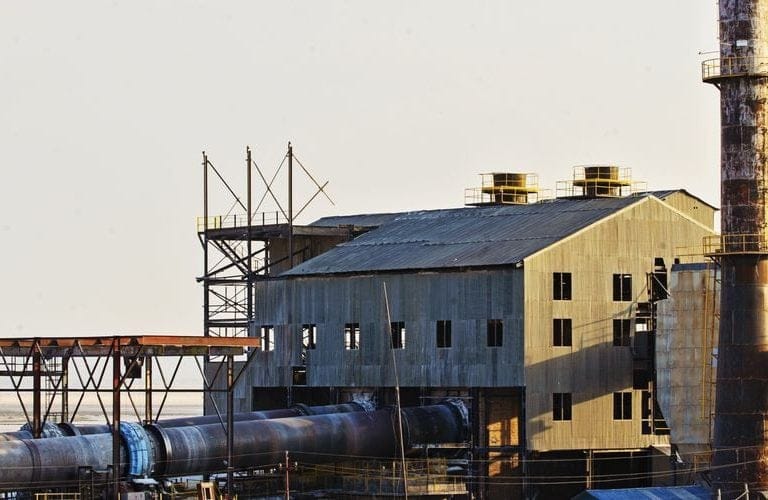
At the centre of the dispute is Lake Magadi, one of Kenya’s most important sources of soda ash. Tata Chemicals Magadi has operated at the site for more than a century, producing soda ash from trona, a naturally occurring mineral rich in sodium carbonate.
Soda ash is an important industrial input used in the manufacture of glass, detergents, soaps and other chemical products. The company says more than 95 percent of its soda ash is exported to markets across Southeast Asia, the Indian subcontinent, Africa and the Middle East.
President Ruto’s criticism is that Kenya has historically benefited too little from the resource beyond the extraction and export of the mineral. He argued that the country should be processing more of its resources locally and creating industries around them.
Speaking in Kajiado, Ruto said the government would seek investors capable of establishing manufacturing operations, including a glass factory, around the Lake Magadi resource. The objective is to turn the mineral into higher-value products within Kenya rather than exporting the resource and allowing other countries to capture more of the value.
Tata Chemicals Disputes the Compliance Concerns
Tata Chemicals has presented a significantly different account of the situation.
The company said its Kenyan subsidiary has submitted the information, reports and documentation requested by the Ministry of Mining, Blue Economy and Maritime Affairs and maintains that it is fully compliant with applicable regulatory requirements.
Tata Chemicals also said it respects the authority of the Kenyan government and remains committed to resolving outstanding issues through established legal and regulatory channels.
The company’s operations have been suspended since July 28, 2026, following a government directive pending a compliance review. The prolonged suspension has created uncertainty for employees, suppliers, local communities and other businesses connected to the Magadi operation.
The Economic Importance of Lake Magadi
The dispute is significant because soda ash is not a marginal export for Kenya. Government data cited in reports on the dispute show that Kenya exported approximately 254,779 tonnes of soda ash worth $56.9 million in the year to July 2025.
That makes the future of the Magadi operation an important issue for Kenya’s export earnings, mining sector and manufacturing ambitions.
Tata Chemicals says it employs more than 600 people and has supported social and community initiatives around the Magadi region over the years. The company also describes itself as one of Kenya’s leading exporters and Africa’s largest soda ash producer.
However, the government’s argument goes beyond the number of people directly employed by the company. Nairobi is increasingly looking at whether natural-resource projects generate wider economic activity through local suppliers, manufacturing, infrastructure, technology transfer and downstream industries.
Kenya’s Bigger Push for Local Value Addition
The Tata Chemicals dispute reflects a broader policy question facing Kenya: How much value should the country retain from the natural resources it exports?
Kenya’s mining regulations already provide a framework for royalties and local participation. The country’s Mining Act requires holders of mineral rights to pay royalties to the state, while regulations on local goods and services seek to increase Kenyan participation across the mining value chain.
Kenya’s mining authorities also have responsibilities covering mineral auditing, royalty collection and the promotion of mineral value addition.
The government’s position in the Magadi dispute therefore fits into a wider economic strategy of encouraging investors to move beyond extraction and into processing and manufacturing.
For example, instead of exporting soda ash as a finished mineral product, Kenya could potentially capture additional value by developing industries that use soda ash to manufacture glass and other industrial products. Such industries could create additional jobs, attract suppliers and generate new export opportunities.
The Investment Question: A Delicate Balancing Act
While the government’s demand for greater local value addition may appeal to Kenya’s industrialisation ambitions, the Tata dispute also raises an important question about investor confidence.
Foreign investors typically assess not only the availability of natural resources and markets but also the predictability of regulations, the security of investments and the mechanisms available for resolving disputes.
The Tata Chemicals case is particularly significant because it follows Kenya’s earlier high-profile decision to cancel proposed projects involving India’s Adani Group.
That does not necessarily mean Kenya is turning away from Indian investment. India remains an important commercial partner for Kenya, and Indian businesses have a substantial presence in the country. However, the developments may lead international investors to pay closer attention to Kenya’s expectations regarding local investment, value addition and community benefits.
The challenge for Nairobi will be to demonstrate that stronger requirements for investors can coexist with a stable and predictable investment environment.
Kenya’s Export Sector Gets Relief From the United States
The Tata dispute comes at an interesting time for Kenya’s wider business environment because the country has also received a major boost for exporters.
The United States has extended the African Growth and Opportunity Act (AGOA) through December 31, 2028, giving Kenyan exporters continued preferential access to the American market.
The extension is particularly important for Kenya’s textile and apparel industry, which has become a significant source of manufacturing employment and export earnings. The government is also encouraging businesses to use the additional period to expand into higher-value agricultural products, leather, pharmaceuticals and other manufactured goods.
The AGOA extension and the Tata dispute highlight two sides of the same economic strategy: Kenya wants more international investment and export growth, but it increasingly wants that investment to translate into local manufacturing, jobs and higher-value production.
What Happens to Tata Chemicals Employees?
One of the immediate concerns surrounding the government’s directive is what happens to workers and businesses that depend on the Magadi operation.
Tata Chemicals says the company has more than 600 employees. Beyond direct employment, the operation supports contractors, suppliers, transport businesses and other economic activity connected to mining and export logistics.
An abrupt transition could therefore have consequences beyond the company’s own workforce.
The government, however, appears to be betting that a new investor can maintain the resource operation while expanding the industrial footprint in Kajiado. The success of that approach will depend on whether new investors can be found, how quickly they can begin operations and whether they can meet the government’s requirements for local processing.
What the Tata Dispute Means for Kenya’s Business Environment
For businesses and investors watching Kenya, the biggest lesson may be that access to the country’s resources is increasingly being linked to broader economic obligations.
Mining companies may face stronger expectations to demonstrate local employment, procurement, community development, environmental compliance and value addition. Foreign companies involved in resource extraction may also be expected to establish more downstream industries inside Kenya.
For Kenya, this could create an opportunity to move from being primarily a supplier of raw materials to becoming a producer of higher-value manufactured goods.
But the transition will require careful implementation. Kenya needs investment capital, technology, skilled workers and reliable infrastructure to develop large-scale manufacturing projects. If investment conditions become too unpredictable, potential investors could become more cautious.
Key Takeaways for Businesses and Investors
- Tata Chemicals Magadi has been ordered to leave Kenya following criticism from President William Ruto over local economic benefits and value addition.
- Lake Magadi remains strategically important because soda ash is a significant Kenyan export and an important industrial raw material.
- Tata Chemicals says it is compliant with Kenyan regulations and has submitted the documentation requested by the government.
- Kenya wants more local processing of minerals instead of relying heavily on the export of extracted resources.
- The dispute could influence investor sentiment as international companies assess Kenya’s regulatory and investment environment.
- Kenya is simultaneously seeking more export opportunities, with the extension of AGOA providing continued preferential access to the US market through 2028.
SkyPress Business Outlook
The Tata Chemicals dispute is bigger than the future of one company or one mining operation. It represents a potentially important shift in Kenya’s approach to natural-resource investment.
The government is making it increasingly clear that it wants Kenya’s natural resources to support broader industrial development rather than simply generate export revenues from raw or minimally processed commodities.
For investors, the message is equally important: opportunities remain available in Kenya, but projects involving natural resources are likely to face greater expectations around local value addition, employment, compliance and economic participation.
The immediate priority will be finding a solution that protects jobs and export earnings while allowing Kenya to capture more value from Lake Magadi. Whether the government can achieve that balance will be closely watched by investors across the mining, manufacturing and broader business sectors.
For SkyPress, the Tata Chemicals case is therefore worth watching not only because of its impact on Kajiado and Kenya’s soda ash exports, but because it could become a test of how Kenya balances resource sovereignty, industrialisation and foreign investment in the years ahead.
Source note: This report is based on reporting from Reuters, BBC, Tata Chemicals’ corporate statements, Kenya’s mining regulations and recent reporting on Kenya’s export and investment environment.
Disclaimer: This article is for news and informational purposes only and should not be considered investment or financial advice.