
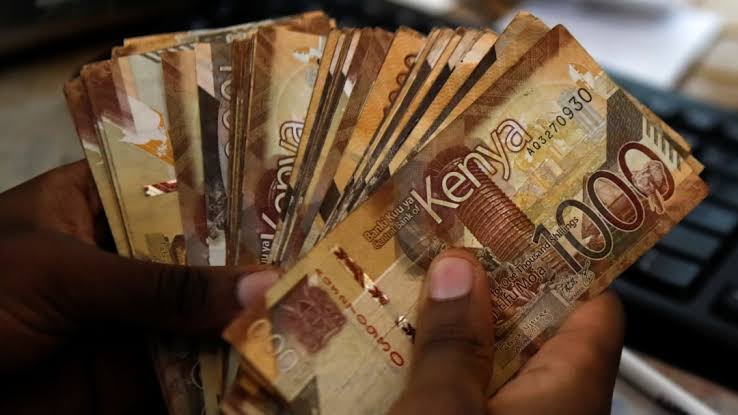
Kenya’s Forex Reserves Drop by KSh63 Billion as Shilling Holds Steady

Kenya Forex Reserves Fall by KSh63 Billion as Shilling Holds Firm Against Dollar
Kenya’s foreign exchange reserves have declined for five consecutive weeks, falling by roughly KSh63 billion as of September 3, 2026, even as the Kenyan shilling continues to trade with remarkable stability against the US dollar.
Data from the Central Bank of Kenya (CBK) shows that usable foreign exchange reserves fell from USD 15.248 billion on August 6 to USD 14.882 billion on September 3. The decline represents about USD 366 million over the five-week period.
Using the prevailing exchange rate, the reserves stood at approximately KSh1.97 trillion at the beginning of the period before falling to about KSh1.93 trillion by September 3.
Despite the sustained decline, the CBK says the country’s foreign exchange position remains adequate. The latest reserves provide 6.1 months of import cover, comfortably above the central bank’s statutory benchmark of at least four months.
Reserves fall for five consecutive weeks
The latest decline represents a continuation of a downward trend that began in early August.
| Date | Forex Reserves | Import Cover |
|---|---|---|
| August 6, 2026 | USD 15.248 billion | 6.3 months |
| August 13, 2026 | USD 15.245 billion | 6.3 months |
| August 20, 2026 | USD 15.155 billion | 6.3 months |
| August 27, 2026 | USD 14.934 billion | 6.2 months |
| September 3, 2026 | USD 14.882 billion | 6.1 months |
The sharpest weekly movement occurred between August 20 and August 27, when reserves dropped by approximately USD 221 million, equivalent to about KSh28.6 billion.
Reserves then declined by a further USD52 million between August 27 and September 3. The August 13–20 period recorded a reduction of approximately USD90 million, while the August 6–13 decline was relatively small at about USD3 million.
Why foreign exchange reserves matter to Kenya
Foreign exchange reserves are one of the key buffers supporting Kenya’s external financial position. They provide the country with foreign currency that can be used to meet international obligations, including payments for imports and government external debt obligations.
For businesses, particularly importers, manufacturers and companies with significant dollar-denominated expenses, the level of reserves can also influence expectations about the availability and cost of foreign currency.
A prolonged decline does not automatically mean that Kenya is facing a foreign exchange crisis. The more important question is whether reserves are falling to levels that could restrict the country’s ability to meet external obligations or increase pressure on the shilling.
For now, the latest CBK figures do not point to such a situation. Reserves remain substantially above the four-month import-cover benchmark.
Kenyan shilling remains stable against the dollar
One of the most notable features of the latest data is the performance of the Kenyan shilling.
Despite the decline in foreign exchange reserves, the shilling remained almost unchanged against the US dollar during the week ending September 3.
The CBK reported that the currency traded at KSh129.48 per US dollar on September 3, compared with KSh129.47 on August 27. The weekly average remained virtually unchanged at KSh129.46.
This stability suggests that the reduction in reserves has not translated into significant immediate pressure on the currency market.
Reuters also reported that the Kenyan shilling was expected to remain broadly stable around the KSh129.35–129.55 range against the dollar, contrasting with greater pressure on some other African currencies.
Kenya gains ground against Uganda’s currency
The shilling’s performance has not been uniform across East African currencies.
According to CBK data, one Kenyan shilling bought approximately Ugandan shillings 29.14 during the week ending September 3, compared with 28.80 during the previous week.
That represents an appreciation of about 1.18% for the Kenyan currency against the Ugandan shilling.
Against the Tanzanian shilling, the Kenyan currency remained broadly stable, while movements against the Rwandan franc and Burundian franc were relatively small.
The contrasting performance highlights an important point for regional businesses: exchange-rate movements are increasingly influenced not only by the strength of the Kenyan shilling but also by developments affecting neighbouring economies.
What is behind the decline in reserves?
The weekly data alone does not establish that one specific factor caused the entire decline in reserves. Foreign exchange reserves can change because of several transactions and movements, including government external debt payments, foreign exchange market operations, changes in official deposits and other international transactions.
The CBK has previously explained that its participation in the foreign exchange market can include transactions undertaken to acquire foreign currency for official debt servicing and to build reserves in line with statutory requirements. The central bank also says it does not target a particular value for the shilling, although it can intervene to stabilise the market during periods of excessive volatility.
This distinction is important because a fall in reserves should not automatically be interpreted as evidence that the central bank is struggling to defend the shilling.
Import cover remains a key measure for businesses
For the Kenyan economy, the decline in import cover from 6.3 months in early August to 6.1 months in early September is an important indicator to monitor.
Import cover measures how long a country’s foreign exchange reserves could theoretically finance imports. It is therefore a useful gauge of the strength of a country’s external liquidity position.
Kenya remains above the CBK’s four-month benchmark, giving policymakers a meaningful buffer. However, businesses and investors will continue watching whether the downward trend stabilises or extends into the coming weeks.
Business impact: importers remain particularly exposed
The developments are especially relevant for Kenyan businesses that rely heavily on imported goods, machinery, fuel, raw materials or other products priced in US dollars.
At present, the stable exchange rate provides some relief because companies can continue planning dollar-denominated transactions without facing a sudden depreciation of the shilling.
However, a prolonged decline in reserves accompanied by renewed pressure on the currency could eventually increase the local-currency cost of imports.
For manufacturers, retailers and transport companies, this could feed into operating costs and eventually influence consumer prices.
Exporters and businesses earning foreign currency could experience the opposite effect if the shilling were to weaken, as their foreign-currency revenues would translate into more Kenyan shillings.
Inflation and interest rates remain part of the picture
The latest reserve figures come at a time when Kenya is also navigating renewed inflationary pressure.
According to the CBK’s September 4 bulletin, headline inflation increased to 6.6% in August 2026 from 6.5% in July, with core inflation rising to 3.4% from 3.2%.
At the same time, the Central Bank Rate remained at 8.75%, while KESONIA was also at 8.75% during the week ending September 3.
For businesses and investors, the interaction between inflation, interest rates, the exchange rate and foreign exchange reserves will be important in determining financial conditions in the months ahead.
Kenya’s external position remains resilient for now
The decline in reserves is worth monitoring, but the latest numbers do not suggest an immediate external liquidity crisis.
Kenya still has more than six months of import cover, while the shilling has remained stable against the dollar. The CBK itself continues to describe the reserve position as adequate.
At the same time, the five-week consecutive decline means the trend cannot be ignored. A continued reduction in reserves, particularly if accompanied by rising demand for foreign currency or a weakening shilling, would deserve closer attention from businesses, investors and policymakers.
The key question for the market is therefore whether the recent drawdown is temporary or the beginning of a longer period of reserve depletion.
What businesses and investors should watch next
Market participants are likely to focus on several indicators over the coming weeks: the direction of foreign exchange reserves, the shilling-dollar exchange rate, import demand, external debt payments, inflation and developments in global energy markets.
Oil prices are particularly important for Kenya because the country imports most of its petroleum requirements. Higher global oil prices can increase demand for US dollars to finance energy imports, potentially putting additional pressure on the country’s external position.
The CBK reported that Murban crude oil prices rose to USD86.01 per barrel on September 3 from USD81.78 a week earlier, amid renewed concerns about global oil supply risks.
For the Kenyan economy, therefore, movements in the foreign exchange market will remain closely connected to global commodity prices and the country’s import bill.
Bottom line
Kenya’s foreign exchange reserves have fallen by about USD366 million, or roughly KSh63 billion, since August 6, marking five consecutive weekly declines.
Yet the Kenyan shilling has remained remarkably stable against the US dollar, while reserves still provide 6.1 months of import cover and remain above the CBK’s four-month benchmark.
For now, the data points more toward a reserve drawdown that warrants monitoring than an immediate foreign exchange crisis. The bigger concern for businesses would emerge if falling reserves begin to coincide with sustained currency weakness, higher import costs and accelerating inflation.
For investors and businesses operating in Kenya, the next few weeks will therefore be important in determining whether the recent decline in reserves is a temporary adjustment or part of a more persistent shift in the country’s external financial position.
Source: Central Bank of Kenya weekly bulletin dated September 4, 2026; Reuters; other Kenyan business reporting.