
Kenya Raises Diesel Prices to Record High as Energy and Petroleum Regulatory Authority Adjusts Fuel Costs

Kenya Raises Diesel Prices to Record High as Hormuz Crisis Sends Global Oil Markets into Shock
By SkyPress News Desk | April 15, 2026
1. Record Fuel Prices Hit Kenyan Consumers
NAIROBI — Kenya has recorded its highest-ever diesel prices following a sharp adjustment by the Energy and Petroleum Regulatory Authority (EPRA), reflecting the full impact of a global oil supply shock.
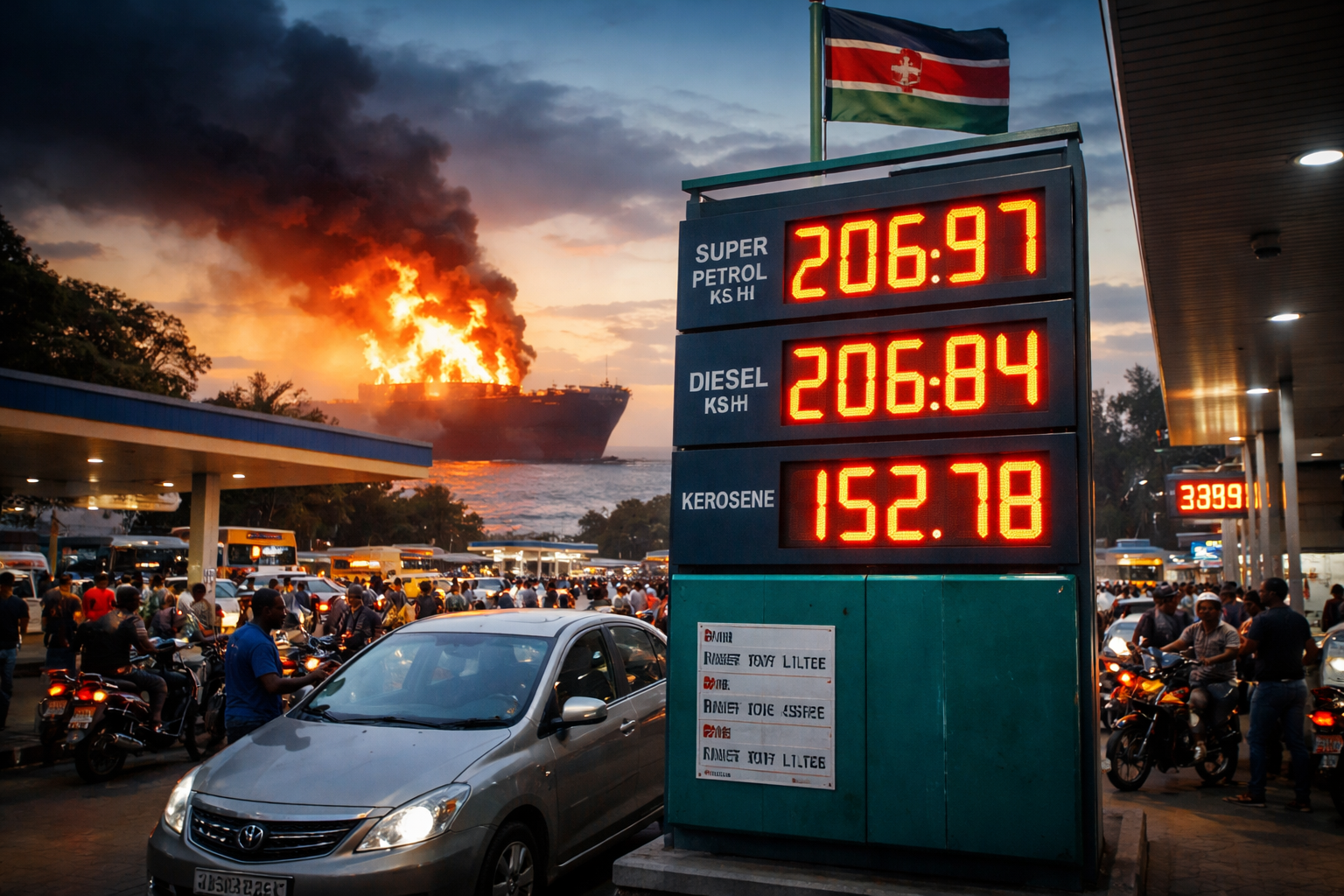
In the latest pricing cycle (April 15 – May 14, 2026), super petrol rose to KSh 206.97 per litre, while diesel surged to an all-time high of KSh 206.84 per litre. The diesel increase of KSh 40.30 marks the largest single-month jump in over two decades, surpassing the previous record set in 2022.
Kerosene prices remained unchanged at KSh 152.78, largely due to heavy government subsidies aimed at protecting low-income households.
This historic spike places fuel costs at the center of Kenya’s economic outlook, with immediate implications for transport, food distribution, and industrial production.
2. Global Oil Shock: Hormuz Disruption Drives Price Surge
The sharp rise in pump prices is directly linked to escalating geopolitical tensions in the Middle East, particularly following the February 28 U.S.–Israel strikes on Iran. The conflict has significantly disrupted shipping through the Strait of Hormuz — a critical global oil transit chokepoint responsible for nearly 20% of the world’s oil supply.
The disruption triggered a dramatic spike in global oil prices and freight costs, which fed directly into Kenya’s import bill. Data shows:
- Diesel landed cost jumped 68.72% (US$636.45 → US$1,073.82 per cubic metre)
- Kerosene surged 105.15%
- Petrol rose 41.53%
The situation has been further worsened by a weakening Kenyan shilling, with the exchange rate averaging 130.08 per USD, amplifying the cost of dollar-denominated fuel imports.
Compounding the crisis, Kenya’s fuel reserves fell below regulatory minimums, with only 16 days of petrol and 19 days of diesel available by late March. This leaves the country highly exposed to prolonged supply disruptions in the Gulf region.
3. Inflation Risks and Economic Spillover Effects
The fuel price shock is expected to cascade through the broader economy, significantly increasing inflationary pressures. Fuel is a core input across nearly all sectors, meaning higher pump prices will translate into:
- Increased transport and logistics costs
- Higher food prices due to supply chain pressures
- Rising manufacturing and production expenses
The Central Bank of Kenya(CBK) had already flagged global oil volatility as a key inflation risk in its April bulletin, and analysts now expect the April pricing cycle to have a lagged but sustained impact on consumer prices.
With the Hormuz disruption ongoing, pressure is likely to persist into the May pricing window, raising concerns of prolonged cost-of-living strain for households and businesses.
4. Government Intervention and Fuel Market Controversies
To cushion consumers, the government implemented emergency stabilization measures, including:
- Reducing VAT on petroleum products from 16% to 13%
- Deploying KSh 6.2 billion from the Petroleum Development Levy Fund
These interventions prevented even steeper increases, as projections had indicated diesel could have risen by up to KSh 70 per litre without support.
The subsidy burden remains significant:
- Petrol subsidy: KSh 4.68 per litre
- Diesel subsidy: KSh 23.92 per litre
- Kerosene subsidy: KSh 108.10 per litre
Without intervention, kerosene prices would have nearly doubled to around KSh 260 per litre, underscoring the scale of government absorption.
Meanwhile, the sector remains clouded by controversy. Energy Cabinet Secretary Opiyo Wandayi revealed that exclusion of certain cargoes, including the MT Paloma shipment, helped moderate prices. The announcement also comes amid ongoing legal proceedings involving former senior officials accused of procurement irregularities and manipulation of fuel stock data.
The latest pricing release was signed by Acting EPRA Director General Dr. Joseph Oketch, marking a leadership transition at a critical moment for Kenya’s energy sector.
Conclusion: A Market Under Pressure
Kenya’s record fuel prices highlight the country’s vulnerability to global energy shocks, particularly those tied to geopolitical flashpoints like the Strait of Hormuz. As long as disruptions persist in the Middle East, oil markets are expected to remain volatile, with direct consequences for emerging economies dependent on imports.
For Kenya, the coming months will test both fiscal resilience and policy response, as authorities balance subsidy costs, inflation control, and energy security in an increasingly uncertain global environment.
Disclaimer: This article is for informational purposes only and does not constitute financial, investment, or economic advice. SkyPress makes no representations as to the accuracy or completeness of the information contained herein. Readers should conduct their own research or consult professional advisors before making financial decisions.