

- What is Forex?
- Understanding the Forex Market
- Key Forex Terminology
- Forex Trading Strategies
- Technical vs. Fundamental Analysis
- Risk Management in Forex
- Choosing a Forex Broker & Platform
.jpeg)
Introduction
The foreign exchange market, or Forex, is the largest and most liquid financial market in the world, with trillions of dollars changing hands daily. Its sheer scale and accessibility have made it an attractive arena for investors and speculators alike. However, navigating this dynamic environment requires more than just capital; it demands knowledge, strategy, and discipline. This guide is designed to serve as your comprehensive blueprint, breaking down the essential concepts of forex trading from the ground up. Whether you are a complete novice or an intermediate trader looking to solidify your foundation, this article will equip you with the critical understanding needed to approach the forex market with confidence.
What is Forex?
At its core, forex trading (also known as currency trading) is the act of buying one currency while simultaneously selling another. Currencies are traded in pairs, and the value of one currency is determined by its comparison to another. For example, in the EUR/USD pair, you are speculating on whether the Euro will rise or fall in value against the U.S. Dollar.

Unlike stock or commodity markets, the forex market has no central exchange. Instead, trading is conducted electronically over-the-counter (OTC), meaning all transactions occur via computer networks between traders around the world. This decentralized nature is a key reason the market can operate 24 hours a day, five days a week.
Understanding the Forex Market
The global forex market is a seamless 24-hour marketplace driven by a network of banks, corporations, central banks, investment management firms, hedge funds, and retail forex brokers. It follows the sun around the globe, opening in Sydney, then moving to Tokyo, London, and finally New York. The highest volume and volatility often occur when major sessions overlap, particularly the London and New York session overlap.
This constant activity means that prices are always in flux, creating opportunities for traders to profit from currency value fluctuations. These fluctuations are driven by a combination of economic, political, and geopolitical events, making a deep understanding of world affairs a valuable asset for any trader.
As legendary investor George Soros once said, “The markets are constantly in a state of uncertainty and flux and money is made by discounting the obvious and betting on the unexpected.”
Key Forex Terminology
To speak the language of forex, you must understand its core vocabulary. Here are the essential terms every trader needs to know:
Currency Pair: Currencies are always quoted in pairs, such as GBP/USD. The first currency (GBP) is the “base” currency, and the second (USD) is the “quote” currency. The price represents how much of the quote currency is needed to buy one unit of the base currency.
Pip: A “Percentage in Point” or pip is the smallest unit of price movement in a currency pair. For most pairs, one pip is equal to 0.0001. For pairs involving the Japanese Yen (JPY), a pip is 0.01.
Leverage: This is a tool provided by a forex broker that allows you to control a large position with a small amount of capital. For example, with 100:1 leverage, you can control a $100,000 position with just $1,000 in your account. While leverage can magnify profits, it is a double-edged sword that can equally amplify losses.
Margin: The margin is the actual capital you must have in your account to open a leveraged position. It is not a fee but a good-faith deposit that is returned to you when the trade is closed.
Forex Trading Strategies
There is no single “best” strategy for trading forex; the right approach depends on your personality, risk tolerance, and time commitment. The most common forex strategies are categorized by the duration of their trades:
Scalping: This ultra-fast strategy involves making dozens or even hundreds of trades per day to capture very small profits (a few pips at a time). Scalpers rely on high leverage and must be laser-focused.
Day Trading: A day trading strategy involves opening and closing positions within the same trading day, ensuring no positions are held overnight. Day traders aim to profit from the intraday price fluctuations.
Swing Trading: Swing trading involves holding positions for several days to a few weeks. Swing traders aim to capture larger price “swings” and typically rely on a combination of technical analysis and fundamental analysis to identify opportunities.
Position Trading: This is a long-term strategy where traders hold positions for weeks, months, or even years. Position traders are less concerned with short-term noise and focus on long-term macroeconomic trends.
Technical vs. Fundamental Analysis
To make informed trading decisions, you need a framework for analyzing the market. The two primary schools of thought are technical and fundamental analysis.
Technical Analysis: Technical analysis is the study of historical price action to identify patterns and predict future movements. Proponents believe that all known information is already reflected in the price. They use tools like:
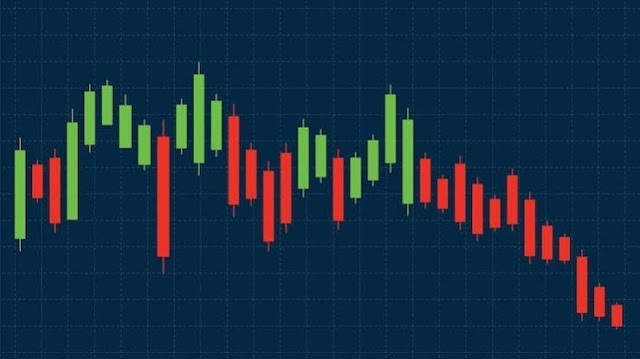
Charts: Candlestick, bar, and line charts to visualize price movements.
Indicators: Mathematical calculations based on price and/or volume, such as Moving Averages, RSI, and MACD.
Patterns: Recognizable formations like Head and Shoulders, Triangles, and Flags that can signal potential reversals or continuations.
Fundamental Analysis: Fundamental analysis involves evaluating a country’s economic health to determine the “intrinsic value” of its currency. This approach looks at macroeconomic factors, including:
Interest Rates: Central bank decisions on interest rates are a huge driver of currency value.
Economic Indicators: Reports on GDP, inflation (CPI), employment numbers, and retail sales.
Geopolitical Events: Elections, political instability, and international relations can all have a profound impact on the forex market.
Successful traders rarely use one method in isolation. The most robust forex strategies often blend technical analysis to identify entry and exit points with fundamental analysis to understand the underlying market direction.
Risk Management in Forex
If there is one secret to long-term survival in trading, it is effective risk management. The market is unpredictable, and losses are an inevitable part of the process. Your job is not to avoid losses but to manage them so they never become catastrophic.
Warren Buffett’s famous rule is paramount in trading: “Rule No. 1: Never lose money. Rule No. 2: Never forget Rule No. 1.”
Key principles of risk management include:
The 1% Rule: Never risk more than 1% (or 2% for more aggressive traders) of your trading capital on a single trade. This ensures that even a string of losses won’t wipe out your account.
Position Sizing: Calculate the appropriate position size for each trade based on your risk percentage and the distance to your stop loss.
Use a Stop Loss: Every single trade must have a predetermined exit point in case the market moves against you. This is non-negotiable.
Risk-to-Reward Ratio: Only take trades where the potential profit is significantly greater than the potential loss. A common target is a 1:2 or 1:3 risk-to-reward ratio.
Trading Psychology
The technical and analytical aspects of trading are only half the battle. The other half is won or lost in your own mind. Trading psychology is the study of how emotions like fear and greed impact your decision-making.
As trading coach Mark Douglas noted, “The key to trading success is emotional discipline. If intelligence were the key, there would be a lot more people making money trading.”
Fear can cause you to close winning trades too early or avoid taking valid setups after a loss (fear of losing). It can also lead to “fear of missing out” (FOMO), causing you to chase trades.
Greed can cause you to over-leverage, hold onto a winning trade for too long until it reverses, or take on excessive risk.
Developing discipline, patience, and a detached, business-like approach to trading is crucial. This involves sticking to your trading plan, accepting losses gracefully, and never letting one trade dictate your emotional state.
Choosing a Forex Broker & Platform
Your forex broker is your gateway to the markets, so choosing a reputable one is a critical first step. When evaluating a broker for online trading, consider the following:
Regulation: Ensure the broker is regulated by a top-tier financial authority (e.g., FCA in the UK, ASIC in Australia, CySEC in Europe, CMA in Kenya). This is your primary protection against fraud.
Trading Costs: Look at the spreads (the difference between the buy and sell price) and any commissions. Lower costs mean more of the profit stays with you.
Trading Platform: The trading platform is your command center. It should be stable, user-friendly, and equipped with quality charting tools. MetaTrader 4 (MT4) and MetaTrader 5 (MT5) are industry standards, but many brokers offer excellent proprietary platforms as well.
Customer Support: Reliable and accessible support can be invaluable when you encounter issues.
Currency Pairs & Leverage
While there are hundreds of currency pairs available, they generally fall into three categories:
Majors: These are the most traded pairs and involve the U.S. dollar (e.g., EUR/USD, GBP/USD, USD/JPY). They offer the highest liquidity and tightest spreads, making them ideal for beginners.
Minors (Crosses): These pairs do not involve the U.S. dollar (e.g., EUR/GBP, AUD/JPY). They are still liquid but may have slightly wider spreads than the majors.
Exotics: These pairs consist of one major currency and one from an emerging economy (e.g., USD/TRY, EUR/ZAR). They are less liquid, more volatile, and have much wider spreads.
A final word on leverage: while it enables you to participate in the market with less capital, it must be treated with extreme respect. High leverage is a primary reason why many new traders fail. Start with low leverage until you have a proven, profitable strategy and a firm grasp on risk management.
Placing Trades: Stop Loss & Take Profit
Executing a trade is more than just clicking “buy” or “sell.” A professional trader defines their exit plan before entering the market. This is done using two essential order types:
Stop Loss: A stop loss order is an instruction to your broker to automatically close your position if the price reaches a certain level, limiting your potential loss. It is your safety net.
Take Profit: A take profit order is an instruction to close your position once it reaches a certain profit target, locking in your gains.
The legendary trader Ed Seykota famously summarized the essence of risk control: “The elements of good trading are: (1) cutting losses, (2) cutting losses, and (3) cutting losses. If you can follow these three rules, you may have a chance.”
Setting a stop loss and take profit level when you place a trade removes emotion from the decision-making process. It forces you to adhere to your pre-defined plan and enforces the discipline required for long-term success.
Conclusion
Embarking on your forex trading journey is an exciting venture into the world’s largest financial arena. Success is not a matter of luck but a result of diligent education, strategic planning, and unwavering discipline. By understanding the market’s structure, mastering key terminology, developing a robust strategy, and prioritizing risk management and psychological fortitude, you can build a solid foundation for your trading career.
Remember that this guide is a starting point. The path to proficiency is paved with continuous learning and practice. Open a demo account, apply these concepts, and begin honing your skills in a risk-free environment. The forex market offers immense opportunity, and with the right approach, you can be well-positioned to seize it.
Follow us on fx254 or contact on email fx254me@gmail.com
© 2025 fx254