
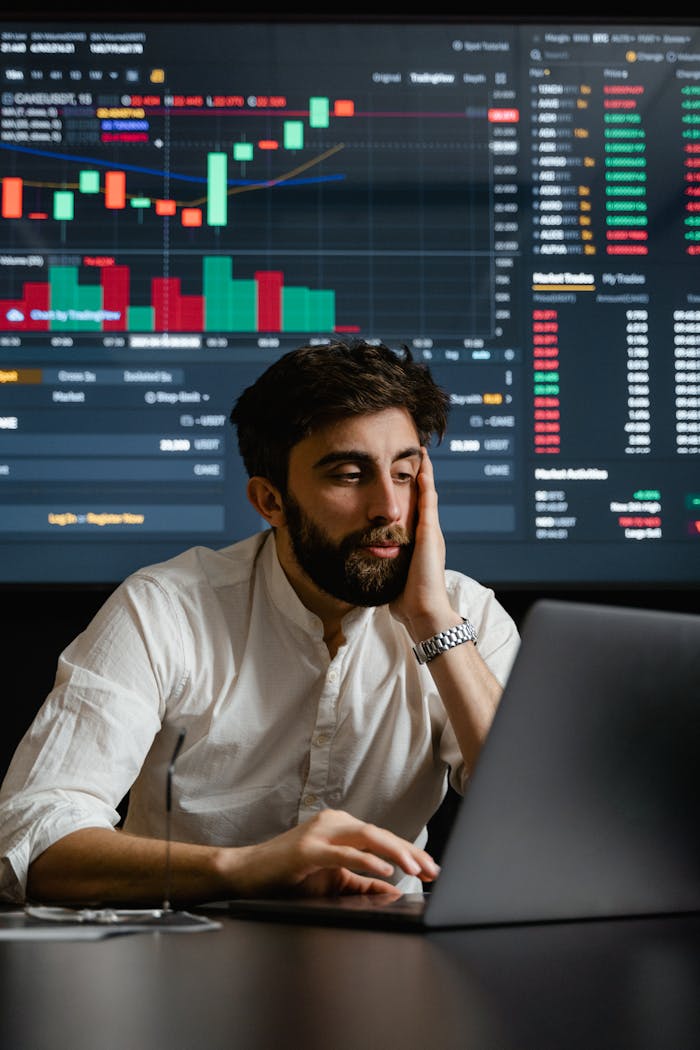
Top Investment Strategies: Few Tips To Manage Your Trades

Top Investment Strategies for Volatile Markets
Market volatility is an inevitable part of investing. Whether driven by geopolitical tensions, inflation concerns, interest rate changes, or global economic uncertainty, volatile markets can create both significant risks and powerful opportunities. For investors—both beginners and experienced—understanding how to navigate these fluctuations is crucial to preserving capital and achieving long-term financial success.
In this comprehensive guide, we explore the most effective investment strategies for volatile markets. If you’re new to trading or want a deeper foundation, you can also explore our Forex Insights and Analysis section for real-time market perspectives and expert breakdowns.
Understanding Market Volatility
Before diving into strategies, it’s important to understand what volatility means. Market volatility refers to the rate at which asset prices increase or decrease over a given period. High volatility means prices move rapidly, while low volatility indicates more stable market conditions.
Volatility is not inherently negative. In fact, it often creates the best opportunities for profit. However, without a clear strategy, it can also lead to significant losses. That’s why disciplined investing becomes even more important during uncertain times.
1. Diversification: The Foundation of Stability
Diversification is one of the most powerful tools investors have. It involves spreading investments across different asset classes such as stocks, bonds, commodities, and forex. By doing so, you reduce the risk of a single asset negatively impacting your entire portfolio.
- Invest across industries (technology, energy, healthcare)
- Include different asset classes (stocks, forex, commodities)
- Consider global markets to reduce local risk exposure
For example, while stock markets may fall, commodities like gold often rise. You can explore how different assets behave in volatile conditions in our Dollar Resilience and Oil Surge Analysis.
2. Risk Management: Protecting Your Capital
In volatile markets, protecting your capital is more important than chasing profits. Risk management ensures that no single trade or investment can significantly damage your portfolio.
Key Risk Management Techniques
- Use stop-loss orders to limit losses
- Risk only 1-2% of your capital per trade
- Avoid overleveraging, especially in forex markets
Many traders fail not because of poor strategies, but due to poor risk management. Learn more detailed trading risk control methods in our Forex trading guide.
3. Dollar-Cost Averaging (DCA)
Dollar-cost averaging involves investing a fixed amount of money at regular intervals, regardless of market conditions. This strategy reduces the impact of volatility by spreading your investment over time.
Instead of trying to time the market—which is extremely difficult—you consistently buy assets at different price levels. Over time, this often results in a lower average cost per unit.
DCA is particularly effective for long-term investors who want to build wealth steadily without being affected by short-term market swings.
4. Focus on High-Quality Assets
During volatile periods, low-quality or speculative assets tend to suffer the most. Strong, fundamentally sound companies and assets are more likely to withstand market turbulence.
- Look for companies with strong balance sheets
- Prioritize consistent earnings and cash flow
- Avoid hype-driven investments
In forex trading, this means focusing on strong currencies and major pairs rather than highly volatile exotic pairs. Check out our deeper analysis of currency strength in the Forex Insights section.
5. Hedging Strategies
Hedging involves taking positions that offset potential losses in your main investments. It is widely used by professional investors to reduce risk.
Common Hedging Methods
- Investing in gold during economic uncertainty
- Using options or futures contracts
- Holding inverse ETFs
For example, when stock markets decline, gold prices often rise. Similarly, during currency instability, traders may shift into safer currencies like the US dollar.
6. Stay Liquid: Keep Cash Ready
One of the most underrated strategies is maintaining liquidity. Keeping a portion of your portfolio in cash allows you to take advantage of sudden opportunities.
Volatile markets often present discounted assets. Investors with available cash can buy quality assets at lower prices while others are forced to sell.
7. Avoid Emotional Trading
Fear and greed are the biggest enemies of investors. Volatile markets amplify emotions, leading to impulsive decisions.
- Avoid panic selling during downturns
- Don’t chase sudden price spikes
- Stick to your strategy and plan
Successful investors remain disciplined regardless of market conditions. Emotional control is often the difference between profit and loss.
8. Follow Market Trends, Not Noise
In volatile markets, there is an overwhelming amount of news and opinions. Not all information is useful. Focus on actual market trends rather than short-term noise.
Technical analysis tools such as moving averages, support and resistance levels, and trend lines can help identify the overall direction of the market.
For ongoing market insights and breakdowns, regularly visit our Forex Insights and Analysis page.
9. Invest in Safe Haven Assets
Safe haven assets tend to retain or increase in value during times of market uncertainty.
- Gold
- US Dollar
- Government bonds
These assets provide stability and can balance a riskier portfolio. As discussed in our market updates, gold and the dollar often move inversely depending on economic conditions.
10. Long-Term Perspective Wins
Volatility is often short-term, but markets generally trend upward over the long run. Investors who maintain a long-term perspective are more likely to succeed.
Instead of reacting to every market movement, focus on long-term growth. This approach reduces stress and increases the probability of consistent returns.
Final Thoughts
Volatile markets can be intimidating, but they also offer some of the best opportunities for growth. By applying strategies such as diversification, risk management, dollar-cost averaging, and disciplined investing, you can navigate uncertainty with confidence.
Remember, successful investing is not about avoiding volatility—it’s about managing it effectively.
Frequently Asked Questions (FAQ)
What are the best investment strategies for volatile markets?
There is no single strategy that works for every investor. Common approaches include diversification, disciplined risk management, dollar-cost averaging, investing in high-quality assets, maintaining liquidity, and taking a long-term approach.
Is market volatility always bad for investors?
No. Volatility can increase investment risk, but it can also create opportunities for investors who have a clear strategy and understand the risks involved. The key is to manage risk rather than attempt to predict every short-term price movement.
How much should I risk on a trade?
There is no universal percentage that is appropriate for everyone. Some traders use a small percentage of their trading capital per trade, such as 1% to 2%, as a risk-management guideline. Your appropriate risk level depends on your financial situation, experience, strategy, and tolerance for losses.
What is diversification and why is it important?
Diversification means spreading investments across different assets, sectors, markets, or geographic regions. It can help reduce the impact of poor performance from any single investment, although it cannot eliminate investment risk.
What is dollar-cost averaging (DCA)?
Dollar-cost averaging is an investment approach where an investor invests a fixed amount at regular intervals regardless of whether prices are rising or falling. It can reduce the pressure to predict the perfect time to enter the market, but it does not guarantee profits or prevent losses.
Are gold and the US dollar always safe-haven investments?
Gold and the US dollar are often considered safe-haven assets during periods of uncertainty, but neither is guaranteed to rise when markets decline. Their performance depends on factors such as interest rates, inflation, economic conditions, investor sentiment, and geopolitical developments.
Should beginners invest during volatile markets?
Beginners should first understand the risks associated with investing and ensure they have an appropriate financial foundation. Rather than trying to profit from every market movement, new investors may benefit from learning about diversification, risk management, asset allocation, and long-term investing principles.
Can these investment strategies guarantee profits?
No. Investment strategies cannot guarantee profits or eliminate the possibility of losses. Market prices can move unexpectedly, and past performance is not a reliable indicator of future results.
What is the most important principle when trading volatile markets?
Risk management and discipline are among the most important principles. Investors should understand how much they can afford to lose, avoid excessive leverage, maintain a clear plan, and avoid making impulsive decisions based on fear or greed.
Disclaimer
Important: The information provided in this article is for educational and informational purposes only and should not be considered financial, investment, trading, tax, or legal advice.
SkyPress does not provide personalized investment recommendations or guarantee the accuracy, completeness, or future performance of any investment strategy, asset, market, or financial instrument discussed in this article. Financial markets are inherently risky, and investors can lose some or all of their invested capital.
Examples, percentages, strategies, market observations, and references to specific assets are provided for educational purposes and should not be interpreted as recommendations to buy, sell, or hold any financial instrument. Past performance does not guarantee future results.
Before making any investment or trading decision, conduct your own research and consider your financial objectives, risk tolerance, investment experience, and personal circumstances. Where appropriate, consider consulting a qualified financial professional.
SkyPress is an independent financial education and information platform. Readers are solely responsible for their own investment and trading decisions.
For more expert insights, market breakdowns, and trading strategies, explore more content on Skyrexx (SkyPress) and stay ahead of the markets.