

Learn Forex Trading In Kenya: The Basics

Forex Insights And Analysis in Kenya – Complete Trading Guide
Welcome to SkyPress by Skyrexx. Forex trading has become increasingly accessible to people in Kenya and around the world. With an internet connection, a smartphone or computer, and a trading account, individuals can participate in the global foreign exchange market.
However, accessibility does not mean that forex trading is easy. The forex market involves significant risks, particularly when leverage is used. Successful trading requires knowledge, discipline, patience, proper analysis, and effective risk management.
This comprehensive guide takes you step-by-step from the fundamentals of forex trading to more advanced concepts. Whether you are a complete beginner or already have some trading experience, the goal is to help you understand how the market works and how traders develop structured approaches to analysing and managing trades.
For Kenyan traders, this guide also highlights important considerations such as broker selection, trading sessions, risk management, and the importance of understanding the regulatory environment before committing real money.

1. Understanding the Forex Market
Forex, short for foreign exchange, is the global market where currencies are bought and sold. Unlike a traditional stock exchange, forex operates through a worldwide network of banks, financial institutions, corporations, brokers, governments, and individual traders.
Currencies are traded in pairs because buying one currency involves simultaneously selling another. Some of the most commonly traded pairs include EUR/USD, GBP/USD, USD/JPY and USD/CHF.
For example, EUR/USD represents the euro against the US dollar. If the EUR/USD price rises, it generally means that the euro has strengthened relative to the US dollar, assuming other factors remain unchanged.
Forex traders attempt to benefit from changes in currency prices by taking either long or short positions. A long position generally means expecting the price to rise, while a short position means expecting the price to fall.
Key Forex Concepts
- Currency Pairs: These show the value of one currency relative to another. EUR/USD, for example, compares the euro with the US dollar.
- Bid and Ask: The bid is the price at which a trader can generally sell, while the ask is the price at which a trader can generally buy.
- Spread: The spread is the difference between the bid and ask prices. It is one of the costs associated with trading.
- Leverage: Leverage allows traders to control a larger position with a smaller amount of capital. It can increase potential gains but can also magnify losses.
- Margin: Margin is the amount of money required to open and maintain a leveraged trading position.
- Lot Size: Lot size refers to the quantity of currency being traded. Understanding position size is essential for proper risk management.
One of the biggest mistakes beginners make is focusing on potential profits before understanding how losses work. Forex trading should therefore begin with education and risk awareness rather than unrealistic expectations of making quick money.

2. Choosing a Reliable Forex Broker
Your forex broker is your gateway to the foreign exchange market. The broker provides the trading platform through which you can analyse prices, place orders, manage positions, and access your trading account.
Choosing a broker should therefore be treated as an important financial decision. A broker may offer attractive trading conditions, but traders should look beyond advertisements and carefully investigate regulation, fees, execution, withdrawals, customer support, and the overall reputation of the company.
What to Look For in a Forex Broker
- Regulation: Check whether the broker is regulated or licensed by a recognised financial authority. Kenyan traders should verify the broker’s regulatory status before depositing funds.
- Trading Costs: Compare spreads, commissions, overnight charges, and any other fees that may apply to your account.
- Payment Methods: Consider whether the broker provides convenient deposit and withdrawal methods that are available to traders in Kenya.
- Trading Platforms: MetaTrader 4 (MT4) and MetaTrader 5 (MT5) are widely used trading platforms. Some brokers also provide their own proprietary platforms.
- Execution Speed: Fast and reliable order execution can be important, particularly during periods of high market volatility.
- Customer Support: A broker should provide accessible customer support when traders experience account, payment, or technical problems.
- Withdrawal Process: Before depositing significant funds, understand how withdrawals work, including processing times, requirements, and applicable charges.
Why Regulation Matters
Regulation is one of the first things a trader should investigate before opening an account. A regulated broker is subject to rules and oversight designed to provide certain protections to clients and maintain standards within the financial services industry.
However, regulation does not eliminate the risk of losing money through trading. A regulated broker cannot guarantee that your trading strategy will be profitable.
Kenyan traders should also be cautious when dealing with individuals or organisations promoting forex services through social media. Before sending money to another person for trading or investment purposes, investigate who they are, what service they provide, and whether they are legally authorised to provide that service.
A professional approach to forex begins with protecting your capital and understanding who has custody of your money.
3. Mastering Forex Analysis
Forex trading success depends heavily on how well a trader can analyse the market and make decisions based on a defined process. Analysis does not predict the future with certainty, but it can help traders identify potential opportunities, understand market conditions, and manage risk.
There are three broad areas that traders commonly consider: technical analysis, fundamental analysis, and market sentiment. Some traders focus primarily on one approach, while others combine several methods.
Technical Analysis
Technical analysis involves studying price charts and historical market behaviour to identify trends, patterns, support and resistance levels, and possible entry and exit areas.
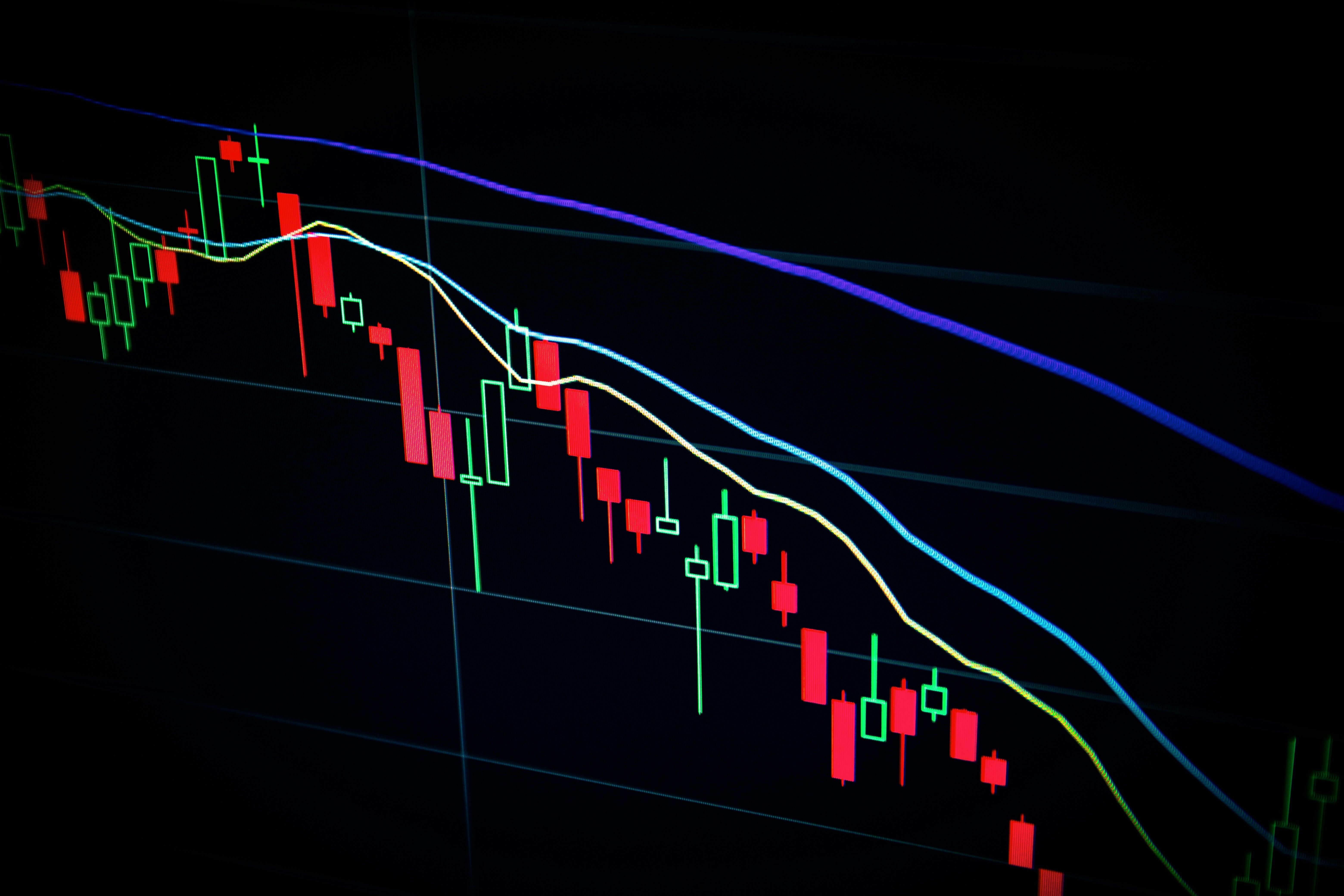
Candlestick charts are among the most commonly used tools in forex trading. Each candle provides information about the opening price, closing price, highest price, and lowest price during a specific period.
Traders may also use technical indicators to support their analysis. Popular indicators include the Relative Strength Index (RSI), Moving Average Convergence Divergence (MACD), moving averages, Bollinger Bands, and Average True Range (ATR).
However, using more indicators does not necessarily produce better analysis. A chart filled with indicators can sometimes make decision-making more complicated. The objective should be to develop a clear and repeatable analytical process.
Support and Resistance
Support and resistance are important concepts in technical analysis. Support refers to a price area where buying interest has previously helped prevent or slow a decline, while resistance refers to an area where selling pressure has previously limited an advance.
These levels are not guaranteed barriers. Price can break through them, particularly when strong economic news or changes in market sentiment occur.
Fundamental Analysis
Fundamental analysis focuses on economic, financial, and political factors that can influence currency values.
Important factors include interest rates, inflation, employment figures, economic growth, central-bank decisions, government policies, and geopolitical developments.
Central banks can have a particularly strong influence on currency markets. Expectations surrounding interest-rate changes can cause significant movements in currencies before an official decision is even announced.
For example, if traders expect a central bank to maintain higher interest rates for longer, that expectation may influence demand for the currency. Conversely, expectations of lower interest rates can affect currency demand in the opposite direction.
Economic News and Forex Volatility
Major economic announcements can cause substantial and rapid price movements. Events such as interest-rate decisions, inflation reports, employment data, and central-bank speeches can increase volatility.
Traders should therefore be aware of the economic calendar before entering positions, particularly when using short-term strategies.
Market Sentiment
Market sentiment refers to the overall attitude of traders and investors toward a particular currency, asset, or the broader financial environment.
When markets become concerned about economic uncertainty or geopolitical risks, traders may adjust their positions rapidly. This can result in increased volatility across currencies and other financial markets.
Understanding sentiment can therefore help traders put individual price movements into a broader market context.
The most important lesson is that analysis should be used to build probabilities and scenarios, not certainty. No indicator, chart pattern, strategy, or analyst can guarantee the direction of the forex market.
4. Developing a Profitable Forex Trading Strategy
A forex trading strategy is a structured plan that determines how you identify potential trades, when you enter the market, where you place your stop loss, how you manage an open position, and when you exit.
Trading without a strategy can quickly become emotional and inconsistent. A trader may enter a position simply because the market is moving, hold a losing trade because they hope it will reverse, or increase their position size after a loss in an attempt to recover the money.
A well-defined strategy helps reduce these behaviours by giving the trader a set of conditions to follow.
What Should a Trading Strategy Include?
- Market Selection: Decide which currency pairs or markets you will focus on rather than attempting to trade everything.
- Timeframe: Determine whether your strategy is designed for short-term, intraday, or longer-term trading.
- Entry Conditions: Define the specific circumstances that must occur before you enter a trade.
- Stop-Loss Rules: Establish where your trade will be considered invalid and where you will accept a loss.
- Profit-Taking Rules: Decide how and when you will take profits or exit a winning position.
- Risk Management: Determine how much of your account you are prepared to risk on each trade.
- No-Trade Conditions: Identify situations where you will stay out of the market, such as periods of extreme volatility or unclear market structure.
Popular Forex Trading Strategies
- Scalping: Scalpers attempt to capture small price movements by entering and exiting trades over very short periods. This approach requires discipline, quick execution, and careful attention to transaction costs.
- Day Trading: Day traders generally open and close their positions within the same trading day. They attempt to take advantage of intraday price movements without maintaining positions overnight.
- Swing Trading: Swing traders typically hold positions for several days or weeks in an attempt to capture larger price movements.
- Trend Trading: Trend traders attempt to identify an established directional movement and position themselves in the direction of that trend.
- Price Action Trading: This approach focuses primarily on price behaviour, candlestick formations, market structure, and important support and resistance areas.
- Smart Money Concepts: This is an advanced trading framework used by some traders to study liquidity, market structure, order blocks, and potential institutional-style price behaviour.
Backtesting Your Strategy
Before using a strategy with real money, traders can test it using historical market data. This process is commonly known as backtesting.
Backtesting can help you understand how a strategy might have performed under previous market conditions. It can also reveal weaknesses in your entry rules, stop-loss placement, profit targets, and position sizing.
However, historical performance does not guarantee future results. Market conditions can change, and a strategy that performed well in one environment may perform poorly in another.
Keep Your Strategy Simple
Beginners often make the mistake of collecting numerous indicators and strategies at the same time. This can create confusion rather than improve decision-making.
A better approach is to choose one trading method, learn it thoroughly, test it, keep detailed records, and make improvements based on evidence.
Consistency is more important than constantly searching for a new strategy. Your objective should be to develop a process that you understand, can test, and can follow with discipline.
5. Risk Management – The Survival Rule
Risk management is one of the most important skills a forex trader can develop. A trader can have a good strategy and still lose money if individual trades are too large or the account is exposed to excessive risk.
The primary objective of risk management is not to eliminate losses. Losses are an unavoidable part of trading. Instead, risk management is designed to ensure that individual losses remain manageable and that a series of losing trades does not destroy the trading account.
Core Risk Management Principles
- Risk Per Trade: Many experienced traders limit the amount of their account they are willing to lose on a single trade. A commonly used example is 1–2%, although the appropriate level depends on the trader, strategy, and financial circumstances.
- Stop Loss: A stop-loss order can help define the maximum planned loss on a trade. Traders should understand that extreme volatility or gaps can sometimes result in execution at a different price.
- Position Sizing: Your position size should be based on your account size, the amount you are willing to risk, and the distance between your entry and stop-loss level.
- Risk-to-Reward Ratio: Traders often compare potential reward with potential risk. For example, a 1:2 risk-to-reward ratio means risking one unit in pursuit of two units. However, a high ratio alone does not make a strategy profitable.
- Capital Preservation: Protecting your trading capital allows you to remain in the market long enough to learn, improve, and apply your strategy consistently.
- Avoid Overleveraging: Excessive leverage can cause relatively small market movements to produce large gains or losses. Using leverage without understanding its impact can quickly damage an account.
Understanding Position Size
Position sizing is an important part of responsible forex trading. Instead of deciding how much to trade based on how much money you want to make, position size should be calculated from how much you are prepared to lose if the trade goes against you.
For example, suppose a trader has a $1,000 account and chooses to risk 1% on a particular trade. The planned maximum risk would be $10. The appropriate position size would then depend on the currency pair, stop-loss distance, pip value, and broker’s contract specifications.
This approach helps prevent emotions from determining the size of your trades.
Why Risking Too Much Can Be Dangerous
Consider a trader who repeatedly risks a large percentage of their account on individual trades. A relatively small losing streak could reduce the account dramatically, making recovery increasingly difficult.
For this reason, professional risk management focuses on survival first. The objective is to keep losses controlled so that no single trade has the power to seriously damage the account.
Risk Management Is More Than Stop Losses
Risk management also includes controlling the number of trades you take, avoiding excessive correlation between positions, managing leverage, maintaining sufficient account equity, and knowing when to stop trading.
For example, opening several positions on currency pairs that are strongly influenced by the same currency can create more exposure than a trader initially realises.
A responsible trader therefore considers the total risk across the entire portfolio rather than looking at every position in isolation.
The goal is simple: protect your capital first and allow your trading strategy to work over a large enough sample of trades.

6. Practicing with a Demo Account
Before risking real money, beginners should consider practising with a forex demo account. A demo account allows you to use simulated funds while learning how the trading platform and market work.
Demo trading can help you understand how to place market orders, pending orders, stop-loss orders, and take-profit orders. It also gives you an opportunity to practise position sizing and observe how prices behave under different market conditions.
What Should You Practise?
- Placing Trades: Learn how to open, modify, and close positions correctly.
- Risk Management: Practise using appropriate position sizes and setting stop-loss levels.
- Technical Analysis: Learn how to read charts, identify trends, and mark important price levels.
- Following a Strategy: Apply the same trading rules consistently instead of entering random positions.
- Keeping a Trading Journal: Record your entries, exits, reasons for taking trades, results, and lessons learned.
However, remember that demo trading does not perfectly replicate the emotional experience of trading real money. A trader may behave differently when actual savings are at risk.
For this reason, moving from demo trading to live trading should be gradual. If you eventually decide to trade real money, use an amount you can genuinely afford to lose rather than money needed for rent, food, school fees, emergencies, debt payments, or other essential expenses.

7. Understanding Forex Trading Psychology
Trading psychology is often overlooked by beginners, yet it can have a significant effect on trading performance. A trader may understand technical analysis and have a clearly defined strategy but still make poor decisions because of fear, greed, impatience, or overconfidence.
The market constantly creates situations that can test a trader’s discipline. A position may move quickly in the trader’s favour, reverse unexpectedly, or remain in a losing position for longer than expected.
Common Psychological Challenges
- Fear: Fear can cause traders to close winning trades too early or avoid valid setups because they are afraid of losing.
- Greed: Greed can encourage traders to increase position sizes, use excessive leverage, or remain in trades longer than their strategy allows.
- FOMO: Fear of missing out can cause traders to enter the market after a large move has already occurred.
- Revenge Trading: After suffering a loss, some traders immediately enter another trade in an attempt to recover the money. This can result in even greater losses.
- Overconfidence: A series of successful trades can make a trader believe that losses are unlikely, leading to unnecessary increases in risk.
- Impatience: Traders may take low-quality setups simply because they feel they need to be in the market.
How to Improve Trading Discipline
One of the best ways to manage emotions is to establish your rules before entering a trade. Decide in advance what conditions must be present, how much you are willing to risk, where the trade becomes invalid, and how you will respond if the market moves against you.
A trading journal can also help identify repeated mistakes. Reviewing your trades regularly may reveal patterns such as entering too early, moving stop losses, overtrading after losses, or abandoning your strategy during periods of volatility.
The objective is not to eliminate emotions completely. Instead, traders should develop systems that prevent emotions from controlling important financial decisions.
8. Advanced Forex Insights and Market Structure
Once you understand the fundamentals of forex, technical and fundamental analysis, strategy development, and risk management, you can begin exploring more advanced concepts. These ideas are often used by experienced traders to study how price moves and how market participants may react around important areas.
Advanced analysis should not be viewed as a shortcut to guaranteed profits. The more complex a trading concept becomes, the more important it is to test it, understand its limitations, and combine it with proper risk management.
Market Structure
Market structure refers to the way price forms a sequence of highs and lows over time. Traders use these structures to assess whether a market is trending upward, trending downward, or moving sideways within a range.
An uptrend may generally be characterised by higher highs and higher lows, while a downtrend may display lower highs and lower lows. When this structure changes, traders may begin watching for a possible shift in market direction.
Understanding market structure can help traders avoid relying entirely on indicators and instead pay closer attention to the actual behaviour of price.
Liquidity
Liquidity is an important concept in financial markets and refers broadly to the availability of buyers and sellers. Forex traders often study areas where significant amounts of buying or selling interest may exist.
Some trading methodologies focus heavily on liquidity around previous highs, previous lows, support and resistance areas, and other important price levels.
A movement through a previous high or low does not automatically mean that the market will continue in that direction. Traders should wait for additional evidence rather than assuming that every liquidity event represents a trading opportunity.
Order Blocks
Order blocks are a concept commonly discussed within certain institutional-style trading and price-action frameworks. Traders attempt to identify areas where significant buying or selling activity may have taken place and then monitor those areas for possible future reactions.
Order blocks can be useful as part of a broader analytical framework, but they should not be treated as guaranteed institutional entry points. Price can move through any level, and market behaviour can change rapidly.
London and New York Trading Sessions
Forex trading takes place across major financial centres around the world. Traders often pay particular attention to the London and New York sessions because these periods can experience substantial trading activity and volatility.
The overlap between major sessions can also produce increased market activity in some currency pairs.
For traders in Kenya, it is important to convert international session times into East Africa Time and remember that daylight-saving changes in other countries can alter the local time relationship.
Why Volatility Matters
Volatility describes the degree to which an asset’s price moves over a particular period. High volatility can create more trading opportunities, but it can also increase risk.
During major economic announcements, currency prices can move rapidly within seconds or minutes. Spreads may also widen and execution may differ from the expected price.

9. Creating a Professional Forex Trading Plan
A trading plan brings together your strategy, risk management rules, market analysis, and personal trading objectives. It provides a framework that can help you make decisions consistently rather than reacting emotionally to every market movement.
What Should Your Trading Plan Include?
- Currency Pairs: Identify the specific pairs you intend to trade and understand their characteristics.
- Trading Timeframe: Decide whether your approach is based on short-term, intraday, swing, or longer-term trading.
- Trading Sessions: Identify the market sessions when you will normally analyse and trade.
- Entry Rules: Clearly define the conditions that must be present before entering a position.
- Exit Rules: Determine where and why you will exit both winning and losing positions.
- Risk Rules: Define the maximum amount you are prepared to risk on an individual trade and across your overall account.
- Daily or Weekly Limits: Establish limits that can help prevent excessive trading after a series of losses or wins.
- Economic News: Decide how you will handle major economic announcements and periods of unusually high volatility.
- Trading Journal: Record your trades and review your performance regularly.
A professional trading plan should also include circumstances under which you will not trade. Sometimes the best decision is to remain outside the market when conditions do not match your strategy.
The Importance of a Trading Journal
A trading journal is one of the most useful tools for improving your trading process. Instead of simply recording whether a trade made or lost money, document why the trade was taken and whether you followed your rules.
You can record information such as the currency pair, date, entry price, stop loss, target, position size, market conditions, reason for entering, result, and emotional state.
After recording enough trades, you may begin to identify patterns. For example, you may discover that certain setups perform better than others, that you trade poorly during particular market conditions, or that most of your losses come from breaking your own rules.
10. Common Forex Trading Mistakes Beginners Should Avoid
Many new forex traders enter the market with the expectation that finding the right indicator or strategy will automatically lead to consistent profits. In reality, poor risk management, emotional decisions, excessive leverage, and unrealistic expectations are among the issues that can cause serious losses.
Understanding these common mistakes can help beginners approach forex trading more responsibly.
1. Using Excessive Leverage
Leverage can allow traders to control positions that are much larger than their available capital. While this can increase the potential return on a successful trade, it can also magnify losses.
Using the maximum leverage available simply because a broker offers it is not necessarily a good trading decision. Traders should understand their total exposure before opening a position.
2. Trading Without a Plan
Entering trades based on emotions, social-media posts, rumours, or random signals can lead to inconsistent results. A trading plan should establish the conditions under which you will enter, manage, and exit a position.
3. Risking Too Much on One Trade
A single trade should not have the ability to seriously damage your account. Risking a large percentage of your capital can make it difficult to recover from a relatively small number of losing trades.
4. Moving Stop Losses
Some traders move their stop loss further away when a trade begins moving against them because they do not want to accept the loss.
While there may be legitimate strategy-based reasons for adjusting a stop loss, moving it simply because you hope the market will reverse can turn a controlled loss into a much larger one.
5. Overtrading
More trades do not automatically mean more profits. Taking trades simply because you are watching the market can increase transaction costs and expose your account to unnecessary risk.
6. Revenge Trading
After losing money, some traders immediately attempt to recover the loss by increasing their position size or taking trades that do not meet their normal criteria.
This behaviour can create a cycle in which one loss leads to another and the account becomes increasingly exposed.
7. Chasing the Market
A currency can move significantly without providing a suitable trading opportunity. Entering a trade simply because you are afraid of missing a move can result in poor entries and unfavourable risk.
8. Believing Guaranteed Profit Claims
No legitimate trading strategy can guarantee profits. Claims of guaranteed daily returns, risk-free forex income, extremely high win rates, or instant wealth should be treated with extreme caution.
9. Following Signals Blindly
Forex signals can provide trade ideas, but relying on another person’s entry without understanding the reasoning behind the trade can prevent you from developing your own skills.
10. Trading With Essential Money
Forex trading should not be funded with money needed for rent, food, school fees, debt payments, medical expenses, emergency savings, or other essential obligations.
11. Forex Trading in Kenya: A Practical Perspective
Forex trading has attracted considerable interest among Kenyan investors and aspiring traders. The growth of smartphones, online financial platforms, digital payments, and educational content has made access to financial markets easier than ever.
However, greater accessibility also means that beginners are exposed to a large amount of promotional content. Social-media platforms are filled with trading signals, courses, automated systems, account-management services, and claims about making large amounts of money from small deposits.
Not every claim is reliable. Kenyan traders should therefore approach online forex promotions with the same level of caution they would apply to any other financial opportunity.
Verify Your Broker
Before opening a trading account, investigate the broker carefully and verify its current regulatory status with the relevant financial authority. Do not rely solely on screenshots, testimonials, social-media advertisements, or claims made by an individual promoting the broker.
Understand the Cost of Trading
Your trading results can be affected by spreads, commissions, overnight financing charges, slippage, currency conversion costs, and other fees. These costs may appear small on individual trades but can become significant when a trader makes many transactions.
Be Careful With Daily Profit Targets
One of the most common expectations among new traders is to make a fixed amount every day. The forex market does not provide a guaranteed daily income, and market conditions vary from one day to another.
There will be periods with clear trading opportunities and periods when staying out of the market may be the better decision.
Understand Kenya’s Time Zone
Kenya operates on East Africa Time (EAT). International forex sessions, economic announcements, and central-bank events are often published using different time zones.
Kenyan traders should therefore check the relevant time carefully, particularly because some countries observe daylight-saving time while Kenya does not.
Forex education should be viewed as a long-term learning process. The more you understand about market behaviour, risk, economics, trading psychology, and your own decision-making, the better prepared you are to make informed choices.
Key Takeaways
- Forex is a global financial market: Currencies are traded in pairs, and prices change in response to economic conditions, market expectations, interest rates, and other factors.
- Education comes first: Beginners should understand currency pairs, spreads, leverage, margin, position sizing, and order types before risking real money.
- Choose your broker carefully: Check regulation, trading costs, withdrawal procedures, platforms, execution, and customer support before opening an account.
- Use structured analysis: Technical analysis, fundamental analysis, and market sentiment can help traders develop informed market scenarios.
- Develop a trading strategy: Your strategy should clearly define your entry conditions, exit rules, risk limits, and situations where you will not trade.
- Risk management is essential: Even a good strategy will experience losing trades. Protecting your capital should always be a priority.
- Practise before going live: A demo account can help you understand trading platforms, test strategies, and develop discipline without immediately risking real money.
- Control your emotions: Fear, greed, FOMO, revenge trading, and overconfidence can lead to poor decisions.
- Keep a trading journal: Recording your trades can help identify weaknesses and improve your decision-making process over time.
- Avoid unrealistic promises: Forex cannot guarantee daily income or rapid wealth. Claims of guaranteed profits should always be treated with caution.
- Kenyan traders should verify financial service providers: Always check the current regulatory status of a broker or service provider before depositing funds.
- Focus on consistency: Successful trading is not about finding one perfect trade. It is about developing a disciplined process and managing risk over many trades.
Frequently Asked Questions About Forex Trading
1. Is forex trading legal in Kenya?
Forex trading is subject to financial regulation and applicable laws in Kenya. Traders should familiarise themselves with the current regulatory framework and verify the licensing status of any broker or financial service provider before opening an account.
2. How much money do I need to start forex trading?
There is no single amount that every trader needs. Brokers may have different minimum deposit requirements, but the more important consideration is whether you can afford to lose the money you deposit. You should never use money required for essential expenses.
3. Can I make a living from forex trading?
Some individuals may generate profits from trading, but consistent profitability is difficult and is never guaranteed. Forex should not be treated as a guaranteed source of income, particularly for beginners.
4. Is forex trading suitable for beginners?
Beginners can learn forex trading, but they should approach the market carefully. Education, demo practice, risk management, and a clearly defined strategy should come before taking significant financial risks.
5. What is the best forex trading strategy?
There is no single strategy that is guaranteed to be the best. Different approaches work under different market conditions and may suit different traders. The most appropriate strategy is one that you understand, have tested, and can follow consistently.
6. What are the best currency pairs for beginners?
Major currency pairs such as EUR/USD are commonly studied by beginners because they generally have significant trading activity. However, every currency pair has its own characteristics, risks, and periods of volatility.
7. How much should I risk on each forex trade?
There is no universal risk percentage that is appropriate for everyone. Some traders choose to risk a small percentage of their account on each trade, such as 1%, while others use different limits. The important principle is to keep risk small enough that individual losses do not seriously damage your account.
8. Can forex trading make me rich quickly?
There is no reliable method of guaranteeing rapid wealth through forex trading. Leverage can increase potential gains, but it can also magnify losses. Attempts to become wealthy quickly can encourage excessive risk-taking.
9. Should I use forex signals?
Forex signals can provide trade ideas, but they should not replace your own research, strategy, and risk management. Be especially cautious about signal providers that promise guaranteed profits, fixed daily returns, or unusually high success rates.
10. What should I learn first before trading forex?
Start by learning currency pairs, pips, spreads, leverage, margin, order types, technical analysis, fundamental analysis, position sizing, and risk management. After gaining a foundation, practise a clearly defined strategy using a demo account.
11. Can I trade forex using a smartphone in Kenya?
Many brokers provide mobile trading applications that allow traders to monitor markets and manage positions from smartphones. However, having access to a mobile trading app does not reduce the financial risks involved in forex trading.
12. Is forex trading the same as gambling?
Forex trading and gambling are different activities, but trading can become highly speculative when decisions are based on chance, emotions, or unrealistic expectations. A disciplined trader uses analysis, defined rules, position sizing, and risk management rather than simply relying on luck.
Final Thoughts
Forex trading is a journey that requires patience, discipline, continuous learning, and realistic expectations. While the foreign exchange market provides opportunities, it also carries substantial risks, especially when leverage is involved.
For beginners in Kenya, the strongest starting point is not a promise of quick profits. It is a solid understanding of how the market works, careful broker selection, effective risk management, consistent practice, and the ability to control emotions.
As your knowledge develops, you can gradually explore technical analysis, fundamental analysis, price action, market structure, trading psychology, and other advanced approaches.
Remember that no strategy works in every market condition and no trader wins every trade. The objective should be to build a process that can be tested, measured, improved, and followed consistently.
Forex trading should be approached as a high-risk financial activity rather than a guaranteed path to wealth. If you decide to trade, make informed decisions and only use capital that you can afford to lose.
For more practical personal finance education, market insights, forex education, and financial analysis, continue exploring SkyPress by Skyrexx.
If you are new to forex trading, the SkyPress Forex Academy provides a structured learning path covering forex fundamentals, technical analysis, risk management, trading strategies, and advanced market concepts.
For ongoing market updates and analysis, visit the SkyPress Forex Markets section, where you can follow developments across the global currency market.
SkyPress Disclaimer
Disclaimer: This article is provided by SkyPress by Skyrexx for general educational and informational purposes only. It is not financial, investment, trading, legal, tax, or other professional advice, and it should not be interpreted as a recommendation to buy, sell, or hold any currency, financial instrument, or investment product.
Forex trading and other leveraged financial products involve substantial risk of loss. Leverage can magnify both potential gains and losses, and you may lose some or all of the capital you commit to trading. Past performance, historical examples, trading strategies, market analysis, or educational information discussed in this article do not guarantee future results.
Readers should conduct their own research and carefully consider their financial circumstances, investment objectives, experience, and risk tolerance before making any financial decision. If you are uncertain about the risks involved, consider consulting a qualified and appropriately licensed financial professional.
Information relating to brokers, regulations, trading platforms, fees, market conditions, and financial services may change over time. Readers in Kenya should independently verify the current regulatory status and licensing of any broker or financial service provider with the appropriate regulatory authority before opening an account or depositing funds.
SkyPress by Skyrexx does not guarantee trading profits, investment returns, income, or financial results. Any decision to trade or invest is made solely at the reader’s own risk and responsibility.
Nothing contained in this article should be understood as a promise of guaranteed income or an assurance that any particular trading strategy will be profitable.