US-China AI Rivalry Fails to Stop Cross-Border Capital Flows as Investors Bet on Both Sides

US-China AI Divide Deepens, but Global Investors Keep Capital Flowing Across the Technology Frontier
September 22, 2026 — SkyPress News
The United States and China are increasingly competing to build independent artificial intelligence ecosystems, yet the global financial system remains deeply connected across the two markets.
American investment banks continue to participate in major Chinese technology and semiconductor fundraising transactions, while Chinese and Hong Kong investors maintain significant exposure to U.S. technology companies.
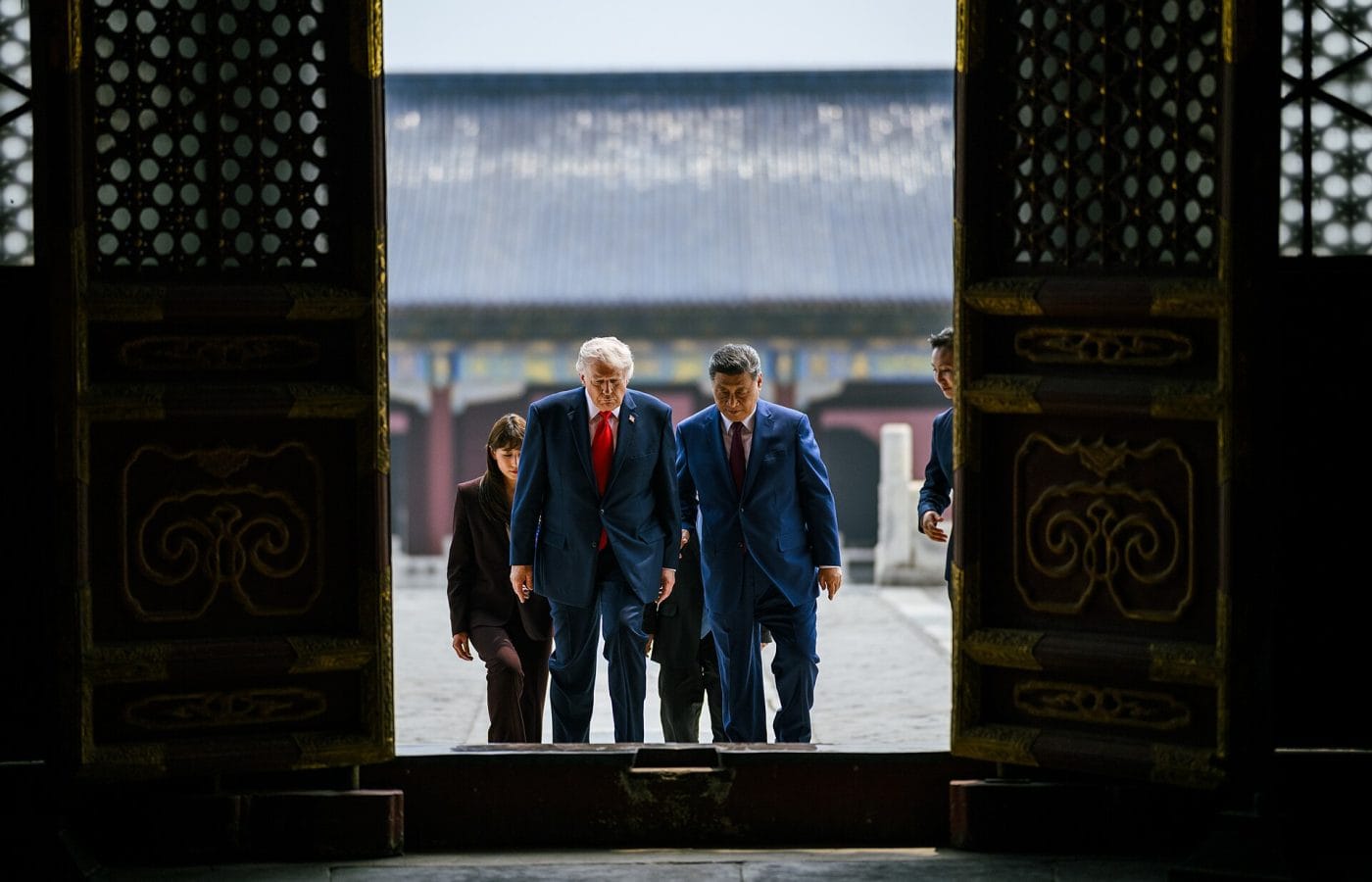
The financial relationship is becoming particularly important as U.S. President Donald Trump and Chinese President Xi Jinping prepare for talks in Washington this week, with artificial intelligence, trade and investment among the issues surrounding the broader relationship.
Recent discussions between senior U.S. and Chinese officials have also included a proposed framework for communication over AI-related risks. U.S. Treasury Secretary Scott Bessent said the two sides had discussed establishing an AI dialogue and a notification mechanism for common goals and national-security threats.
US and China Are Building Separate AI Supply Chains
The technology relationship between Washington and Beijing has changed significantly in recent years.
The United States has tightened controls on advanced semiconductor technology and certain investments involving sensitive Chinese technology sectors. China, meanwhile, has accelerated efforts to develop domestic alternatives to foreign chips, equipment and artificial intelligence technologies.
The result is an increasingly fragmented global AI industry.
American companies remain major players in advanced processors, semiconductor equipment, cloud infrastructure and AI software, while Chinese companies are expanding their domestic capabilities and benefiting from government support and a large internal technology market.
Yet the financial connections between the two ecosystems have not disappeared.
Wall Street Banks Continue to Fund Chinese Technology
Despite the strategic competition, U.S. investment banks remain active in China’s technology capital markets.
According to LSEG data cited by Reuters, Wall Street banks have acted as bookrunners on 19 Chinese high-tech equity capital-market transactions worth approximately $17.2 billion so far in 2026. That represents nearly 30% of total issuance in the sector during the period.
The transactions include artificial intelligence developers, semiconductor manufacturers and companies supplying hardware for AI infrastructure.
Major international banks including Goldman Sachs, Morgan Stanley, Citigroup and JPMorgan have participated in various Chinese technology and semiconductor offerings.
This activity demonstrates an important distinction between technological competition and financial-market activity. Investment banks can earn fees from arranging and distributing securities even when governments are simultaneously attempting to reduce strategic dependence on each other’s technology.
Chinese AI companies are attracting domestic capital
China’s push for technological self-sufficiency is also creating a large domestic funding opportunity.
Restrictions on access to certain advanced foreign technologies have increased the strategic importance of Chinese semiconductor companies, AI developers and suppliers of computing infrastructure.
For investors, that creates exposure to a domestic technology cycle driven partly by China’s effort to reduce reliance on foreign suppliers.
Chinese Investors Continue to Hold US Technology Exposure
The financial connection also runs in the opposite direction.
U.S. equities remain an important destination for Chinese and Hong Kong capital, particularly within the technology and semiconductor sectors.
Reuters reported that the value of U.S. equities held by Hong Kong residents and mainland Chinese investors has risen 23% over the past year to more than $750 billion.
Chinese outbound mutual funds also maintain substantial exposure to U.S. stocks. Technology companies and semiconductor manufacturers are particularly relevant because American firms continue to occupy important positions across the global AI hardware chain.
Data compiled by Sinolink Securities showed increased Chinese holdings in several U.S. semiconductor companies, including Micron Technology, AMD, SanDisk, Lam Research and Applied Materials, according to Reuters.
This means that investors on both sides remain financially exposed to the technology ecosystem of their geopolitical competitor.
AI Investment Is Creating a Two-Sided Technology Market
The emerging structure of the AI industry is increasingly difficult to describe as a single global technology market.
Instead, companies are preparing for a world in which different countries may use different chips, software platforms, supply chains, investment rules and technology standards.
For investors, that creates both opportunities and risks.
A Chinese semiconductor company could benefit from Beijing’s push for domestic technology production, while an American chipmaker could benefit from continued global demand for advanced AI computing.
The two investment cases can therefore exist at the same time.
Reuters cited S&P Global Market Intelligence data showing that U.S. AI funding rounds involving investors from China or Hong Kong increased from approximately $436 million in 2023 to about $8.9 billion through mid-September 2026.
The figures illustrate how financial capital can remain internationally mobile even when technology supply chains are becoming more fragmented.
US Investment Restrictions Add Regulatory Risk
The financial relationship is not unrestricted.
The U.S. Treasury’s outbound investment program covers certain transactions involving China, Hong Kong and Macau in strategically sensitive technology areas.
The program covers three broad categories: semiconductors and microelectronics, quantum information technologies and certain artificial intelligence systems. Some transactions are prohibited while others require notification to the U.S. government.
For investors, this means geopolitical risk is becoming increasingly connected to regulatory risk.
A company may have strong commercial prospects but still face restrictions affecting its access to foreign capital, advanced technology, customers or supply-chain partners.
Investors therefore have to consider more than earnings growth and valuation when assessing companies operating across the U.S.-China technology relationship.
Semiconductors Remain at the Centre of the AI Competition
Semiconductors are among the most strategically important components of the AI economy.
Advanced AI systems require large quantities of computing power, creating demand for processors, memory, networking equipment and sophisticated semiconductor manufacturing technologies.
Washington has sought to restrict China’s access to certain advanced chips and chipmaking technologies, while Beijing has increased efforts to expand domestic semiconductor production.
This creates a complicated market dynamic.
Restrictions can make it more difficult for Chinese companies to obtain certain foreign technologies, but they can also strengthen incentives for domestic companies to develop alternatives.
At the same time, U.S. semiconductor companies may face reduced access to certain Chinese customers while benefiting from strong demand for AI infrastructure elsewhere.
The effects will vary considerably between individual companies depending on their products, customers, geographic exposure and ability to adapt to changing regulations.
Trump-Xi Talks Put AI and Investment in Focus
The upcoming Trump-Xi meeting is attracting attention from financial markets because the technology dispute has become closely linked to trade, investment and national security.
Senior U.S. and Chinese officials held preparatory discussions in New York, with AI among the subjects under discussion.
Bessent said the United States proposed an AI safety notification mechanism that could provide communication channels for serious AI-related incidents and common risks.
Separate reporting on the talks indicated that both governments have described the discussions positively ahead of the leaders’ meeting.
For investors, however, the significance of the meeting may extend beyond any immediate announcement.
Markets will be watching whether Washington and Beijing can establish greater predictability around trade, technology restrictions, critical minerals and investment rules.
Why the US-China Financial Connection Matters for Markets
The continued movement of capital between the world’s two largest economies means that a deeper technology separation could have consequences across global markets.
Potential effects include:
- Higher costs as companies redesign technology supply chains.
- Greater investment in domestic semiconductor production.
- Additional government support for strategically important technology industries.
- More restrictions on cross-border technology investment.
- Greater volatility in technology and semiconductor stocks.
- Changes in how companies raise capital internationally.
- Increasing importance of geopolitical risk in technology valuations.
At the same time, greater diplomatic stability could reduce some uncertainty for companies operating across the two markets, even if existing restrictions remain in place.
Global Investors Are Watching More Than AI Stocks
The consequences of the U.S.-China technology relationship extend beyond artificial intelligence companies.
Semiconductor equipment manufacturers, data-centre operators, cloud companies, industrial technology firms and suppliers of critical materials can all be affected by changes in the global AI supply chain.
There is also a broader macroeconomic connection.
Changes in technology investment can influence productivity, corporate capital expenditure, trade flows and demand for industrial commodities.
For example, persistent energy-price pressures are already influencing inflation expectations in several economies. SkyPress recently examined this issue in our report on rising inflation risks from energy prices and domestic demand.
What Investors Will Be Watching Next
1. US-China AI discussions
Investors will watch whether the proposed AI dialogue develops into a sustained communication mechanism between Washington and Beijing.
2. Semiconductor restrictions
Any changes to U.S. export controls or Chinese semiconductor policies could affect chipmakers, equipment manufacturers and AI infrastructure companies.
3. Chinese technology listings
Continued Hong Kong listings could provide an important funding channel for China’s AI and semiconductor industries.
4. Cross-border investment rules
Changes in investment restrictions could alter how institutional investors gain exposure to technology companies in either market.
5. The broader Trump-Xi relationship
Trade, tariffs, critical minerals and technology policy remain interconnected. Developments in one area could affect investor expectations across the others.
Key Takeaways
- Financial ties remain strong: U.S. banks continue to participate in major Chinese technology fundraising transactions.
- Chinese investors remain exposed to U.S. technology: U.S. equities continue to represent an important destination for Chinese and Hong Kong capital.
- AI supply chains are becoming more fragmented: Washington and Beijing are pursuing greater technological self-reliance.
- Semiconductors remain strategically important: Chip technology sits at the centre of the U.S.-China AI competition.
- Regulation matters increasingly: Investment restrictions can influence which technology companies international investors can access.
- Diplomatic developments matter for markets: Investors will closely monitor the Trump-Xi meeting and subsequent discussions over AI, trade and investment.
Frequently Asked Questions
Why are US banks still involved in Chinese AI and semiconductor deals?
Investment banks can participate in underwriting and arranging securities even while governments impose restrictions on specific technology transfers or investment activities. The banking relationship therefore does not necessarily represent a direct strategic investment in China’s technology sector.
Are Chinese investors still investing in US technology companies?
Yes. Reuters reports that Chinese and Hong Kong investors continue to hold substantial U.S. equity exposure, including positions in technology and semiconductor companies.
What is the US outbound investment program?
The U.S. Treasury’s outbound investment program regulates certain U.S. investments involving sensitive technologies in countries of concern. Covered areas include semiconductors, quantum technologies and certain AI systems.
Why are semiconductors important to the US-China AI rivalry?
Advanced AI systems depend heavily on sophisticated processors and semiconductor manufacturing technologies. Control over these technologies therefore has major economic and strategic implications for both countries.
What should investors watch after the Trump-Xi meeting?
Investors will be watching developments involving AI cooperation, semiconductor restrictions, trade policy, critical minerals and cross-border investment rules. These factors could influence technology companies and broader global markets.
Article Disclaimer
This article is provided for educational and informational purposes only. It does not constitute financial, investment, trading or legal advice. Market conditions, regulations and geopolitical developments can change rapidly. Readers should conduct their own research and consult qualified professional advisers before making financial or investment decisions.
Sources
- Reuters — reporting on U.S.-China AI investment flows and technology capital markets, September 22, 2026.
- Reuters — reporting on U.S.-China AI safety discussions involving Treasury Secretary Scott Bessent and Chinese Vice Premier He Lifeng, September 2026.
- U.S. Department of the Treasury — Outbound Investment Security Program.
- U.S. Department of the Treasury — Final regulations implementing the U.S. outbound investment executive order.
SkyPress News | Skyrexx
SkyPress provides practical financial education, market news and economic analysis for readers following global markets, money and investment-related developments.
© 2026 SkyPress by Skyrexx. All rights reserved.