
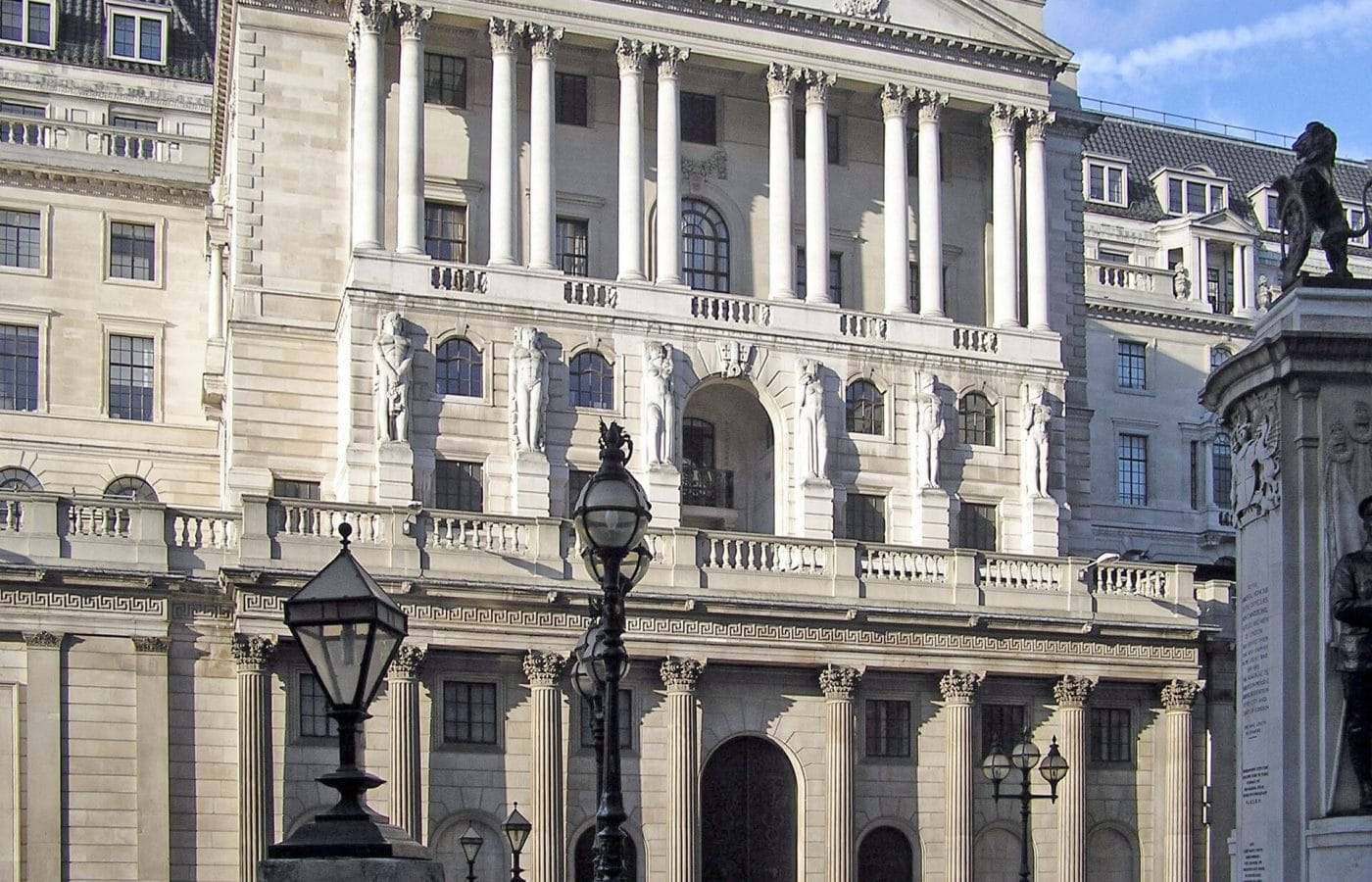
Bank of England Holds Rates at 3.75% as Inflation Risks Rise, Pound Faces Market Pressure

By SkyPress Desk | SkyPress News
September 17, 2026 — The Bank of England has kept its benchmark interest rate at 3.75%, but its latest policy decision has delivered a significantly more cautious message for investors as rising energy costs threaten to push UK inflation above 4% early next year.
The Monetary Policy Committee voted 6–3 to leave Bank Rate unchanged. Three policymakers — Megan Greene, Catherine L Mann and Huw Pill — supported an immediate increase to 4%.
More importantly for financial markets, the September meeting showed that the debate inside the Bank is shifting. Although Governor Andrew Bailey and several other policymakers backed holding rates, the Bank made clear that prolonged energy-price pressures could require tighter monetary policy.
For currency markets, the decision creates a complicated environment. A higher probability of future UK rate increases can support sterling through wider interest-rate differentials, but the pound also faces pressure from a stronger US dollar, elevated geopolitical risk and concerns that persistent inflation could weaken UK economic growth.
Bank Rate Remains at 3.75%
The Bank of England said the decision to hold rates reflected the need to assess how the energy shock is passing through the wider UK economy.
UK consumer-price inflation reached 3.1% in August, already above the Bank’s 2% target. The central bank now expects inflation to rise further over coming quarters, with its short-term assessment pointing to a rate slightly above 4% in the first quarter of 2027 if current energy-price conditions persist.
The inflation problem is being driven primarily by higher energy costs rather than a broad-based acceleration in domestic prices. The Bank noted that there has so far been limited evidence of significant second-round effects in wages and business pricing.
That distinction is important. If energy prices rise but wage and price-setting behaviour remains contained, policymakers may be able to tolerate a temporary inflation spike. If higher energy bills begin feeding into wage negotiations, services prices and business costs, the central bank could face greater pressure to raise interest rates.
The 6–3 Vote Matters for the Pound
Three MPC members wanted an immediate 25-basis-point increase. Their argument centred on the possibility that the current energy shock could become embedded in inflation expectations and domestic pricing.
The majority, however, judged that the economy’s spare capacity, softer labour-market conditions and limited evidence of second-round effects justified waiting for more information.
For currency investors, the significance is less about today’s unchanged rate and more about what the voting split says about the direction of monetary policy.
A 6–3 vote means there is already a meaningful group inside the MPC arguing for higher rates. If inflation continues to rise and energy prices remain elevated, the balance of opinion could shift further toward tightening at future meetings.
That possibility could keep sterling-sensitive interest-rate markets volatile during the autumn.
Why Sterling Initially Struggled
At first glance, a more hawkish Bank of England should be supportive of the pound. Higher interest rates can make sterling-denominated assets more attractive by increasing their potential yield relative to other currencies.
But currency markets trade expectations rather than simply the level of interest rates.
The September decision came after investors had already been preparing for a more hawkish UK policy outlook. The actual decision to leave Bank Rate unchanged therefore failed to provide the immediate tightening signal that some market participants had positioned for.
Sterling subsequently weakened against the US dollar. Market reporting put GBP/USD around $1.3346 after the announcement, compared with approximately $1.3403 immediately beforehand. The pound also weakened against the euro.
The reaction illustrates an important feature of the current FX environment: hawkish expectations alone may not be enough to lift sterling if other major central banks are also moving toward tighter policy.
The Federal Reserve Complicates the Sterling Outlook
The US dollar has its own interest-rate catalyst.
The Federal Reserve has also moved toward tighter policy, increasing the federal funds rate by 25 basis points and signalling that inflation risks remain important to its policy outlook.
That creates a more difficult environment for GBP/USD.
If markets increasingly price additional Federal Reserve tightening at the same time that they price Bank of England increases, the relative advantage of sterling may remain limited.
The direction of GBP/USD could therefore depend heavily on the difference between expected UK and US interest rates rather than on the absolute level of either country’s policy rate.
A scenario in which the BoE becomes more hawkish while the Fed pauses could strengthen the pound’s relative position. Conversely, if both central banks tighten but US rates rise more aggressively, the dollar could retain the advantage.
Energy Prices Are Now a Major FX Variable
The central issue behind the Bank of England’s changing inflation outlook is the energy shock linked to the prolonged conflict in the Middle East.
Higher oil and gas prices affect the UK through several channels. Motor-fuel prices can raise headline inflation directly, while higher gas and electricity costs increase household bills and business expenses.
Those higher costs can eventually feed into transportation, manufacturing, food production and services.
The Bank said the direct energy contribution has been significant, while broader pass-through into wages and business pricing has so far remained relatively limited.
That creates two contrasting possibilities for markets.
If energy prices stabilise or fall, UK inflation could eventually move lower without requiring a large increase in Bank Rate. That could allow the BoE to maintain its current policy stance.
If energy prices remain elevated for longer, inflation could stay above target and increase pressure on the MPC to tighten policy.
For sterling, this makes developments in global energy markets increasingly important alongside conventional UK economic data.
Gilt Market Gets a Different Message
The Bank also announced a major change to the way it will reduce its holdings of UK government bonds accumulated through quantitative easing.
Active gilt sales will be paused for six months while the Bank implements a revised multi-year approach. The Bank intends to reduce its monetary-policy gilt holdings to zero by 2034, with the remaining reduction taking place through a combination of annual sales and maturing securities.
The announcement helped trigger a rally in UK government bonds, pushing gilt yields lower.
The immediate market response may appear unusual because the Bank simultaneously warned about higher inflation and future rate risks. But the bond-market reaction reflects the supply implications of the revised quantitative-tightening strategy.
Reducing the amount of government debt being actively sold into the market can ease some of the supply pressure facing investors, particularly at the longer end of the gilt curve.
That could temporarily improve financial conditions even while the Bank’s inflation message remains cautious.
What Could Happen to GBP/USD in the Coming Weeks?
The pound is likely to remain sensitive to three competing forces through the autumn: UK inflation, US monetary policy and developments in global energy markets.
1. A More Hawkish BoE Could Support Sterling
If UK inflation continues to surprise on the upside and energy prices remain high, markets could increase expectations for a Bank Rate increase at a coming meeting.
That would likely push short-term UK interest-rate expectations higher and could provide support for sterling, particularly against currencies whose central banks are perceived as less willing to tighten.
However, the strength and duration of any pound recovery would depend on whether the Bank actually follows through with higher rates.
2. A Stronger Dollar Could Limit GBP/USD Gains
The pound does not trade in isolation.
If US interest-rate expectations continue rising, the dollar could remain attractive to international investors. In that environment, even a more hawkish BoE might not produce a sustained GBP/USD rally.
This makes the US rate outlook one of the most important external variables for sterling during the next several weeks.
3. A Fall in Energy Prices Could Change the BoE Debate
The opposite scenario is equally important.
If oil and gas prices decline materially, the inflation outlook could improve without additional monetary tightening. That would reduce the urgency for the Bank to raise rates.
Initially, lower energy prices could benefit the UK economy by reducing household and business costs. However, the effect on sterling would be less straightforward because falling inflation could simultaneously reduce expectations for future BoE rate increases.
Currency markets would therefore have to weigh the positive economic effect of cheaper energy against the possibility of lower UK interest-rate expectations.
EUR/GBP Could Also Become More Volatile
The euro-pound exchange rate presents a different policy comparison.
The European Central Bank has also been responding to renewed inflation pressures associated with higher energy prices. This means the traditional assumption that a more hawkish BoE automatically strengthens sterling against the euro may not hold.
If both central banks remain focused on inflation, the relative performance of the UK and euro-area economies could become increasingly important for EUR/GBP.
Energy developments will also matter because Europe remains highly exposed to natural-gas prices. A renewed energy shock could therefore affect both sides of the currency pair, although through different economic channels.
UK Economic Data Will Become More Important
The Bank’s November meeting is likely to receive significant attention because policymakers will have additional inflation, employment and activity data available by then.
Investors will particularly watch whether higher energy costs begin producing stronger domestic inflation pressures.
Key indicators include:
- UK consumer-price inflation
- Services inflation
- Wage growth and pay settlements
- Employment and unemployment data
- Retail sales and household spending
- Business pricing intentions
- Oil and natural-gas prices
- GBP interest-rate expectations
The interaction between these indicators may matter more than any single data release.
Markets Enter an Unusually Complicated Policy Environment
The September Bank of England decision demonstrates how difficult monetary policy becomes when inflation is being driven by geopolitical developments rather than purely domestic demand.
Higher interest rates cannot directly reduce the global price of oil or natural gas. They can, however, influence domestic demand, inflation expectations and the extent to which businesses and workers pass higher costs through to prices and wages.
The Bank is therefore attempting to prevent an external energy shock from becoming a persistent domestic inflation problem without unnecessarily weakening economic activity.
For financial markets, that creates an environment where the same economic development can produce competing reactions.
Higher oil prices can increase expectations for BoE tightening, potentially supporting sterling. At the same time, higher energy costs can damage economic growth and increase risk aversion, potentially weighing on the currency.
Likewise, lower energy prices can reduce inflation and improve household purchasing power, but may also reduce expectations for future UK interest-rate increases.
What Investors Will Be Watching Next
The Bank of England has left the door open to higher rates, but it has not committed to a specific tightening path.
The coming weeks will therefore be dominated by incoming economic data and developments in energy markets rather than by today’s decision alone.
For sterling, the key question is whether the market begins to price a sustained UK rate advantage over the United States and euro area.
For gilts, investors will assess whether the Bank’s revised quantitative-tightening strategy can reduce supply pressure while inflation remains elevated.
For UK equities, the combination of lower gilt yields and the possibility of higher future rates creates a mixed backdrop, with interest-rate-sensitive sectors potentially responding differently from banks, exporters and energy-related companies.
For global markets, the larger issue remains the energy shock. If geopolitical tensions ease and energy prices retreat, some of the inflation pressure currently confronting major central banks could fade. If disruptions persist, central banks may face a prolonged period of difficult policy decisions.
Key Takeaways
- The Bank of England kept Bank Rate at 3.75% on September 17.
- The MPC voted 6–3, with three members supporting an increase to 4%.
- UK inflation reached 3.1% in August and the Bank now expects inflation to rise to slightly above 4% in early 2027 under current energy-price assumptions.
- The inflation outlook is being driven primarily by higher energy prices linked to the Middle East conflict.
- Sterling initially weakened after the decision despite the Bank’s more hawkish inflation warning.
- GBP/USD will remain sensitive to the relative paths of Bank of England and Federal Reserve policy.
- The euro-pound exchange rate could also become more volatile as the ECB and BoE respond to similar energy-driven inflation pressures.
- The Bank’s pause in active gilt sales produced a positive reaction in the UK bond market.
- Future UK inflation, wages, employment data and energy prices will be crucial for expectations surrounding the Bank’s next moves.
Market Outlook
The September decision does not establish a predetermined path for sterling or UK interest rates. Instead, it leaves markets highly dependent on incoming data.
A persistent energy shock combined with evidence of broader domestic inflation could strengthen expectations for further BoE tightening and potentially support sterling. A moderation in energy prices, weaker domestic demand or continued restraint in wage and services inflation could have the opposite effect by reducing the need for additional rate increases.
GBP/USD will also depend heavily on the Federal Reserve and the US dollar. Consequently, the pound’s performance over the coming weeks is likely to be shaped by the relative pace of monetary-policy repricing in London and Washington rather than by the Bank of England decision in isolation.
For market participants, the central question is no longer simply whether the BoE will cut or hold rates. It is whether the current energy shock becomes temporary inflation — or develops into a broader inflation problem requiring a more persistent monetary-policy response.
Article Disclaimer
This article is provided for educational and informational purposes only. It is not financial, investment, trading or currency-market advice. Financial markets can move rapidly and unexpectedly in response to economic data, central-bank decisions, geopolitical developments and other factors. Readers should conduct their own research and consider seeking professional advice before making financial decisions.
Sources
Bank of England — September 2026 Monetary Policy Summary and MPC Minutes.
Office for National Statistics — UK inflation and economic data.
MUFG Research — European macro and foreign-exchange analysis.
Reuters — September 17, 2026 market reporting used for market-reaction context.