Dangote’s Landmark IPO Signals a New Era for African Refining and Kenya’s Lamu Project

Dangote Opens Africa’s Biggest IPO as Nigeria’s Refining Boom Sets Sights on Kenya
By SkyPress Desk | SkyPress News
September 14, 2026 — Nigerian billionaire Aliko Dangote has opened what is being described as Africa’s largest initial public offering (IPO), putting his giant oil refinery on the Nigerian stock market while laying the financial groundwork for a broader refining expansion that includes a planned refinery in Lamu, Kenya.
The Dangote Petroleum Refinery and Petrochemicals public offer opened on September 14, with the company offering 4.1 billion shares at 525 Nigerian naira each. If fully subscribed, the IPO is expected to raise about 2.15 trillion naira, equivalent to roughly $1.6 billion at current exchange rates, with the possibility of reaching about $2.1 billion if the offer is oversubscribed and additional shares are issued under the greenshoe option.
The IPO represents more than a major corporate fundraising exercise. It marks an important moment for African capital markets, industrial development and energy security, while potentially creating a new model for financing large African infrastructure projects.
A Refinery Becomes a Public Investment Opportunity
Dangote has marketed the share sale as an “IPO for the people”, reflecting its unusually low entry threshold for retail investors. Investors can buy as few as 10 shares, translating into a minimum investment of approximately $4 at the reported exchange rate. The public offer is scheduled to close on October 13, 2026.
The refinery is being valued at close to $48 billion to $49 billion for the transaction, significantly above the roughly $40 billion valuation attached to an earlier private placement in July, when institutional investors acquired a 6% stake for about $2.5 billion.
The difference illustrates the growing investor interest surrounding one of Africa’s largest industrial projects, although it also means investors are being asked to consider a substantially higher valuation than that offered to institutional investors earlier in the year.
For ordinary investors, the IPO offers access to an asset that was previously controlled largely by private shareholders. However, participation should not be confused with a guaranteed return. Dangote’s own IPO information warns that share prices can rise or fall and that dividends are not guaranteed.
Why the Dangote Refinery Matters to Nigeria
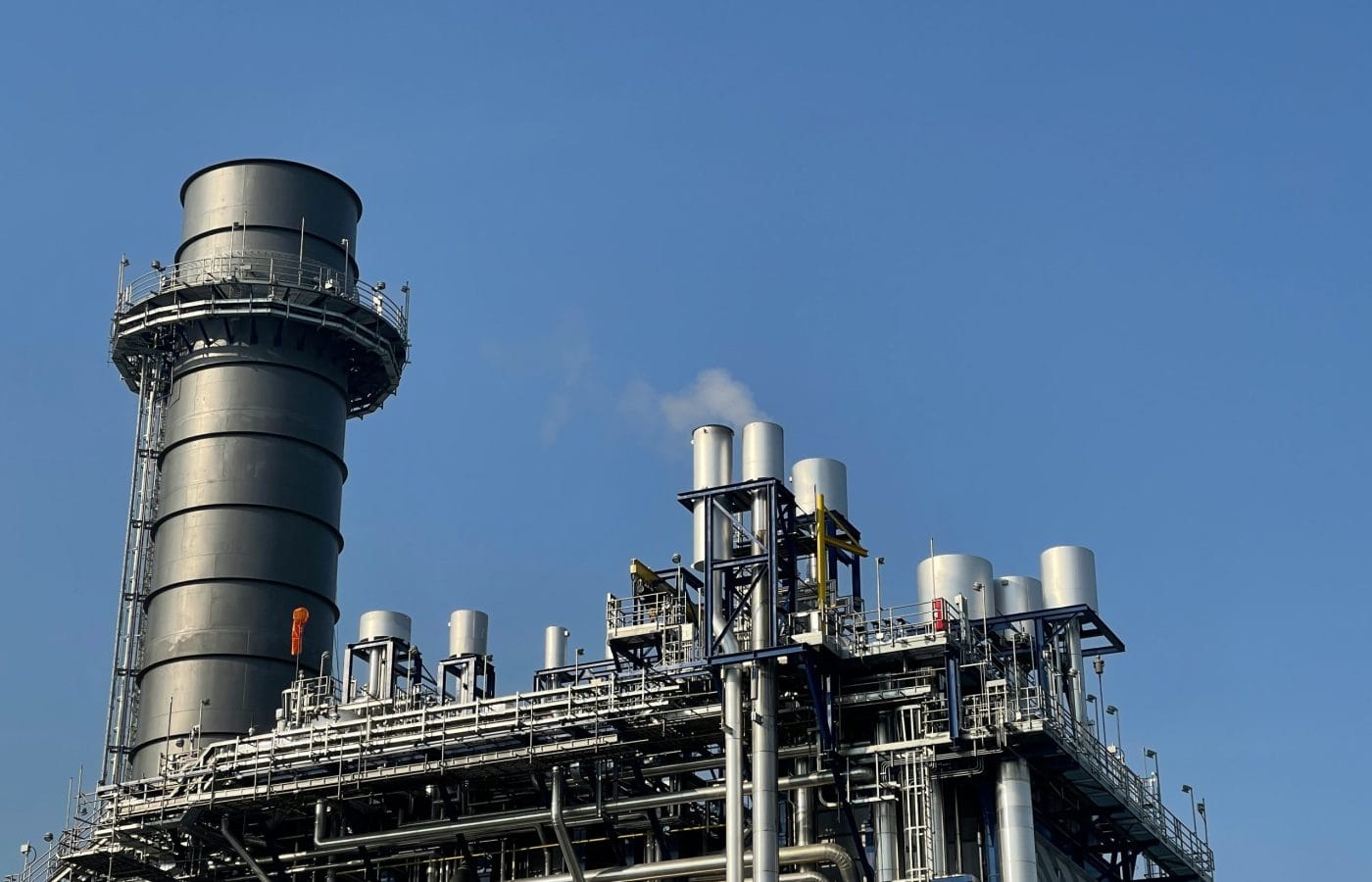
The Dangote refinery began operations in 2024 after an investment of more than $20 billion. With a designed crude-processing capacity of 700,000 barrels per day, it is Africa’s largest single-train refinery and one of the largest refining facilities in the world. The company plans to expand capacity to approximately 1.4 million barrels per day.
The facility is already changing Nigeria’s position in the petroleum-products market. Data from the U.S. Energy Information Administration shows that Nigeria’s seaborne petroleum-product shipments averaged about 561,000 barrels per day in the second quarter of 2026, compared with an annual average of 79,000 barrels per day in 2023. About 350,000 barrels per day were exported during the second quarter of 2026.
That shift is significant because Nigeria had historically exported crude oil while importing large quantities of refined petroleum products. The development of large-scale domestic refining capacity allows more of the value chain—from crude processing to fuel distribution—to remain within Africa.
The Economist Intelligence Unit has also reported that the refinery has substantially reduced Nigeria’s dependence on imported refined petroleum products, with the plant meeting nearly 80% of domestic petrol demand in April as operations approached full capacity.
From Fuel Importer to Regional Supplier
The potential benefits extend beyond Nigeria. A large refinery operating in West Africa can supply petroleum products to neighbouring markets, while reducing the distance between African consumers and major sources of refined fuel.
This is particularly important during periods of disruption in global energy markets. The refinery has benefited from increased international demand for refined products amid disruptions associated with the Iran war and damage to refining infrastructure elsewhere. Dangote executives have also warned that global fuel shortages could persist because of constrained refining capacity and the need to rebuild inventories.
For Africa, the larger strategic question is whether the continent can gradually reduce its dependence on imported refined petroleum products while developing its own refining, storage, transportation and petrochemical industries.
The African Benefits Could Go Beyond Cheaper Fuel
The most important benefit of the Dangote model may not simply be the production of petrol, diesel or jet fuel. It is the creation of a broader industrial ecosystem around energy.
Dangote’s Nigerian facility combines refining with petrochemicals, storage, marine infrastructure, logistics and power. The company says the refinery produces Euro V-standard fuels and is developing petrochemical capacity alongside its refining operations.
That model can create several economic benefits for Africa:
- Lower dependence on imported refined fuels: Countries with adequate domestic or regional refining capacity can retain more economic value within the continent.
- Foreign-exchange savings: Replacing some imported petroleum products with locally or regionally refined products can reduce pressure on foreign-exchange reserves.
- Export earnings: Refineries capable of producing surplus fuel can sell products into international and regional markets, generating foreign-exchange revenue.
- Industrial development: Refineries can support petrochemicals, plastics, transportation, storage, engineering, construction and other industries.
- Employment: Large industrial projects create direct jobs while also generating demand for contractors, logistics companies, engineers, suppliers and service businesses.
- Regional energy security: Multiple large refining centres could make African fuel markets less vulnerable to individual international shipping disruptions.
- Deeper African capital markets: A large industrial IPO gives African investors an opportunity to participate in major infrastructure businesses while demonstrating that large African companies can raise substantial domestic capital.
Why the Kenya Connection Matters
Dangote’s Nigerian IPO is particularly significant for East Africa because the group is preparing to replicate its refining strategy in Kenya.
Dangote plans to develop a refinery in Lamu, on Kenya’s coast, with a proposed capacity of 700,000 barrels of crude oil per day. The project is estimated at roughly $15 billion to $16 billion and would become the largest refinery in East Africa if completed as planned.
Dangote has announced September 30, 2026 as the date for the groundbreaking ceremony. As of September 14, 2026, construction has not yet begun, making the project best described as an advancing planned development rather than an already operational or completed refinery.
The proposed facility would be located within the Lamu Port-South Sudan-Ethiopia Transport (LAPSSET) corridor, positioning it close to Kenya’s deep-water port infrastructure. The strategic ambition is to establish a major East African petroleum-processing and distribution centre capable of supplying Kenya and neighbouring markets.
Kenyan officials see the investment as potentially transformative. The wider project is expected by the Kenyan government to create more than 60,000 jobs, including a substantial number of skilled positions, while supporting a broader petrochemical and industrial complex around Lamu.
What the Lamu Refinery Could Mean for Kenya
Kenya currently relies heavily on imported petroleum products. The proposed Lamu refinery could therefore have implications extending far beyond the oil industry.
Kenyan government officials have highlighted the possibility of retaining more value inside the domestic economy by processing petroleum products closer to the country’s markets rather than importing finished products. Kenya spent about 511.5 billion shillings on petroleum products in 2025, according to figures cited in Kenyan media, making petroleum one of the country’s largest import expenses.
A large refinery could also strengthen Lamu’s position as an industrial and logistics hub. The combination of refining, petroleum storage, port operations, transportation, petrochemicals and manufacturing could create an economic cluster around the facility.
For East Africa, the potential market is much larger than Kenya alone. A strategically located refinery could supply petroleum products to countries such as Uganda, Tanzania, Rwanda, South Sudan and the Democratic Republic of Congo, depending on commercial arrangements and regional demand.
In that sense, the Lamu project fits into a wider African trend: developing infrastructure that serves regional markets rather than relying exclusively on individual national economies.
But Kenya Faces a Major Challenge: Crude Supply
The proposed Lamu refinery also faces a fundamental challenge that should not be overlooked—the availability and reliable transportation of crude oil.
Kenya does not currently have commercial-scale domestic crude production sufficient to supply a 700,000-barrel-per-day refinery. Potential sources could include crude from South Sudan, Uganda and Kenya, but each option presents infrastructure, commercial or geopolitical complications.
Without sufficient regional crude, the refinery could remain dependent on imported crude delivered through international shipping routes.
This means the success of Lamu will depend not only on constructing the refinery itself but also on developing an efficient crude-supply network, storage facilities, pipelines, port infrastructure and long-term supply agreements.
The project’s location within the LAPSSET corridor could become an advantage if these infrastructure links are successfully developed. However, it also means that Kenya must coordinate multiple large infrastructure and regulatory projects at the same time.
Could the Nigerian IPO Help Demonstrate a Funding Model for Lamu?
The Nigerian IPO does not directly finance the Lamu refinery. The current public offer is primarily intended to raise capital for the expansion of the Nigerian refinery toward 1.4 million barrels per day and to strengthen the company’s ability to raise additional capital.
However, the transaction provides an important example of how large African industrial projects can increasingly use domestic and international capital markets rather than relying exclusively on private wealth or government funding.
Dangote has previously indicated that the Kenya refinery could be financed through a combination of internal cash, bonds and an IPO, while equity participation from East African countries has also been discussed.
If the Nigerian IPO performs successfully, it could strengthen the credibility of this broader financing strategy. It would demonstrate that a major African industrial asset can attract significant capital from retail and institutional investors while remaining anchored in an African stock market.
A Potential New Chapter for African Capital Markets
The Dangote IPO therefore carries significance beyond the oil sector.
Africa has substantial infrastructure needs in energy, transport, manufacturing and technology, but many large projects struggle to secure long-term financing. A successful large-scale IPO could encourage other established African companies to consider public markets as a source of expansion capital.
It could also encourage greater participation by African retail investors in domestic capital markets.
That is especially important because economic development is not only about constructing factories and infrastructure. It is also about creating mechanisms through which citizens can participate in the ownership of productive assets.
Dangote’s “people’s IPO” approach attempts to connect those two ideas: industrial development and broader public ownership.
The Risks Should Not Be Ignored
Despite its potential, the Dangote strategy is not without risks.
The Nigerian refinery is operating in a volatile global energy market, while the company is simultaneously planning a massive capacity expansion. The valuation attached to the IPO is also considerably higher than the valuation used in the earlier private placement, meaning investors must assess whether future earnings can justify the price.
The Kenya project faces additional risks involving financing, crude supply, infrastructure development, environmental considerations and coordination among government agencies, investors and local communities.
Reuters has reported that environmental concerns and the project’s proximity to the UNESCO-listed Lamu Old Town are among issues that will require careful management.
For Kenya, another important question is how much of the economic value created by such a large project will remain in local communities. Lamu residents have previously called for greater transparency and participation in decisions surrounding the proposed refinery, highlighting the importance of ensuring that local communities benefit from employment, business opportunities and infrastructure while environmental safeguards are maintained.
What This Means for Africa
The larger story is bigger than one billionaire or one refinery.
Africa remains one of the world’s major crude-producing regions but has historically had insufficient refining capacity in many markets. This has created an unusual situation in which countries can export crude oil and then import expensive refined petroleum products.
Dangote’s strategy challenges that model by attempting to build large-scale refining capacity inside Africa and connect it to regional and global markets.
If Nigeria successfully expands the Lagos refinery to 1.4 million barrels per day and the proposed 700,000-barrel-per-day Lamu refinery is eventually completed, Dangote’s planned refining footprint across the two countries would reach about 2.1 million barrels per day.
That is a measure of planned capacity rather than current production, but it demonstrates the scale of the company’s ambitions.
For Africa, the potential payoff is substantial: more domestic processing, stronger regional fuel supply chains, new industrial activity, additional export opportunities and deeper capital markets.
But the ultimate test will be execution. The continent needs projects that are not only large, but commercially sustainable, environmentally responsible and integrated with local economies.
What to Watch Next
- September 30, 2026: The planned groundbreaking of the Dangote refinery project in Lamu, Kenya.
- October 13, 2026: Scheduled closing date for the Dangote Petroleum Refinery IPO in Nigeria.
- Nigeria’s refinery expansion: Progress toward increasing capacity from 700,000 barrels per day to approximately 1.4 million barrels per day.
- Lamu financing: Details on how the proposed Kenyan refinery will be funded and whether regional governments or investors will take equity positions.
- Crude supply: Agreements that could provide reliable feedstock for the Lamu facility.
- Regional fuel markets: Whether increased African refining capacity eventually reduces dependence on imported refined petroleum products.
Key Takeaways
- Dangote has launched Africa’s largest IPO, offering 4.1 billion refinery shares at 525 naira each.
- The public offer targets about 2.15 trillion naira, or roughly $1.6 billion, with a potential maximum of about $2.1 billion.
- The Nigerian refinery currently has capacity of about 700,000 barrels per day and plans to expand to 1.4 million barrels per day.
- Nigeria’s refined-product exports have risen sharply since the refinery began operations, according to U.S. Energy Information Administration data.
- Dangote plans to break ground on a second 700,000-barrel-per-day refinery in Lamu, Kenya, on September 30, 2026.
- The Lamu project could strengthen Kenya’s position as a regional petroleum-processing and logistics hub.
- The Kenyan project still faces important challenges, particularly crude supply, financing, infrastructure, environmental concerns and community participation.
- The broader Dangote strategy could contribute to greater African energy self-sufficiency and deeper African capital markets if successfully executed.
Frequently Asked Questions
What is the Dangote refinery IPO?
It is a public share offering through which investors can acquire shares in Dangote Petroleum Refinery and Petrochemicals. The September 2026 offer involves 4.1 billion shares priced at 525 naira each and is intended to raise capital for the company’s expansion.
How much money is Dangote trying to raise?
The base offer targets about 2.15 trillion naira, equivalent to approximately $1.6 billion. If the offer is oversubscribed and the greenshoe option is exercised, the amount could rise to around $2.1 billion.
Is Dangote building an oil refinery in Kenya?
Yes. Dangote plans to build a 700,000-barrel-per-day refinery in Lamu. As of September 14, 2026, construction has not yet begun; the company has announced September 30 as the planned groundbreaking date.
Why is the Lamu refinery important to Kenya?
If completed, the refinery could reduce Kenya’s dependence on imported refined petroleum products while supporting fuel storage, logistics, petrochemicals, manufacturing and regional exports.
Will the Dangote IPO directly finance the Lamu refinery?
Not according to the current information. The Nigerian IPO is primarily designed to finance the expansion of the Nigerian refinery and strengthen the company’s capital base. Dangote has separately discussed a mixture of cash, bonds and potential equity-market financing for the Kenyan project.
What could Dangote’s expansion mean for Africa?
The potential benefits include greater refining capacity, lower dependence on imported fuels, stronger regional energy security, foreign-exchange savings, export opportunities, industrial development, job creation and greater participation in African capital markets.
SkyPress Perspective
The Dangote refinery story represents an important shift in how Africa can think about its natural resources. Instead of exporting raw commodities and importing finished products, the continent has an opportunity to build more of the processing, manufacturing and distribution capacity around its own resources.
Nigeria’s refinery provides an early test of that model. Kenya’s proposed Lamu refinery could become the next major test in East Africa. If both projects achieve their stated ambitions, they could help reshape petroleum trade across two of Africa’s largest regional markets.
For investors, businesses and policymakers, however, the lesson is clear: the size of an infrastructure project does not guarantee success. Long-term value will depend on efficient operations, reliable feedstock, responsible financing, strong infrastructure, transparent governance and meaningful economic participation by the communities and countries involved.
Disclaimer: This article is provided for educational and informational purposes only. It is not financial, investment or trading advice, and SkyPress does not recommend buying or selling any security discussed in this article. Investors should conduct their own research, review official offering documents and seek qualified professional advice where appropriate. Investing in shares involves risk, including the possibility of losing some or all of the money invested.
Related Article
Oil Prices Surge as Middle East Disruptions Raise Fears of a Global Supply Shock
Rising oil prices and supply disruptions are reshaping global energy markets. Read our latest analysis of what the surge could mean for fuel prices, inflation and the wider global economy.
Sources: Reuters; U.S. Energy Information Administration; Dangote Petroleum Refinery; Kenyan media reports on the Lamu refinery project.