
Forex Trading for Beginners: Understanding the World’s Largest Financial Market
Forex trading, or foreign exchange trading, is the act of buying and selling currencies with the aim of making a profit. Unlike stocks, which are traded on specific exchanges like the New York Stock Exchange or NASDAQ, Forex operates as a decentralized global market where currencies are traded electronically across networks spanning the world. With over $6 trillion traded daily, Forex is the largest financial market, attracting both institutional investors and individual traders. Its accessibility, liquidity, and potential for profit make it a highly popular choice for both beginners and experienced traders alike.
At its core, Forex is about speculating on currency value movements. For example, if a trader believes that the euro (EUR) will strengthen against the US dollar (USD), they can buy the EUR/USD currency pair. If the euro rises in value relative to the dollar, the trader can then sell it for a profit. Conversely, Forex allows traders to profit even if currencies decline in value by selling first and buying later. This dual opportunity is one reason why Forex remains attractive to traders globally.
What makes Forex trading particularly compelling for beginners is its accessibility and flexibility. The market operates 24 hours a day, five and a half days a week, meaning that no matter your time zone, you can engage in trading when it suits your schedule. Moreover, with the advent of online trading platforms, traders can start with minimal capital, using leverage to control larger positions while risking only a fraction of the trade amount. However, leverage can amplify losses as much as gains, so understanding risk management is crucial.
How the Forex Market Works: Currency Pairs and Market Dynamics

Forex trading is always conducted in pairs. A currency pair consists of a base currency and a quote currency, indicating how much of the quote currency is needed to purchase one unit of the base currency. For instance, in the EUR/USD pair, EUR is the base currency and USD is the quote currency. If EUR/USD is trading at 1.1500, this means that 1 euro costs 1.15 US dollars. Understanding how to read currency pairs is essential for all Forex traders, as every trade involves buying one currency while simultaneously selling another.
The Forex market is influenced by macro-economic factors, geopolitical events, and market sentiment. Central banks, such as the Federal Reserve in the US or the European Central Bank, can significantly impact currency prices through interest rate decisions and monetary policy announcements. Political instability, trade agreements, or economic crises can also trigger dramatic market movements. Successful Forex traders monitor these factors closely, combining fundamental analysis (study of economic and political news) with technical analysis (study of historical price data and chart patterns) to make informed decisions.
Liquidity is another defining feature of the Forex market. Major currency pairs like EUR/USD, USD/JPY, and GBP/USD are highly liquid, meaning they can be bought and sold in large volumes with minimal price fluctuation. This ensures that traders can enter and exit positions efficiently. Minor and exotic pairs, while offering different opportunities, tend to have lower liquidity and wider spreads, making them riskier for beginners.
How to Trade Forex Successfully: Advanced Strategies and Professional Insights

Now that you have a solid foundation in Forex basics, it’s time to elevate your trading skills with advanced strategies and practical insights. While understanding currency pairs, charts, and market dynamics is crucial, the difference between a beginner and a consistently profitable trader lies in structured planning, disciplined execution, and risk management. In this guide, we cover the pillars of professional Forex trading, the tools and techniques used by experienced traders, and the mindset necessary for long-term success.
Developing a Professional Trading Framework
A professional trading framework is essential for consistent results. It starts with a comprehensive trading plan. Your plan should define entry and exit criteria, risk tolerance, preferred trading instruments, and daily routines. By setting clear rules, you eliminate guesswork and reduce emotional decision-making during volatile market conditions. Traders who follow a plan are far less likely to make impulsive decisions that lead to losses.
Another key component is maintaining a trading journal. Recording every trade, including entry and exit points, position size, and rationale, helps identify recurring mistakes and track performance over time. Many professional traders review their journals weekly to refine strategies and adapt to changing market conditions.
Advanced Forex Trading Strategies
Trend-Following Strategies
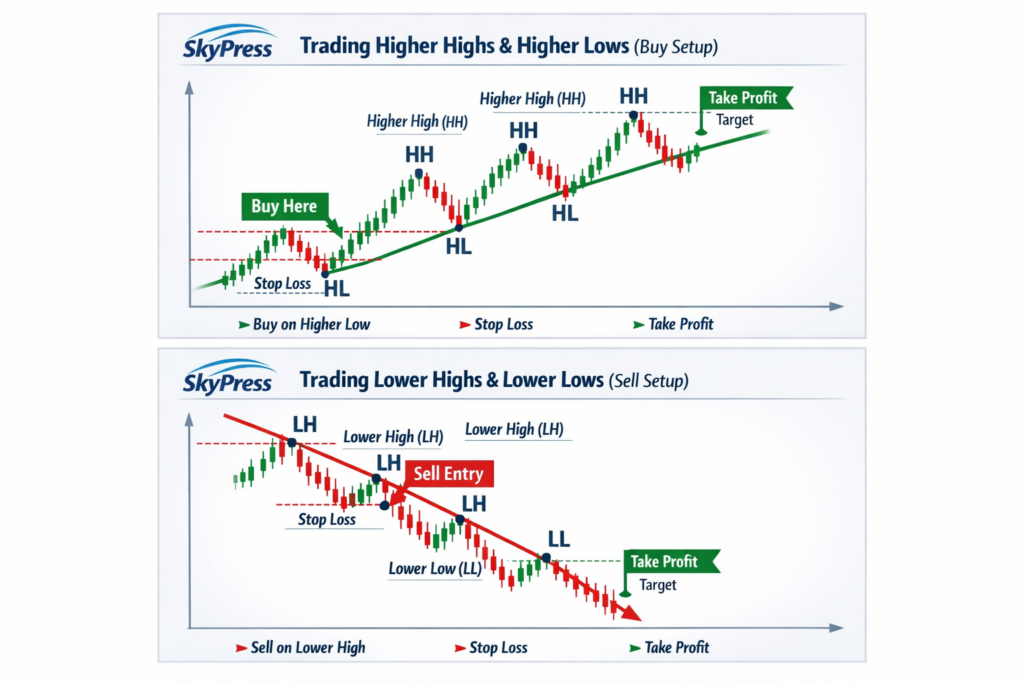
Trend-following is a widely used strategy in Forex trading. Traders identify strong market trends and attempt to ride them until signs of reversal appear. This approach relies heavily on technical indicators such as moving averages, trendlines, and the Average Directional Index (ADX). By aligning trades with the overall market direction, trend-followers aim to capture larger price movements while minimizing counter-trend risks.
Range Trading
Range trading is suitable when a currency pair moves within a defined price band, bouncing between support and resistance levels. Traders enter positions near the lower bound (support) and sell near the upper bound (resistance). This strategy works well in low-volatility markets but requires patience and careful monitoring of breakout events, which can invalidate the range.
Breakout Trading
Breakout trading involves entering positions when price breaks a significant support or resistance level. Breakouts often signal the start of strong trends, offering high potential returns. However, traders must confirm breakouts using volume or other indicators to avoid false signals that could lead to losses.
Risk Management: Protecting Your Capital
Risk management is the cornerstone of successful Forex trading. Even the most profitable strategies can fail without disciplined risk control. Traders use stop-loss and take-profit orders to automate exits and limit losses, ensuring that a single trade does not jeopardize overall capital. Position sizing is another critical technique, with most professionals recommending risking no more than 1-2% of your trading account on any single trade.
Psychology and Emotional Discipline
Trading psychology is often overlooked, yet it can determine long-term success. Fear, greed, and overconfidence can cloud judgment and lead to repeated mistakes. Successful traders cultivate emotional resilience, remain patient during drawdowns, and avoid chasing losses. Techniques such as meditation, structured routines, and periodic breaks can help maintain a clear and disciplined mindset.
Continual Learning and Market Adaptation
The Forex market is dynamic. Economic policies, geopolitical developments, and global events constantly reshape currency valuations. Professional traders commit to continual learning, reviewing trade performance, studying economic indicators, backtesting strategies, and adapting to new tools and trends. By staying informed, traders improve decision-making and maintain a competitive edge in the market.
Why Forex Remains a Popular Trading Choice
Forex remains one of the most widely traded markets globally due to its accessibility, liquidity, and potential for profit. Retail traders can start with small capital, trade around the clock, and access high leverage to maximize exposure. Additionally, the ability to profit from both rising and falling markets provides unparalleled flexibility. Combined with sophisticated tools and resources, Forex trading offers opportunities for growth and skill development unmatched by most other asset classes.
Disclaimer
The contents of this article and related materials are provided for educational and informational purposes only. Trading financial instruments such as Forex involves significant risk and may not be suitable for all investors. The information presented here does not constitute investment advice, financial recommendations, or an offer to buy or sell any financial product. Readers should perform their own due diligence and consider consulting with a qualified financial advisor before making any trading decision. Past performance is not indicative of future results.
Footer
© 2026 SkyPress. All Rights Reserved.
SkyPress provides market insights and educational resources for traders and investors. The information presented on this website should not be taken as financial advice. Visit our Market Insights section for more professional guidance and analysis.